

Dear Compounders,
Thinking about edge – and carefully distinguishing between edge and skill – has been one of my most transformative theoretical breakthroughs as an investor this year.
Much of this clarity emerged from private exchanges with Tiho Brkan, who consistently sharpened my perspective on how market efficiency operates in practice. Tiho is an avid reader of Michael Mauboussin, whose institutional research deeply shaped my personal evolution as an investor over the past couple of years.
I explored complementary dimensions of this topic earlier this year in The Paradox of Investment Skill: Why Exceptional Thinkers Fail in Crowded Games and How to Measure Investing Skill: A Practical Framework to Isolate Your True Alpha. I think reading both pieces will make you a better investor, learner, and thinker.
To locate true structural edge today, you have to look directly at how the investing landscape itself has shifted underneath our feet. Mauboussin's research illuminates a defining friction in modern market microstructure. Between 2006 and 2025, over three trillion dollars migrated out of active mutual funds directly into passive index vehicles.
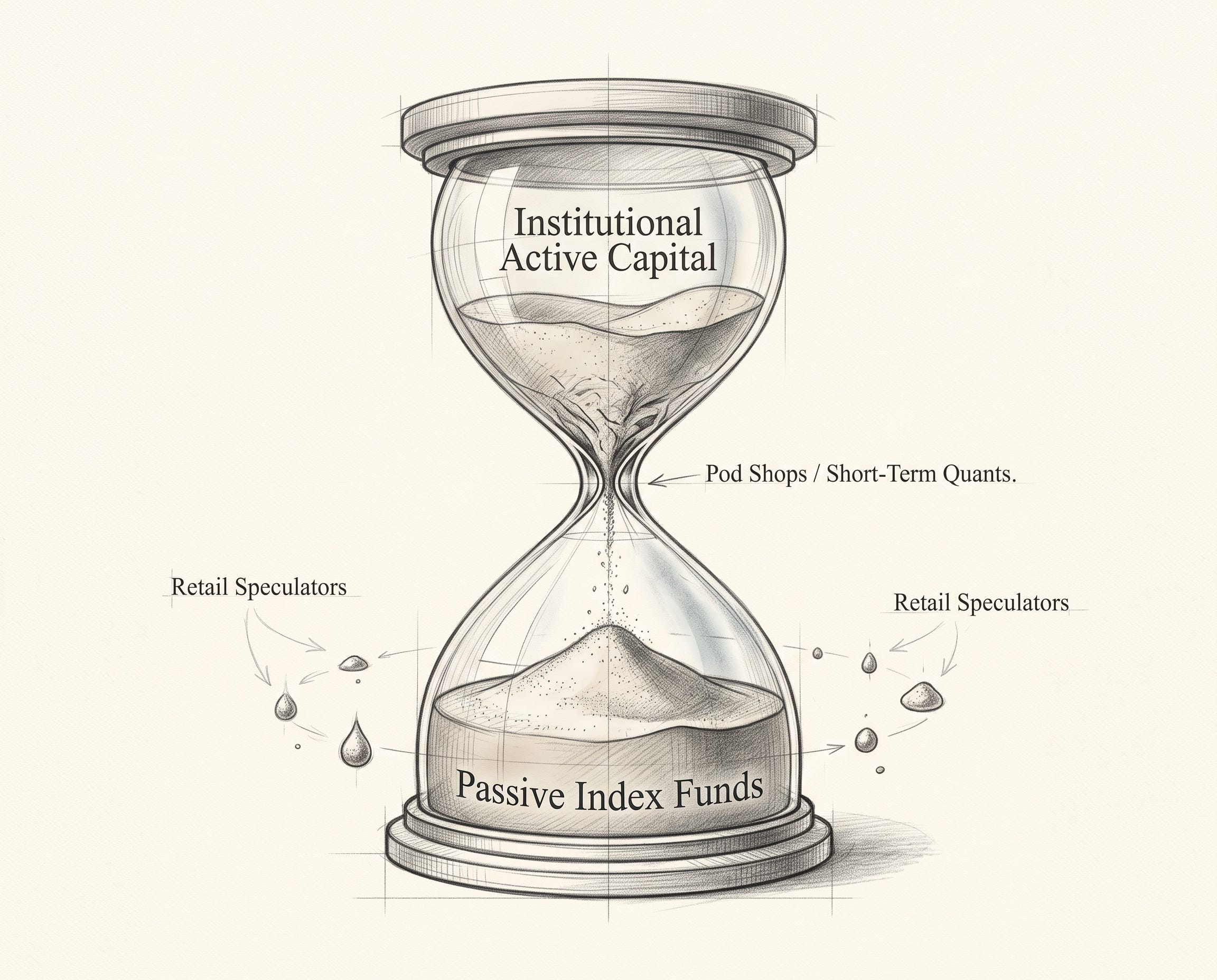
Looking at market structure today in 2026, rules-based passive strategies control well over a third of U.S. public equities. These passive entities trade strictly to accommodate fund flows or index rebalancings. They never evaluate intrinsic value or discount anticipated cash flows. This creates massive price-agnostic buying and selling across global exchanges.
Active investors face a structural puzzle. Highly talented managers struggle to outperform because they compete against equally brilliant peers in crowded strategies, while broader market mechanics are increasingly driven by non-fundamental capital flows.
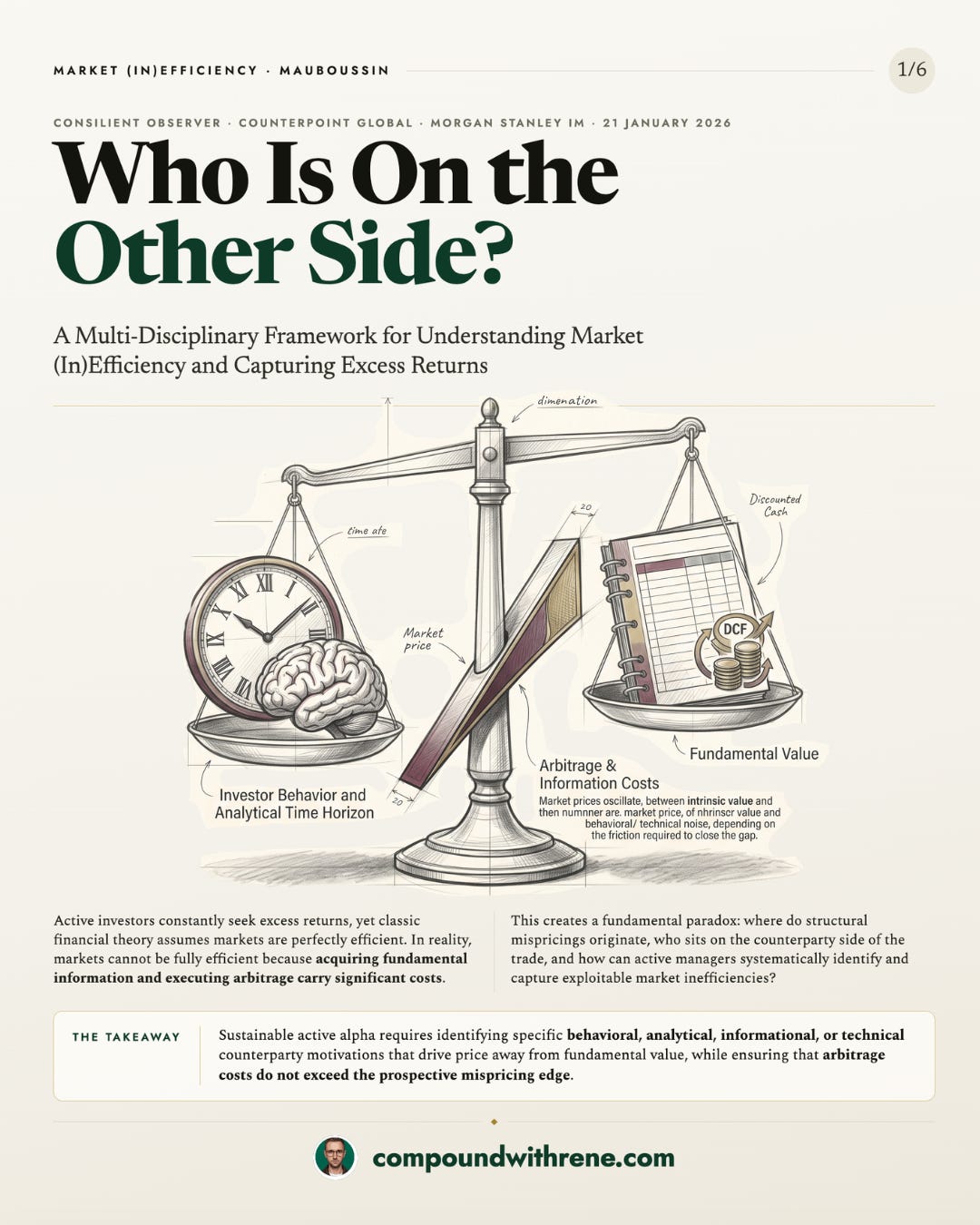
My personal process when analyzing institutional literature like Mauboussin and Dan Callahan’s research involves rigorous structural extraction. I sit down with these long-form papers, pencil in hand, reading through each section twice to strip away corporate boilerplate. First, I highlight the core mechanical drivers. Next, I map out the economic feedback loops on paper to visualize how capital flows interact with human behavior. Finally, translating dense academic research into these visual blueprints forces me to clarify my own mental models.
Can High Skill Deliver Alpha Without an Uninformed Counterparty?
Skill reflects internal analytical processing capacity. Edge relies on external market frictions.
In their foundational work that served as the foundation of this blueprint, Mauboussin and Callahan unpack the Grossman-Stiglitz paradox, demonstrating that financial markets can never achieve absolute efficiency. Perfect efficiency eliminates all economic incentives to gather information, yet efficient prices require informed traders to process data.
Markets must exist in an efficiently inefficient equilibrium. Active management requires exploitable mispricings to recoup the substantial costs of gathering data.
Tip: Access all of Mauboussin’s writing here
Superior analytical skill yields zero excess return if your trade counterparty possesses identical information, operates on the same time horizon, and faces identical structural constraints.
Edge demands an asymmetry.
It requires identifying who is taking the opposite side of your transaction and pinpointing their explicit motivation.
You must verify whether your counterparty is trading based on
flawed extrapolation,
forced regulatory mandates, or
temporary liquidity needs?
Without a clear answer to that single question, perceived skill is merely intellectual vanity.
Where Do Structural Inefficiencies Appear in Modern Markets?
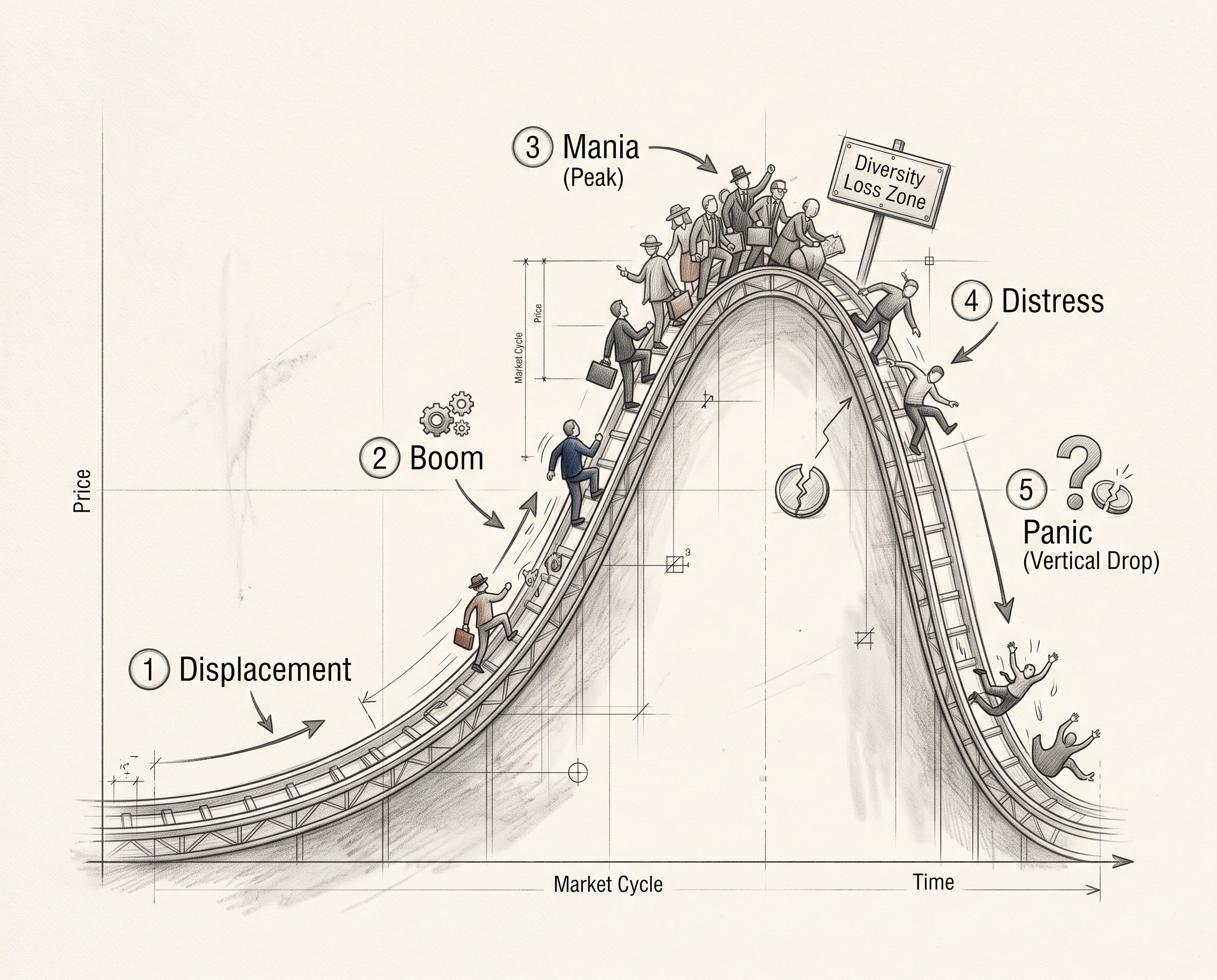
Mauboussin and Callahan organize market inefficiencies into four distinct domains through the BAIT taxonomy – Behavioral, Analytical, Informational, and Technical.
Behavioral inefficiencies stem from overextrapolation and correlated crowd beliefs.
Analytical inefficiencies center on time arbitrage and narrative transitions.
Informational inefficiencies arise from limited investor attention and task complexity.
Technical inefficiencies develop through forced selling and leverage liquidations.
Examining these categories reveals how institutional market microstructure has evolved.
Fundamental long-only funds now account for less than fifteen percent of daily equity trading volume, down sharply over the past decade. Multi-manager pod shops leverage capital four to five times over to harvest short-term quarterly earnings variance, while retail trading accounts for one-fifth of daily volume.
Context matters. Capital moves fast.
Dear compounders,
The special-offer button below offers you a 30% discount on your first year of membership (annual plans only). The offer is available for 24 hours, until September 11, 7 pm CET – or until ten people have used it.
Why join the community, you may ask? Our library is fast approaching 70 comprehensive deep dives, providing institutional-level research on some of the world’s most fascinating businesses. Most recently, we’ve dissected companies like Reddit, Pinduoduo, Mercado Libre, Grab Holdings, Tencent Music, CTS Eventim, Dino Polska, Toast, Workiva, Amadeuts IT, Fair Isaac, and Topicus.com.
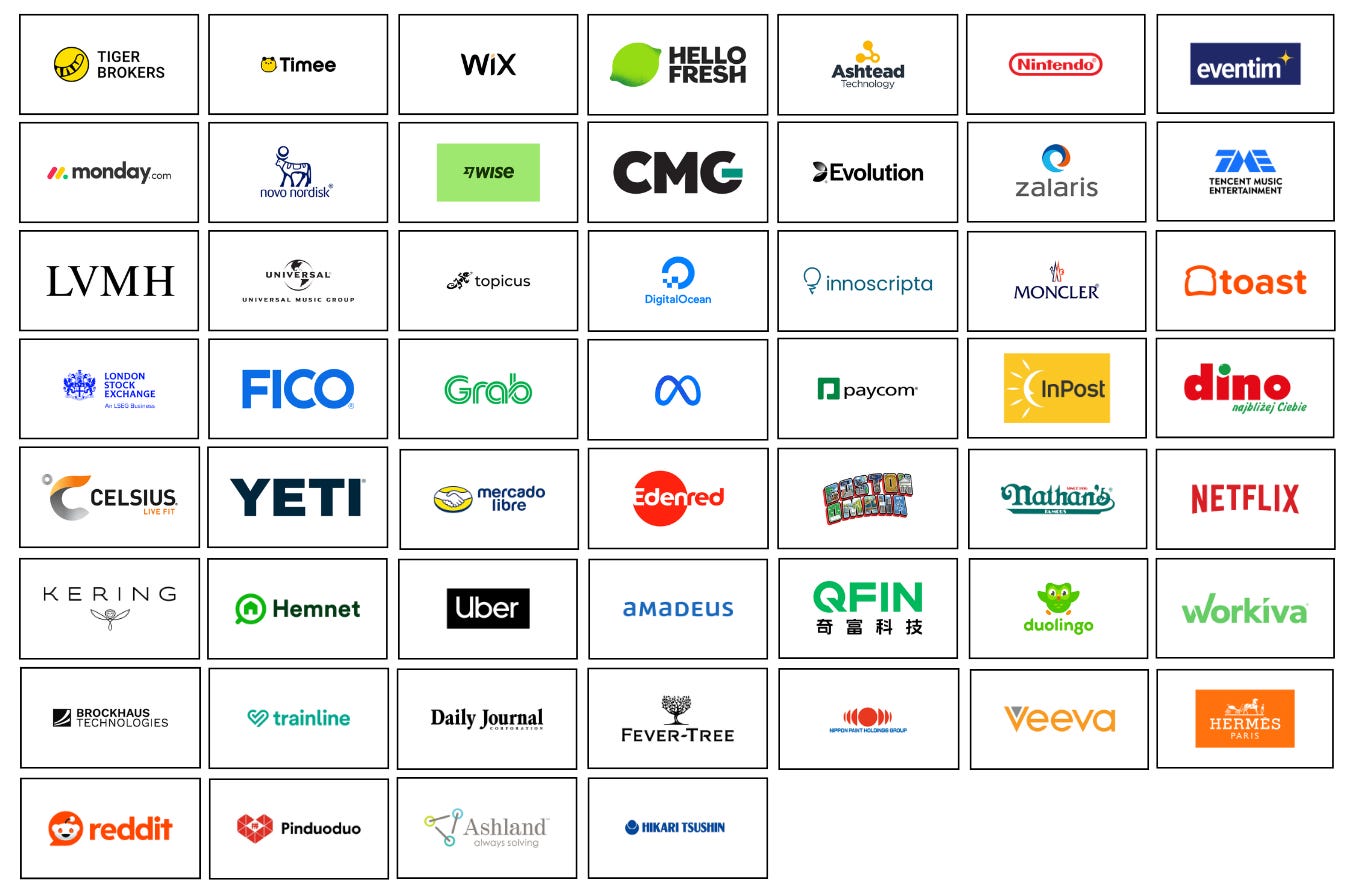
As a member, you get:
Complete Access: Every deep dive in our library (65+ and counting). The most thorough analyses you will be able to get your hands on (including downloadable models).
Access to my 150+ Global Watchlist: And How To Use It to Outperform the Market!
Slide Decks: Every deep dive now comes with a companion slide deck. It’s the whole argument in compressed form – the hypothesis, the business, the competitive position, the valuation, and the case against – for the days when you don’t have an hour to spare but still want the shape of the thing. Paid subscribers get both, the long piece and the deck.
More Content: Company updates; AI tools I built (like my AI superforecaster); powerful valuation spreadsheets, frameworks, and processes; regular portfolio updates (insights into my investing decisions); market commentary; etc.
The WhatsApp Community: Real-time discussion and networking with like-minded investors.
Digital Investing Conferences: About three times a year, we also hold digital conferences where members present and share stock ideas, and discuss broader themes, and we’d love for you to join in!

Downloadable Visual Blueprints: Direct access to high-resolution PDF reference sheets distilling timeless investment classics, insights from my proprietary investing framework, and essential valuation mechanics into structured visual architecture. Print them, save them, and build your own institutional reference binder.

Incredible Value: Full access to all of this for less than 1€/day.