

Below you find my late July/early August reading (and listening) list: a handful of recent finds that offer valuable context on market trends and the frameworks driving them.
Shoutout to our WhatsApp community in which some of these resources are regularly shared – the power of swarm intelligence!
Subscribe below to not miss these kinds of posts in the future.
Articles & Letters:

Open letter by Bernard Arnault in reaction to "the investigation" by Le Monde (translation shared by European_DGI) – I can assure you you will enjoying reading this and laugh out multiple times!
“First, I learned that my staff are very well dressed and none are overweight. I apologize to readers for this lack of body diversity, and I will contact the company restaurant on Monday. I also learned that visitors have their Hermès ties taken away. That is false: we let them keep them. We simply offer them a second, more discrete one for the elevator. It is a matter of politeness. I will add, as a secret, that I own several.“
Horizon Kinetics June letter (“Under the Hood Revived (we just HAD to!): What’s in Your Index?“); topics covered:
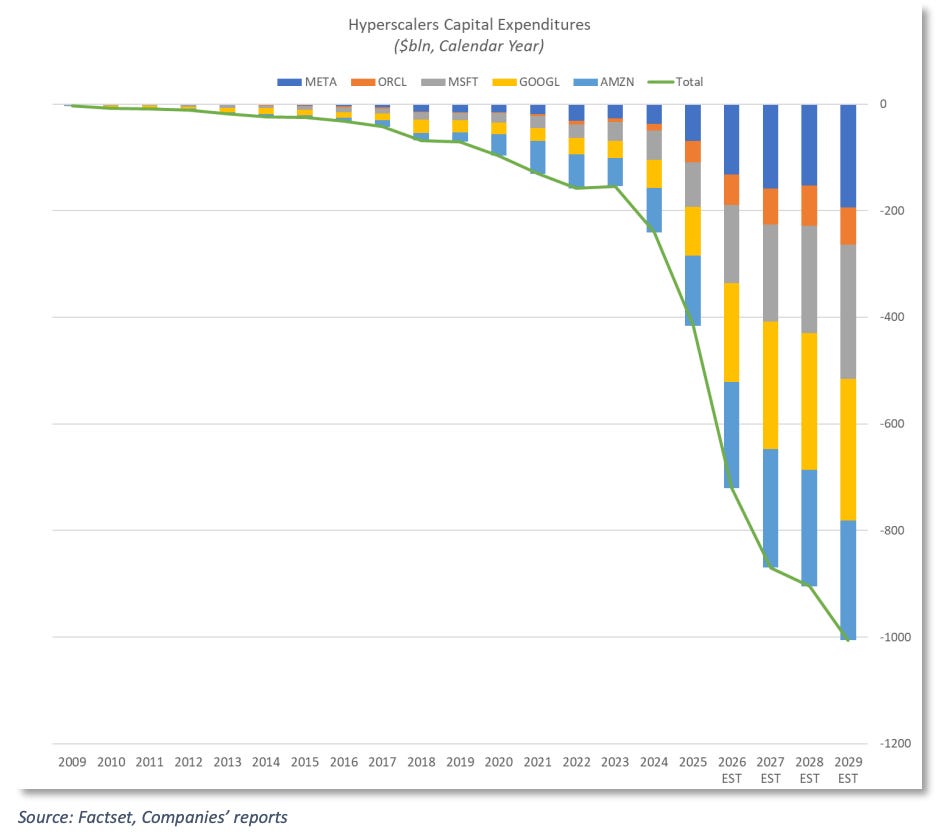
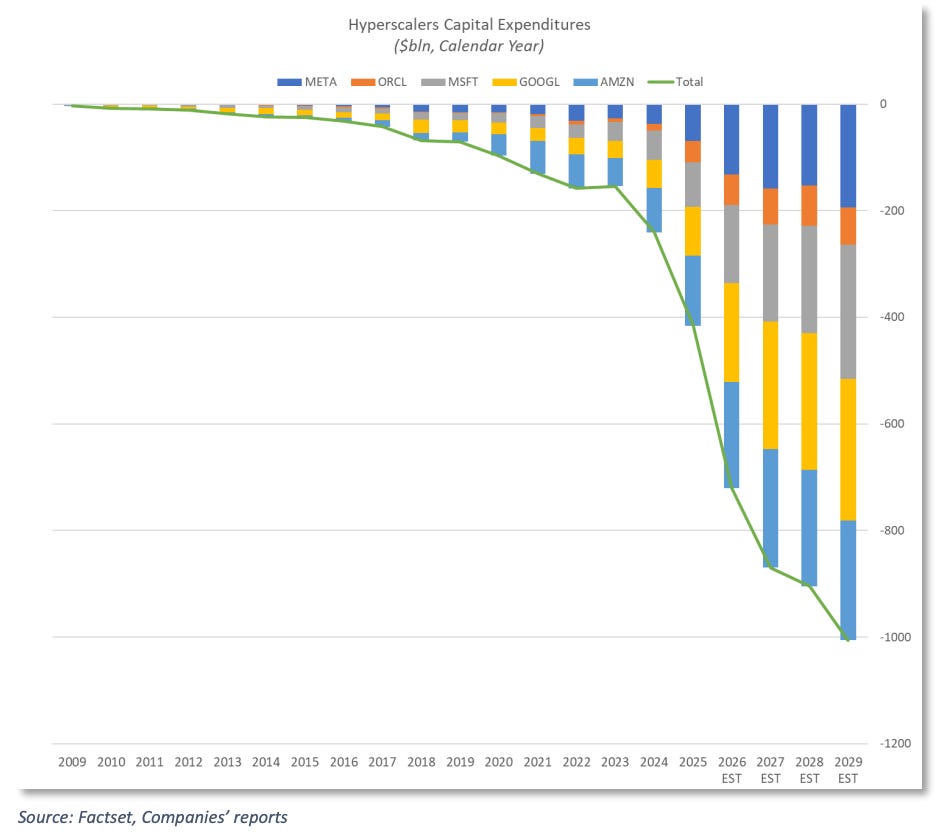
Hyperscalers Are Sacrificing Their Free Cash Flow for Data Center Growth
Data Center Spending Means Tough Trade-Offs for Hyperscalers
Emerging Co-Dependence Risk
Here’s one chart from the letter:
Reading Suggestion: Very much related to it is my own analysis from last week titled “8 Signs the AI Bubble Is Further Along Than You Think“
Seeing What Others Miss: An Investor’s Guide to Insight by The Financial Pen
“In an after-the-fact diagnosis, Burns is implying that a biased sample of self-selected winners like Tesla and Alibaba suggest that it is a mistake to ever sell any shares in any companies that you think are “winners” either historically or prospectively. Yes, it is true, if you sold Tesla too early, you didn’t make as much money as those who didn’t. But what about those investments that weren’t Tesla? And what about former consensus winners like Eastman Kodak, or Cisco, or Nokia? Justifying his view, Burns cites research by professor Hendrik Bessembinder which suggests that a) a majority of stocks do not outperform 1 month US treasury bills b) 1 per cent of companies accounted for all global net wealth creation and c) 99% of companies were a “distraction to the task of managing money”. Burns suggests that Bessembinder’s research should “shake the foundations” of the investment industry and that we need a “vastly different mentality” to “focus on the possibility of extreme upside”. That sure would be nice, wouldn’t it? If we all could just sit back and take our money out of 99 percent of our investments and all plough it in the same 1 per cent that everyone else already knows about, and then expect to outperform. As preposterous as it sounds, the conclusions drawn from Bessembinder’s paper were also misinformed in the first place. It isn’t entirely Burns’ fault, Bessembinder himself presented his observations and conclusions in a sensational way.“
Two comments that are very related to this critique that I shared on X recently:
Here, I myself claimed that Bessembinder’s study is “The single most-referenced finding in equity research this decade [and] is misleading. Not wrong – misleading.“ – and explain why.
“Here’s my problem with how that data point gets used: It assumes a forever holding period. That may be a clean theoretical construct – and even Buffett himself said “his favorite holding period is forever” – but it ignores one of the single most important skills in real-world investing: TIMING. Bessembinder is measuring lifetime, buy-at-IPO-hold-until-delisting/bankruptcy outcomes. Almost no one actually invests that way, including the man whose quote gets attached to the idea (see above).“
In this post, I argued that the single biggest weakness of some quality funds is their lack of timing skills.
“They excel at security selection. They do not even try their hand at timing (another way of saying they are average at best), I don’t find them to be particularly valuation-disciplined. And they aren’t particularly differentiated with regard to position sizing.“
An MIT study drawing on 52 executive interviews, surveys of 153 leaders and analysis of 300 public deployments found that roughly 95% of enterprise generative AI pilots delivered no measurable impact on profit and loss.
“Zero return.”
S&P Global found 42% of companies abandoned most of their AI projects during 2025.
“The percentage of companies abandoning the majority of their AI initiatives before they reach production has surged from 17% to 42% year over year, with organizations on average reporting that 46% of projects are scrapped between proof of concept and broad adoption“
Podcasts & Videos:
Gavin Baker back on the Patrick O’Shaughnessy podcast (Invest Like the Best); topics covered:
AI Selloff vs. Fundamentals
Financing the AI Buildout
GPU Prices Keep Rising
Claude Moves Markets
What Could Break the Thesis
The Memory Supply War
Nvidia’s New Playbook
China and Open Source
Data Centers and Regulation
SpaceX and Orbital Compute
New Mohnish Pabrai interview on the New Money YouTube channel; topics covered (embedded further below); table of contents:
0:00 Market Overvaluation
3:20 Berkshire's Future
5:30 Berkshire's Cash Pile
6:57 Buffett's Google Investment
13:30 The Kaspi Play
17:30 How Mohnish Finds Stocks
24:00 Circle of Competence
28:00 Adobe Stock
31:00 The SpaceX IPO
33:30 Elon Musk
35:40 Buffett's "Too Hard" Pile
36:40 Passive Investing Bubble
39:05 Mohnish's Non Negotiables
43:20 Focus
44:05 If Mohnish Started Over...
45:00 Holding Overvalued Compounders
48:10 Private Credit
48:50 Outro
Other:
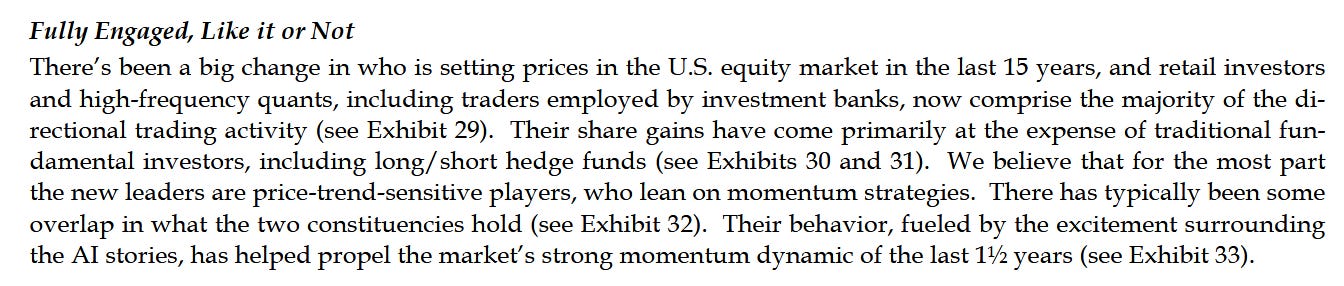
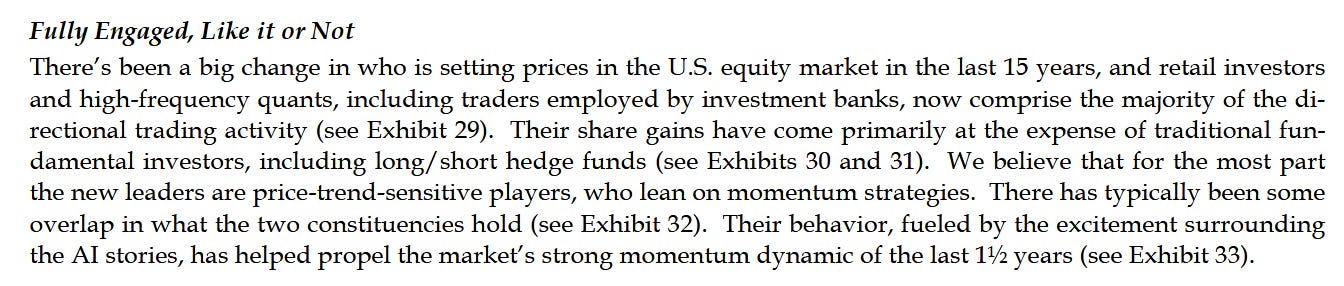
modest proposal shared this excerpt on X on changing market structures; I couldn’t find the original source (would love to take a look at the exhibit), so if anyone can help out?
“There’s been a big change in who is setting prices in the U.S. equity market in the last 15 years, and retail investors and high-frequency quants, including traders employed by investment banks, now comprise the majority of the directional trading activity …“
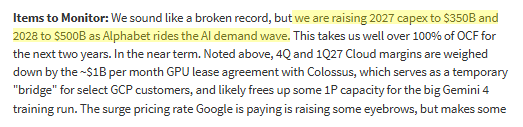
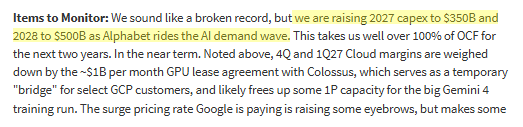
Barclays has Google’s CapEx at $500 billion in 2028
Charts shared by Tobias Carlisle:
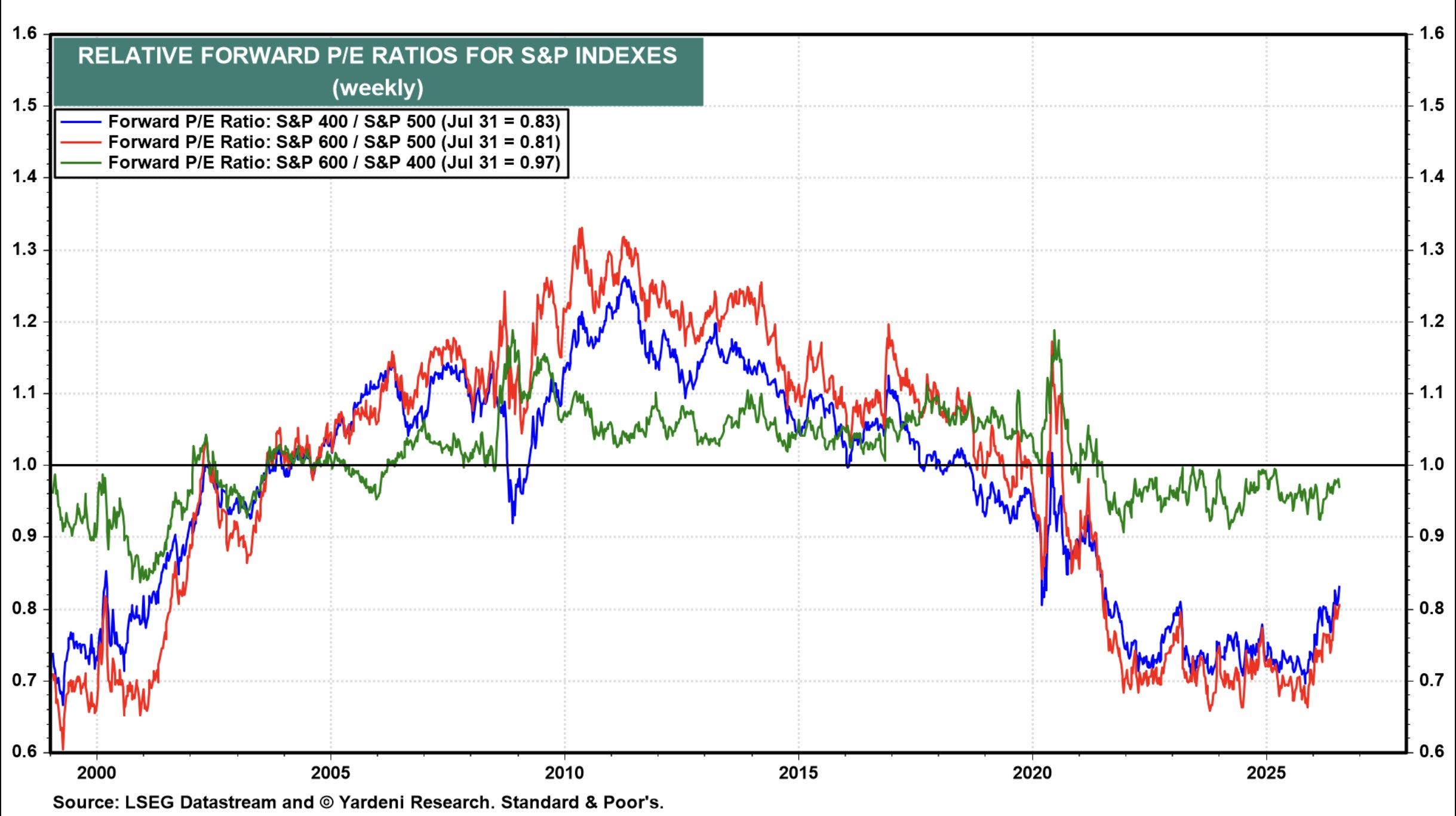
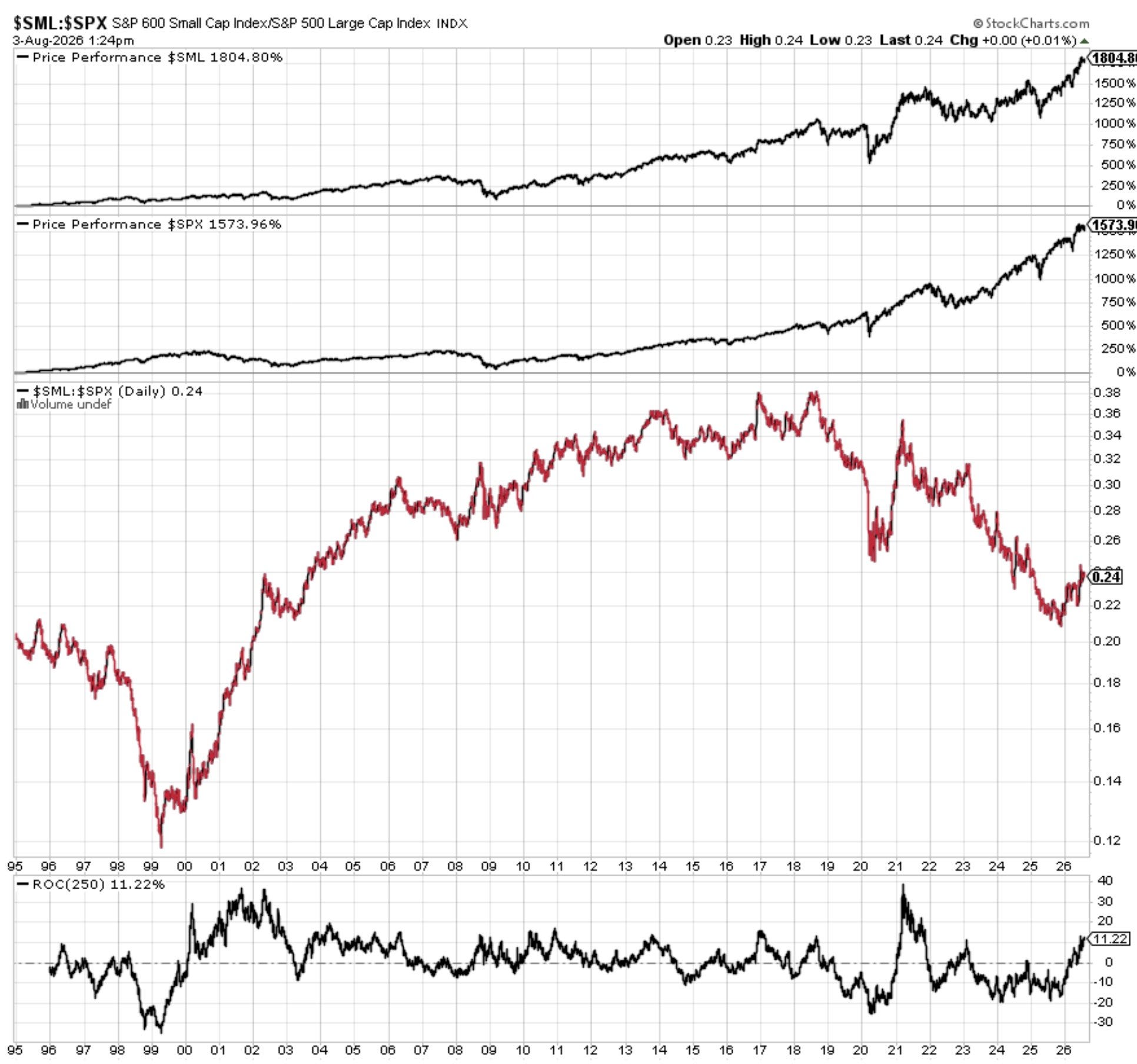
“Mid and small caps are still valued at roughly a 20-30% discount to large caps, near the cheapest levels in the chart's ~27-year history. Historically such wide discounts have preceded periods of mean-reversion and small-cap outperformance (as happened after 2000). The recent uptick in blue/red lines (bottom-right of chart) suggests a modest recovery in small/mid-cap relative valuations is underway, worth watching if it continues. Second chart shows small-caps have outperformed large-caps by about 11% over the trailing year.“
Thanks for the quality content!
Going to listen to the Mohnish Pabrai video now :)
Thanks for the mention! And really thought provoking stuff you put together here!