

As we head into Timee’s 2026 fiscal year – the company just reported Q1 results –, Timee, Inc. has found itself at a crucial juncture. Over the past few months and quarters, there’s been significant debate about whether the company had already matured too quickly – some feared it had hit the ceiling of its addressable market already.
For a while, this concern had a very real impact on its stock price, with investors speculating that growth was slowing further and perhaps even plateauing earlier than expected.
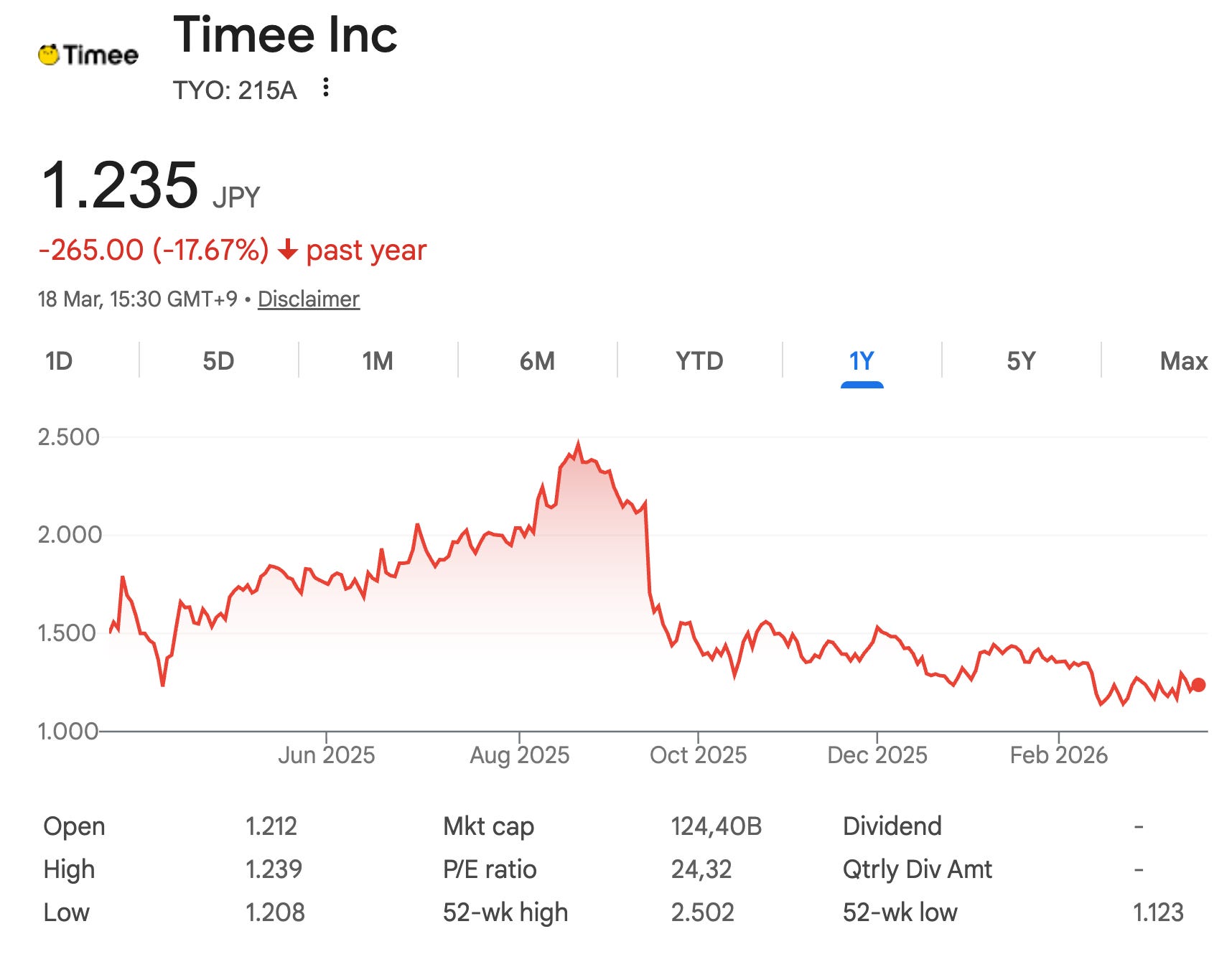
However, the company’s Q1 earnings report not only exceeded expectations but also revealed a deeper, more strategic growth story that suggests the best may still be ahead.
In this post, I’ll take a fresh look at Timee’s stock, diving into the Q1 results and unpacking why the numbers weren’t just a pleasant surprise, but a sign that Timee’s growth potential remains intact.
We’ll start by breaking down how Q1 reflected a strategic rebound, particularly with the upward revisions in full-year guidance and the return of growth in core areas like logistics and retail.
But the story doesn’t end with the numbers. The earnings call and the recent “fireside chat” with Bristlemoon Capital gave investors more qualitative insights into the company’s future direction, including the shift in fiscal year-end, the push into long-term hiring solutions, and the exciting potential of expanding into international markets like Korea.
In addition, I’ll give a quick update on Timee’s valuation, exploring the 5-year total shareholder return scenario, which suggests that the stock’s future price could see impressive gains if the company continues on its growth trajectory.
So, if you’ve been watching Timee with skepticism, it might be time for a second look.
Read my deep dive here:
Deep DIve: Timee Inc. ($215A)

Timee is not your typical Japanese tech company. Founded just a few years ago, in 2017, it has essentially created and scaled an entirely new labor category: instant, on-demand hourly staffing.
Disclaimer: I own Timee shares. The analysis presented in this blog may be flawed and/or critical information may have been overlooked. The content provided should be considered an educational resource and should not be construed as individualized investment advice, nor as a recommendation to buy or sell specific securities. I may own some of the securities discussed. The stocks, funds, and assets discussed are examples only and may not be appropriate for your individual circumstances. It is the responsibility of the reader to do their own due diligence before investing in any index fund, ETF, asset, or stock mentioned or before making any sell decisions. Also double-check if the comments made are accurate. You should always consult with a financial advisor before purchasing a specific stock and making decisions regarding your portfolio.

1) Stellar Q1 – Timee’s Strong Rebound and Revised Guidance
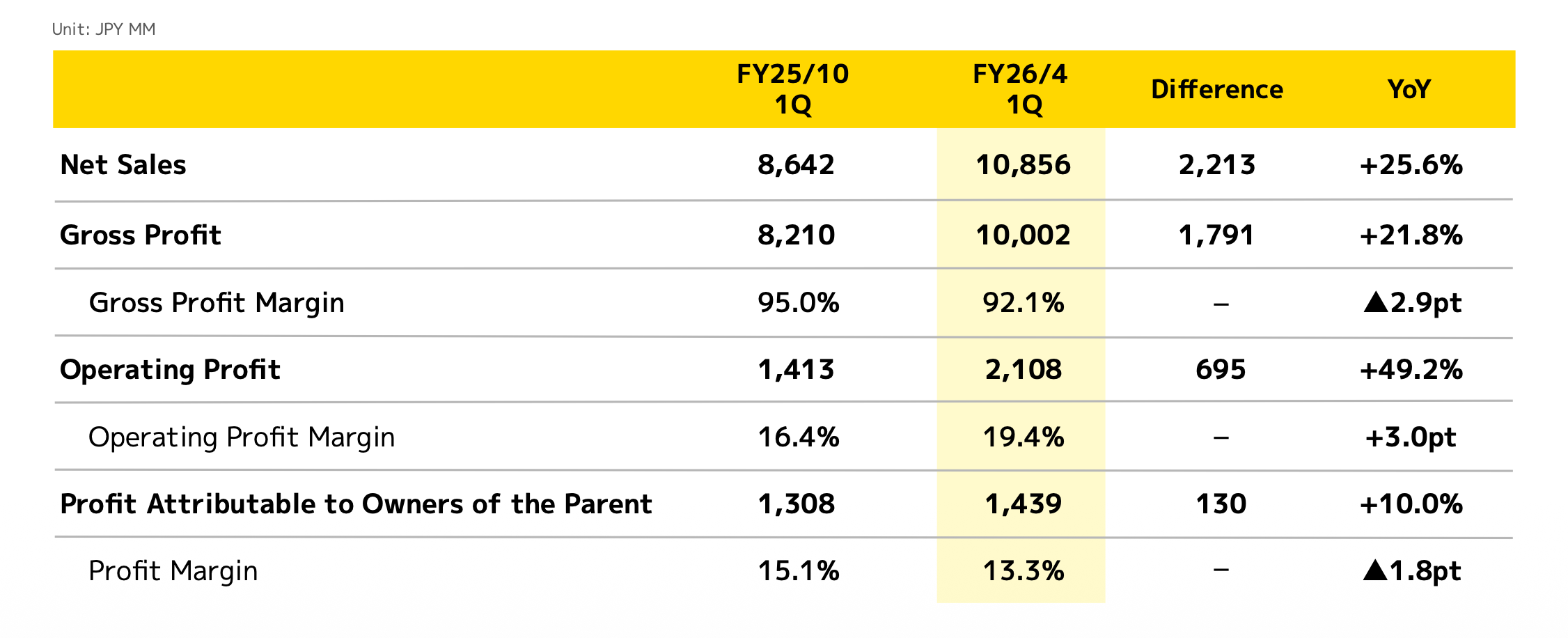
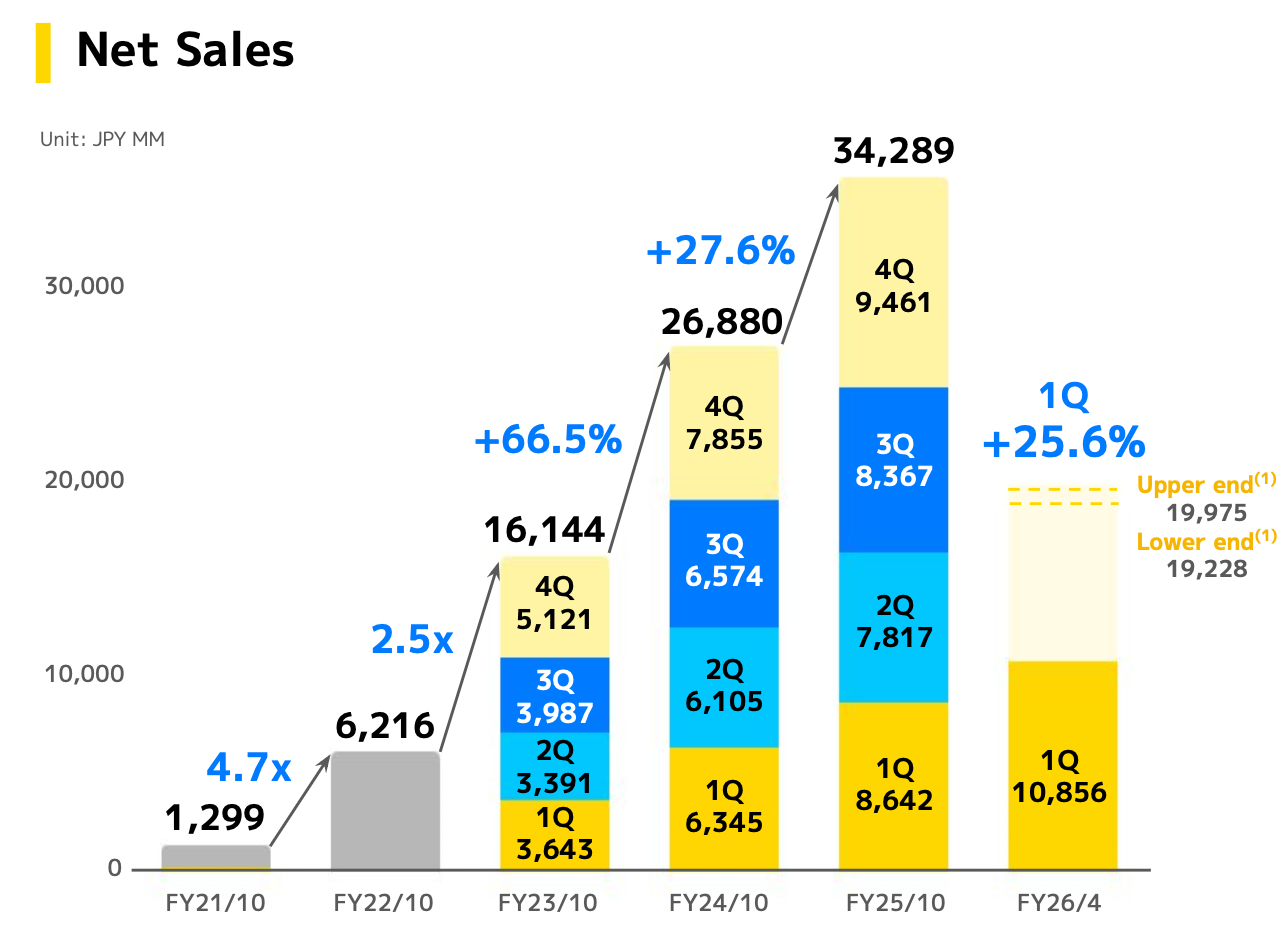
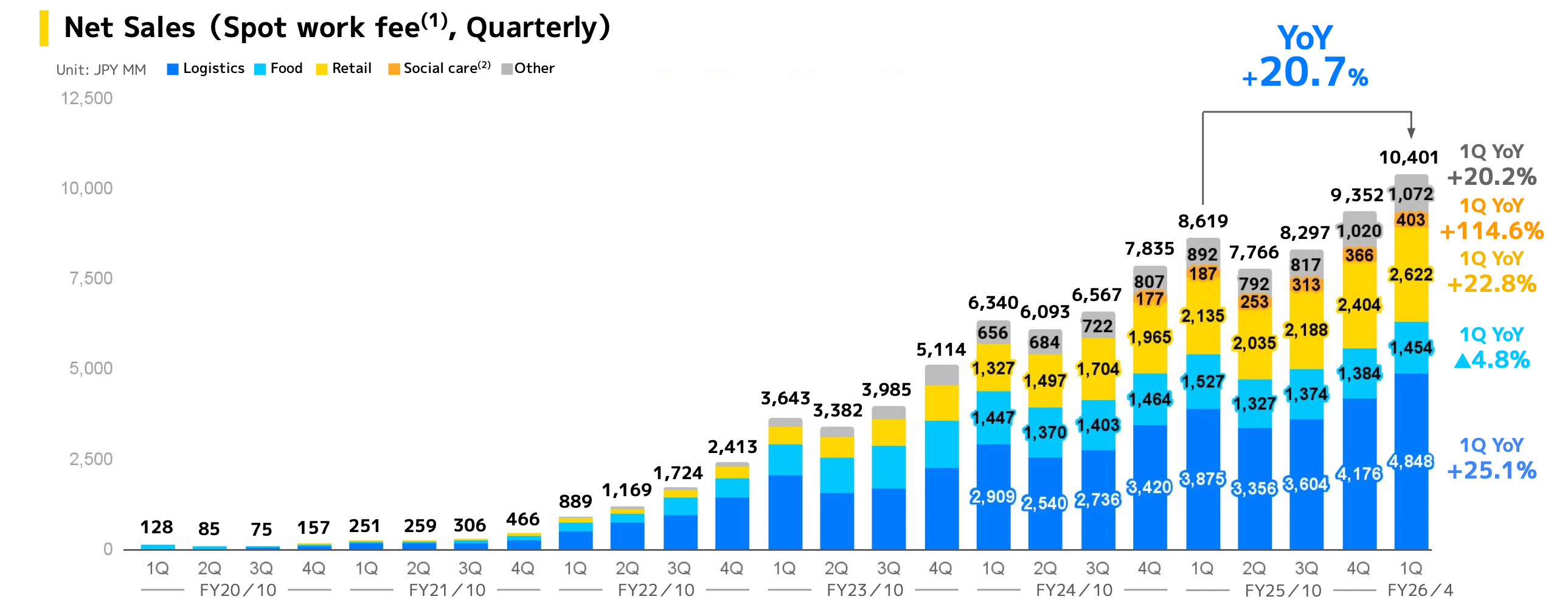
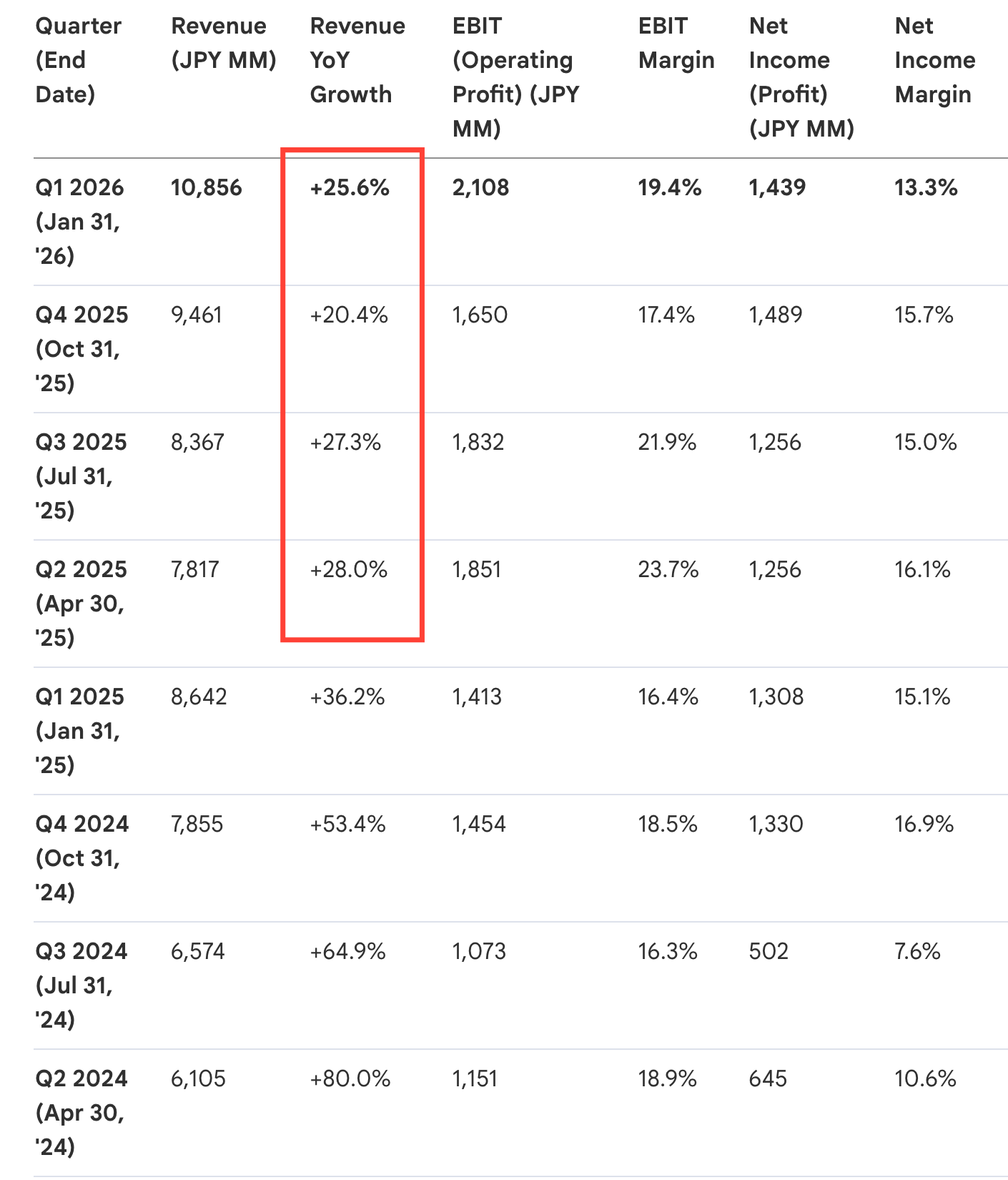
Timee, Inc. delivered a phenomenal performance for the first quarter of FY26, reporting net sales of JPY 10.85 billion, which marked a 25.6% year-on-year (YoY) increase.
This was accompanied by a 49.2% YoY surge in operating profit, reaching JPY 2.10 billion. The company’s strong growth surpassed internal expectations, prompting a revision of its full-year guidance.
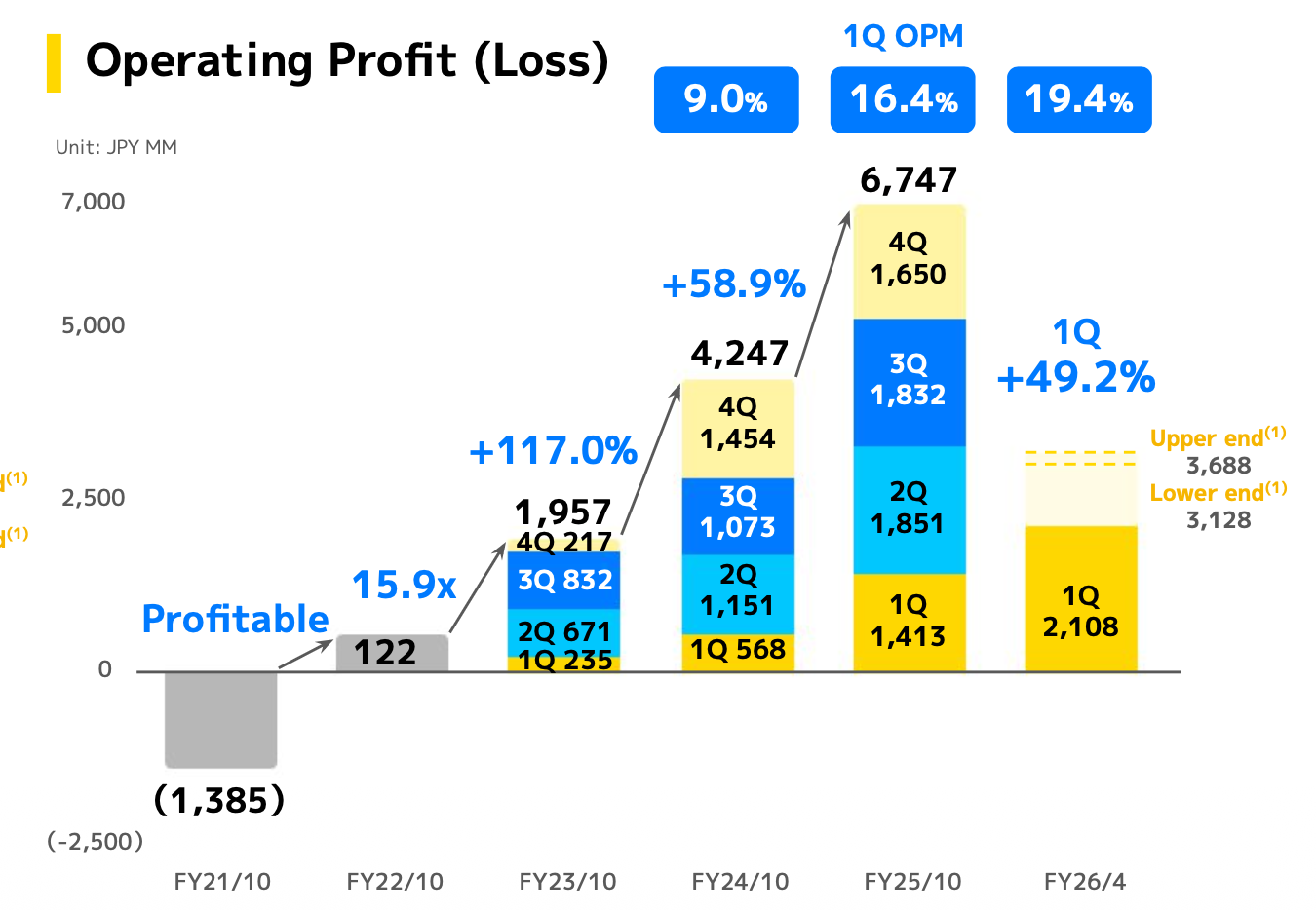
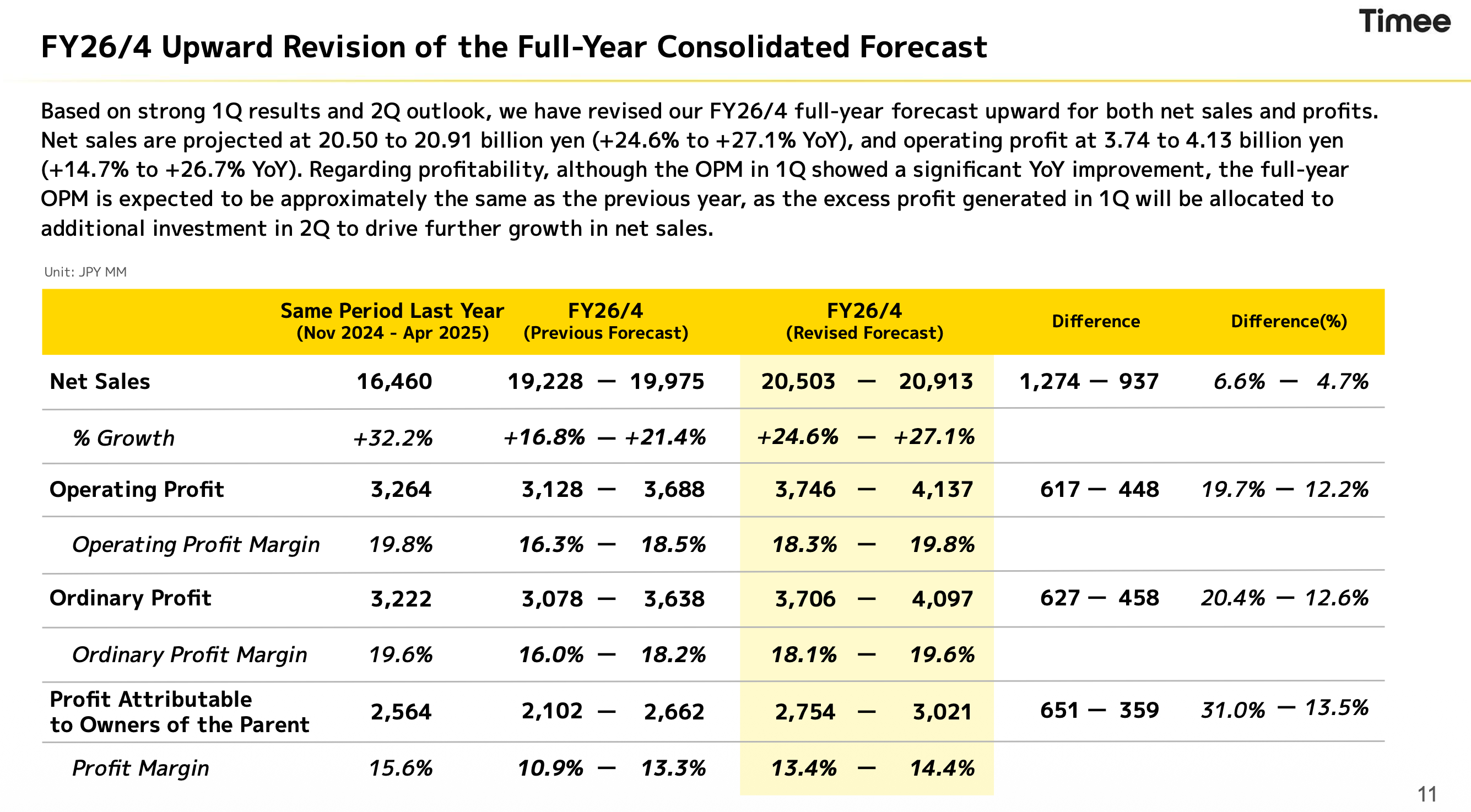
The revised forecast now projects net sales of JPY 20.5 billion to JPY 20.91 billion, reflecting an increase of 24.6% to 27.1% YoY, and operating profit of JPY 3.74 billion to JPY 4.13 billion, an increase of 14.7% to 26.7% YoY.

Key Performance Indicators
Timee’s strong Q1 results were driven by a combination of factors, with its core spot-work platform continuing to grow and improve in efficiency.
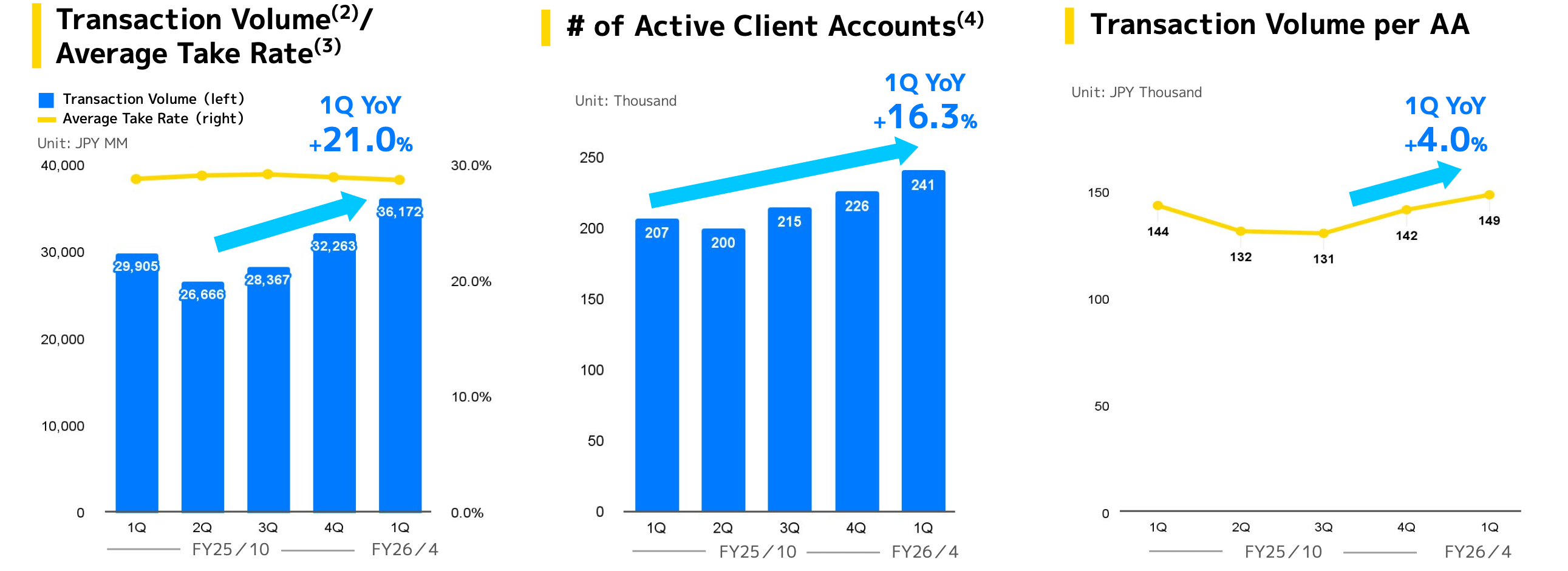
Transaction Volume (GMV): This metric reached JPY 36,172 million, up 21.0% YoY, driven primarily by a significant increase in the number of active workers.
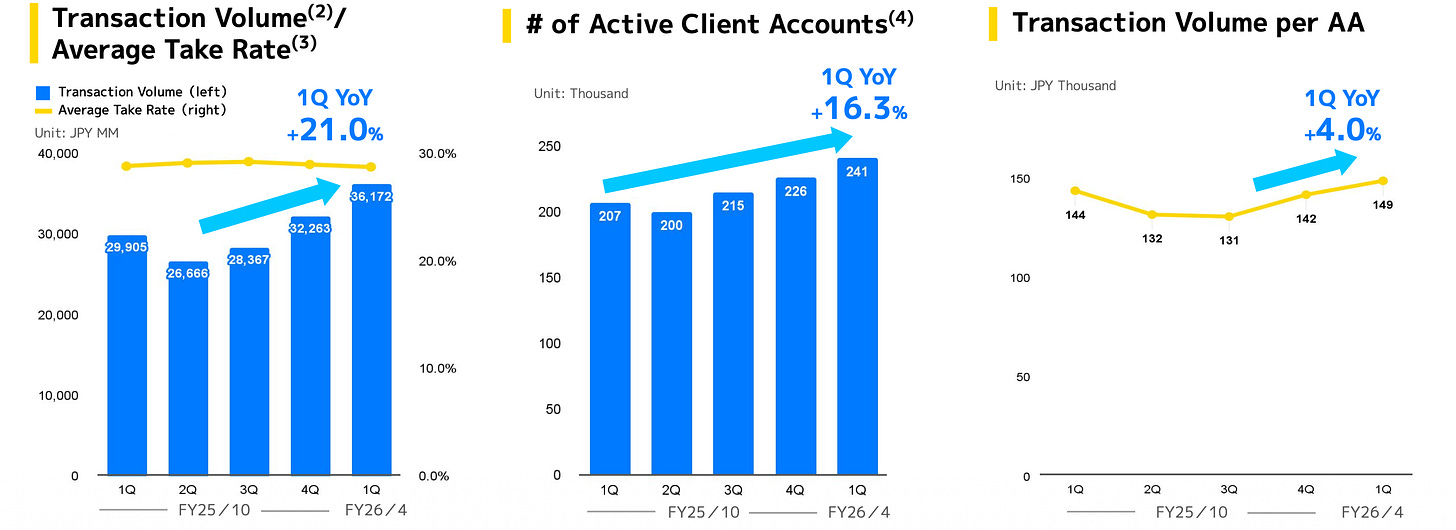
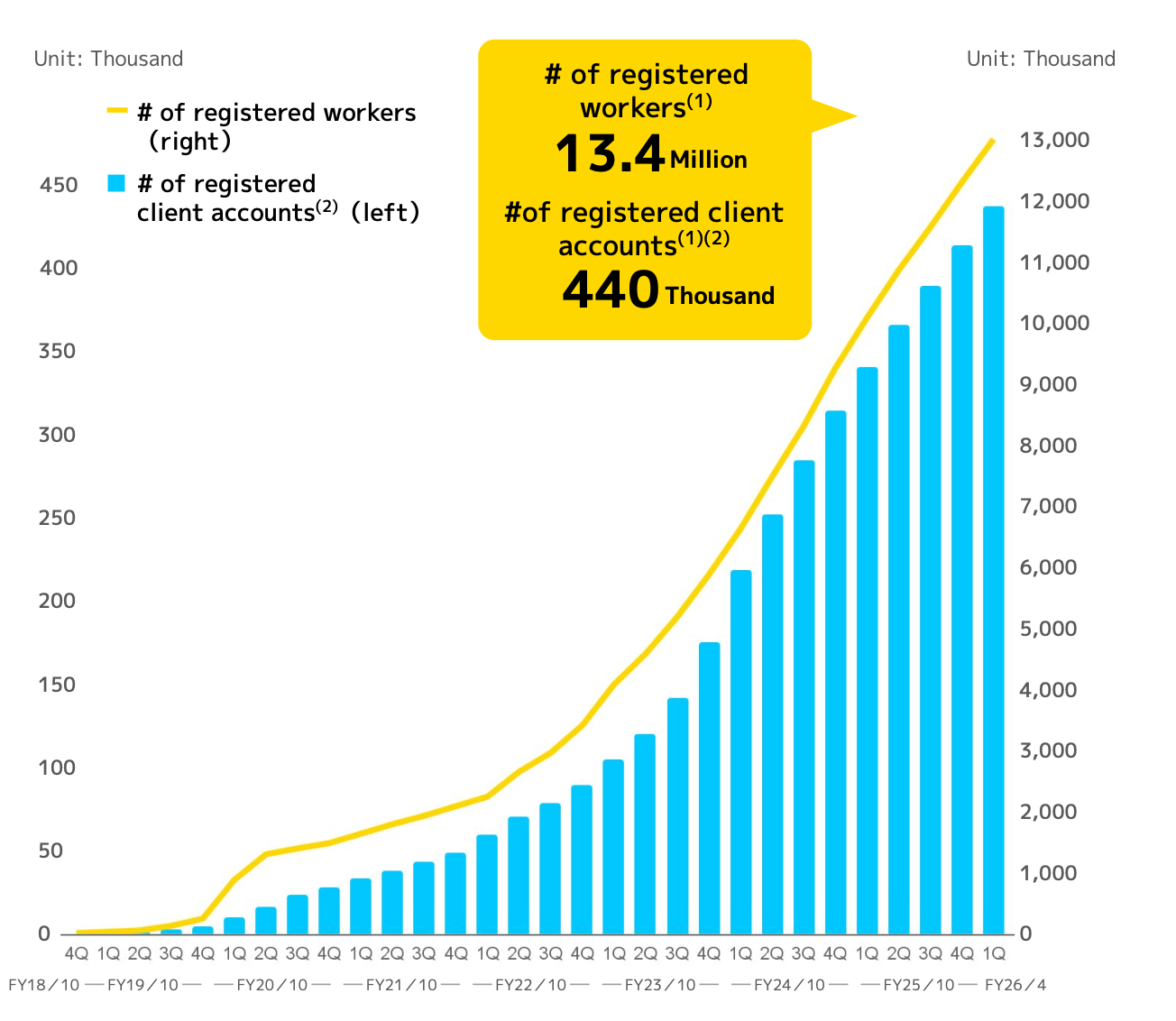
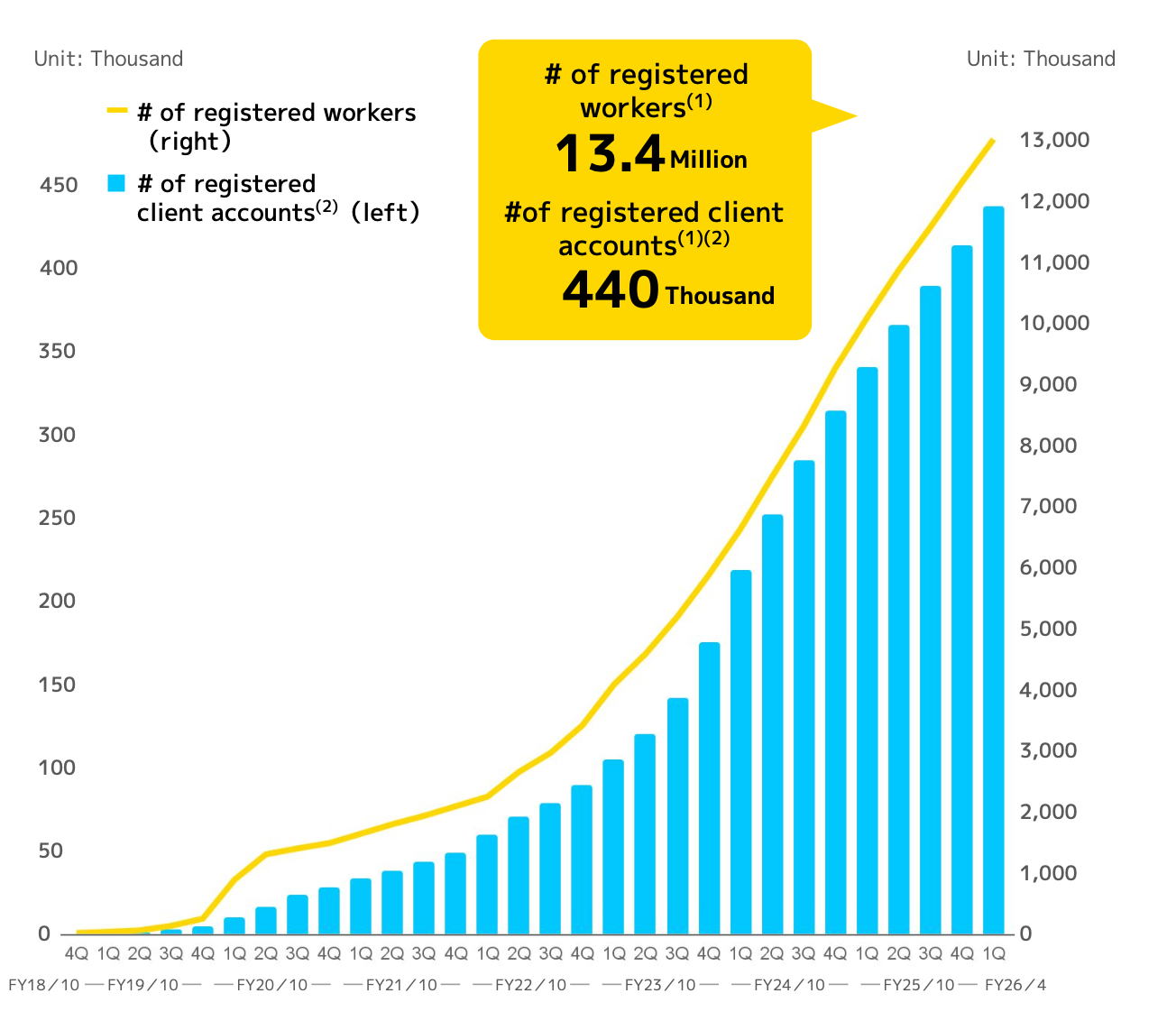
User Base: Timee’s registered workers now exceed 13.4 million, with 440,000 registered client accounts, indicating a growing network effect that benefits both employers and workers.
Fill Rate: Despite the busy peak season, the company maintained a solid fill rate of 84.9%, up 0.3 percentage points from the previous year. To remind you of the relevance of this KPI, read the excerpt below from Bristlemoon’s recent investor letter.
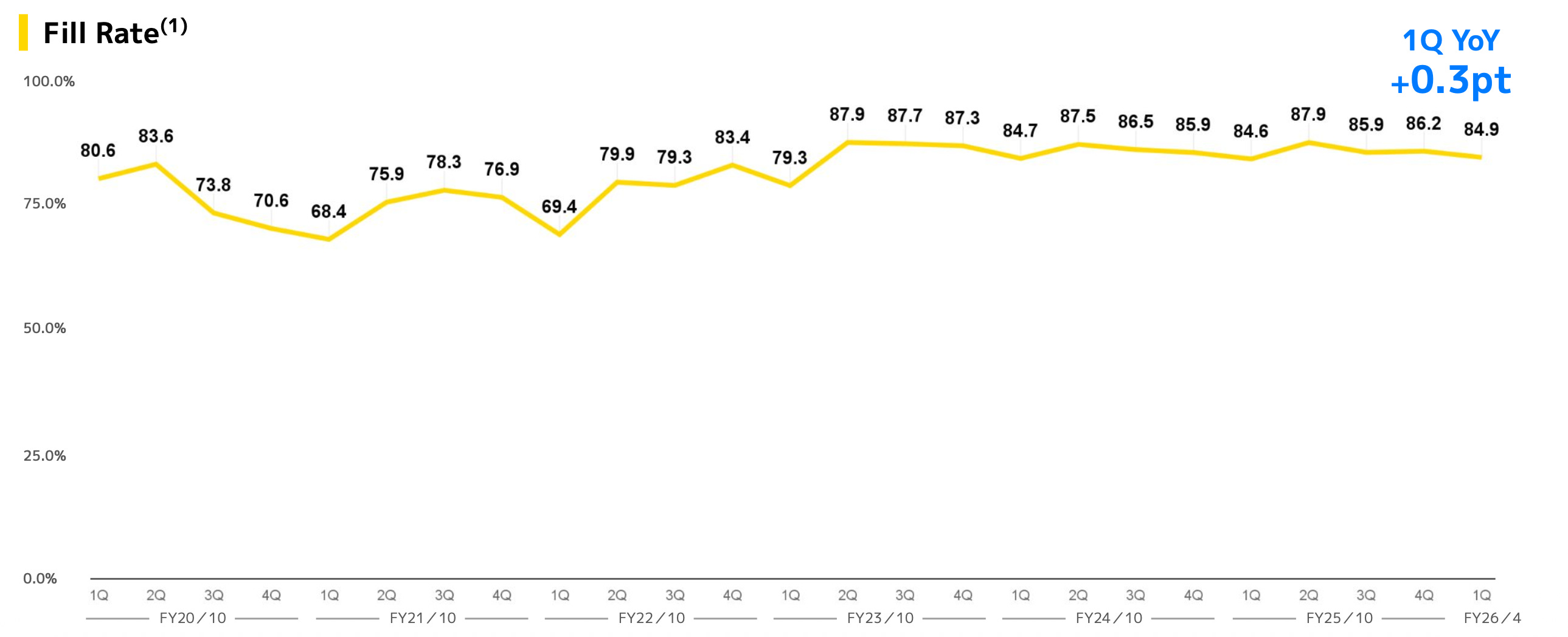
“This retreat by a key competitor validates our view that Timee’s network is incredibly difficult to replicate. Scaling a spot work marketplace requires maintaining a delicate, hyper-local equilibrium between supply and demand. If the platform tilts too heavily towards workers, job fill rates remain high but workers leave due to a lack of available shifts. Conversely, if job postings outstrip worker density, employers experience low job fill rates and churn off the platform.“ - Bristlemoon December 2025 Quarterly Letter
Take Rate: Timee maintained a high take rate of 28.8%, which remains stable despite increasing competition in the gig economy.
Sector Performance and Industry Developments
Timee’s performance varied across key sectors, with logistics and retail being standout drivers of growth, while the food industry continues to face significant challenges. Here’s a breakdown of how different industries contributed:
Logistics: The logistics sector showed notable improvement during its first peak season since the full-scale implementation of the onboarding burden reduction project. The recruitment of Field Managers (FMs), who are responsible for worker training on-site, exceeded expectations, allowing the company to maintain high fill rates even during the busiest periods.
Retail: Growth in the retail sector was supported by business process reengineering (BPR) initiatives, which helped increase GMV per active account by 8.5% YoY. Sub-industries like drugstores also began to show signs of expansion, contributing positively to overall growth.
Food Industry: This sector continues to struggle, showing a YoY decline of 4.8% as clients in the food industry continue to implement cost containment measures. Despite this, management reported signs of individual recovery, especially from new solution proposals that are being tested with select clients.
Social Care: In contrast, the social care sector – while still small – was one of the major success stories in Q1, with GMV growing 115.7% YoY and the number of active accounts increasing by 147.6% YoY. This strong growth underscores the sector’s increasing importance and Timee’s growing footprint in healthcare and welfare.
Strategic Initiatives and New Business Ventures
Timee is taking aggressive steps to expand its business model beyond simple spot-work matching, aiming to address broader client needs:
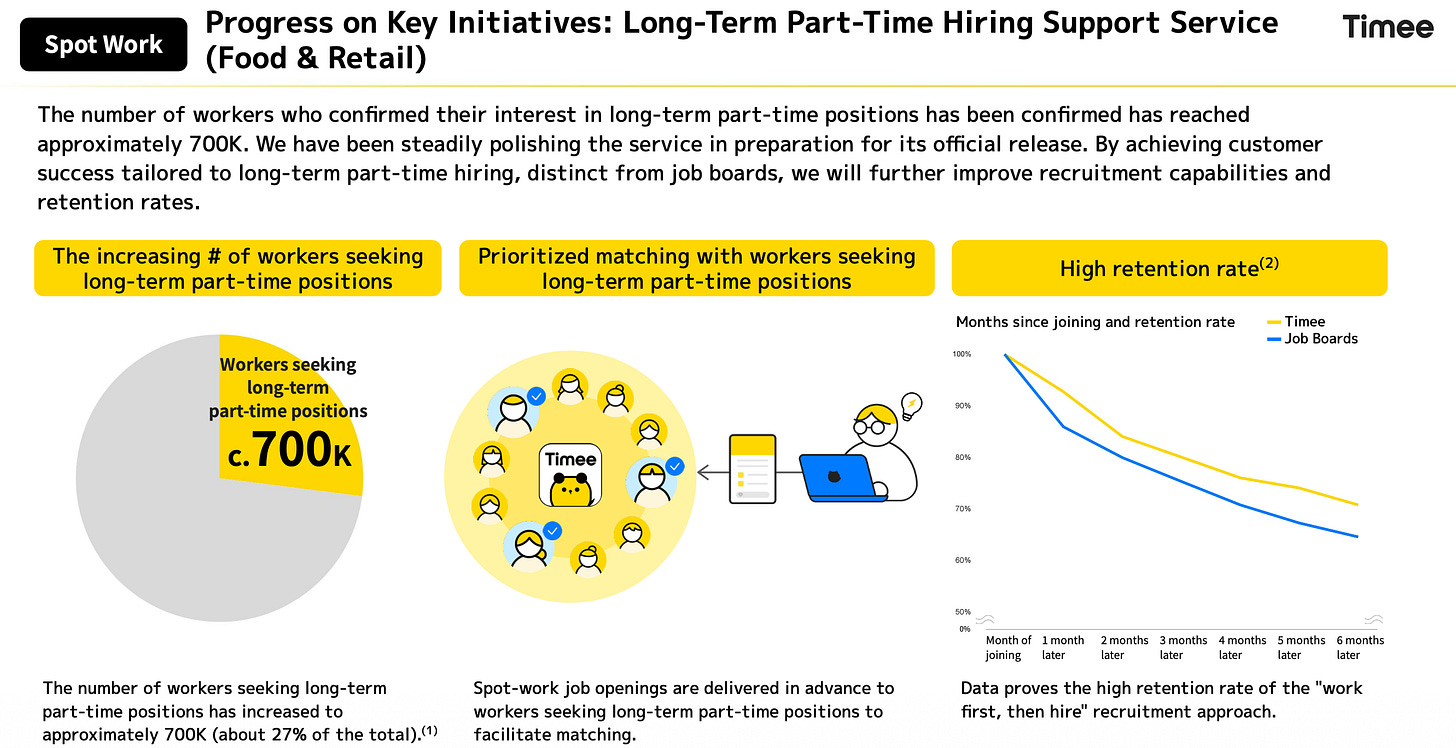
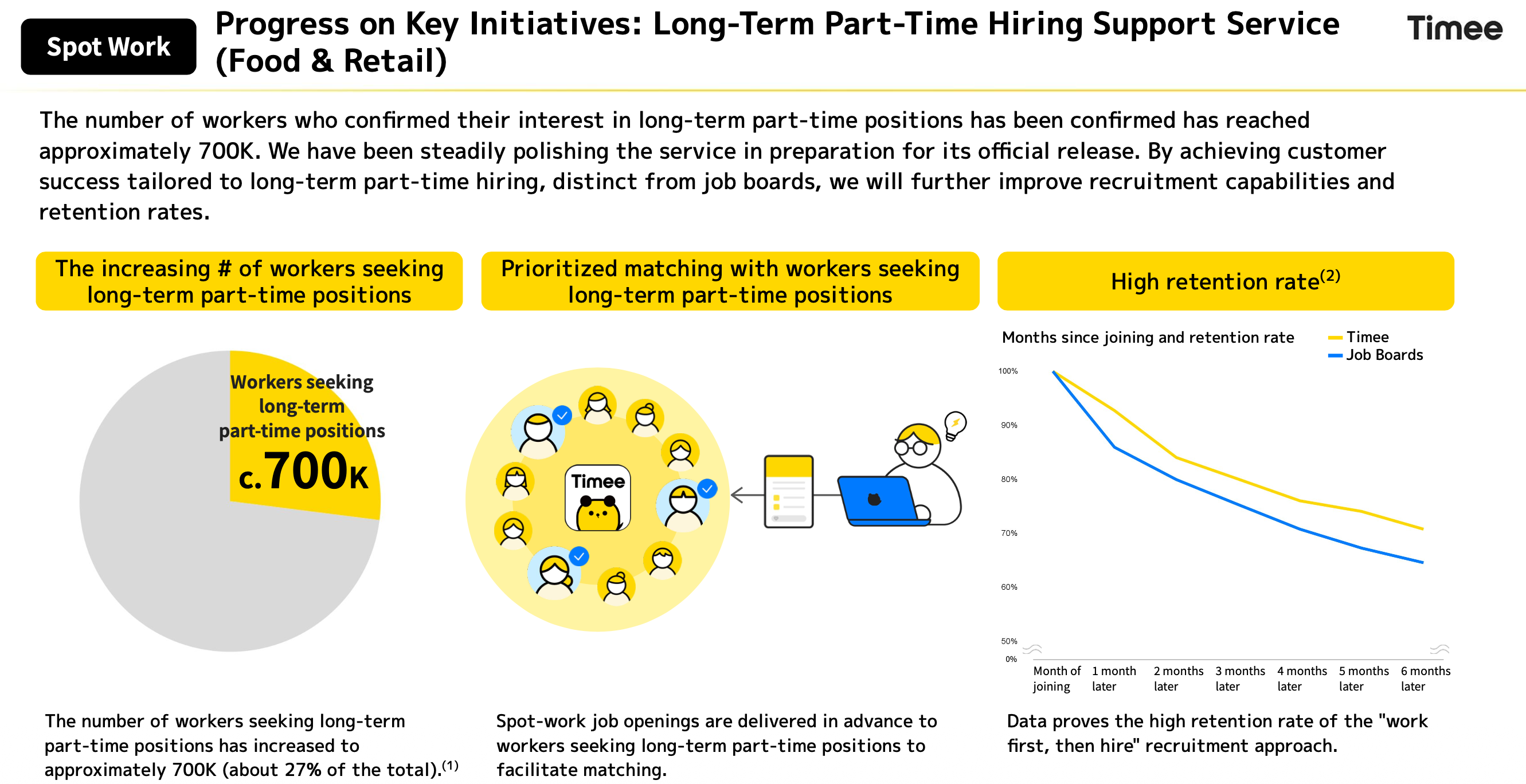
Long-Term Hiring Support: A new service is being developed to allow clients to hire workers for permanent positions after utilizing Timee’s spot-work platform. This service, which is targeting a formal launch in summer 2026, already has 700,000 workers (27% of total) expressing interest in transitioning to long-term roles. Early data suggests these hires show higher retention rates than workers sourced through traditional job boards.
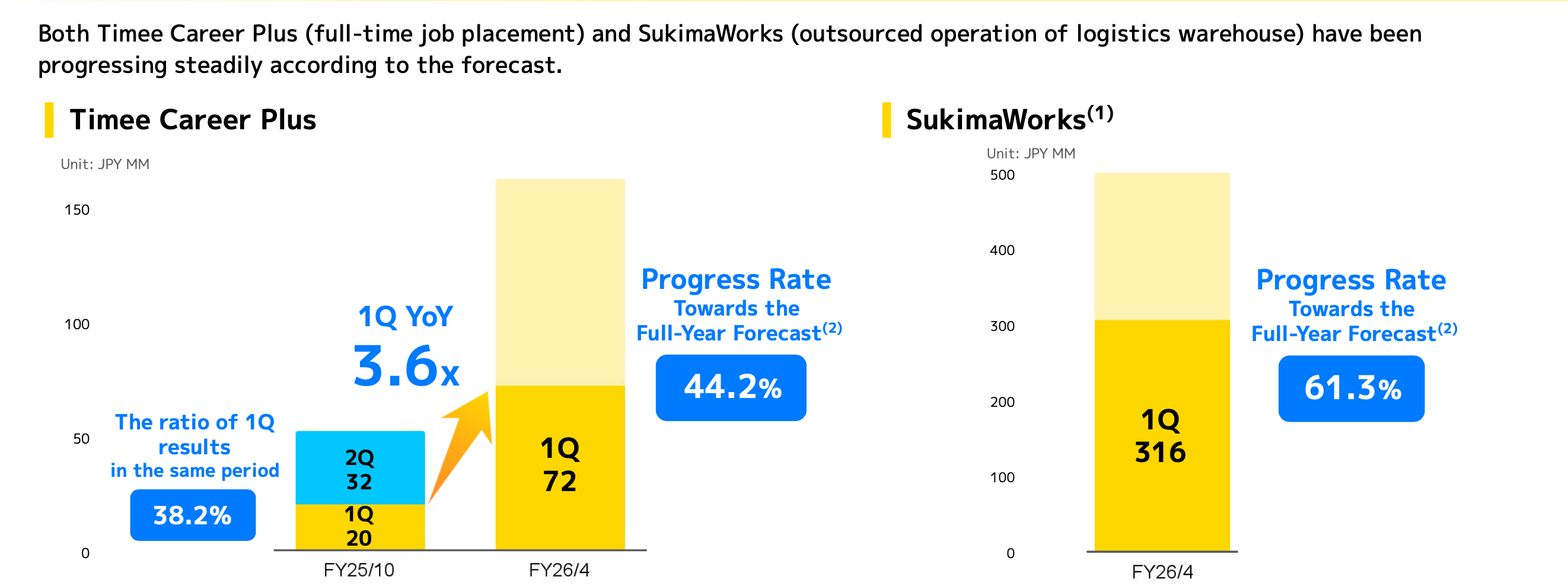
SukimaWorks: This logistics warehouse outsourcing business, now fully consolidated into Timee, reported ¥316 million in revenue for Q1 and is progressing smoothly toward meeting its full-year target.
Timee Career Plus: The full-time placement service saw strong growth, with net sales increasing by 3.6 times YoY, reflecting the broader expansion of Timee’s services beyond temporary labor.
Addressing the Sell-Off: Concerns and Reassurance
As highlighted in the introduction, previously investors had been concerned that Timee had matured too quickly and had already hit the total addressable market (TAM) ceiling, particularly in its core sectors. Concerns about slower growth were exacerbated by the food sector’s struggles and the belief that the company’s growth potential had been overestimated.
However, Timee’s impressive Q1 results, upward revision of guidance, and strategic diversification into sectors like social care, long-term hiring, and full-time placement services are a clear indication that growth is far from stalled. I’ve attached the quarterly YoY growth rates below - in Q1 growth reaccerlated.
The company is actively reengineering its approach to capture new market opportunities, particularly in high-growth sectors like logistics, retail, and social care. Additionally, Timee’s ongoing investments in AI-driven processes and physical robotics suggest a future where the company can leverage its data and field expertise to stay ahead of market trends and technological disruptions.
The strong Q1 performance has set a solid foundation for Timee’s growth trajectory in FY26/4. With its upwardly revised full-year forecast and continued expansion into new sectors, Timee is proving that it has the agility and vision to navigate market challenges.
Investors who were concerned about the company’s growth potential in the wake of the stock sell-off should now take a closer look at the diversification strategy and the growing demand in key sectors.
2) The Earnings Call: Key Insights
In the Q1 earnings call for Timee, some qualitative insights emerged – for me at least. These discussions revealed more about the company’s strategic direction, plans for reinvestment, shareholder returns, and operational challenges.
Fiscal Year Shift: Aligning Resources with Peak Demand
One of the significant changes discussed during the call was Timee’s shift from an October-end fiscal year to an April-end fiscal year. This move was driven by the company’s aim to better align internal resources with the peak demand periods from clients, particularly in industries like logistics and retail, where year-end (holiday) periods are crucial.
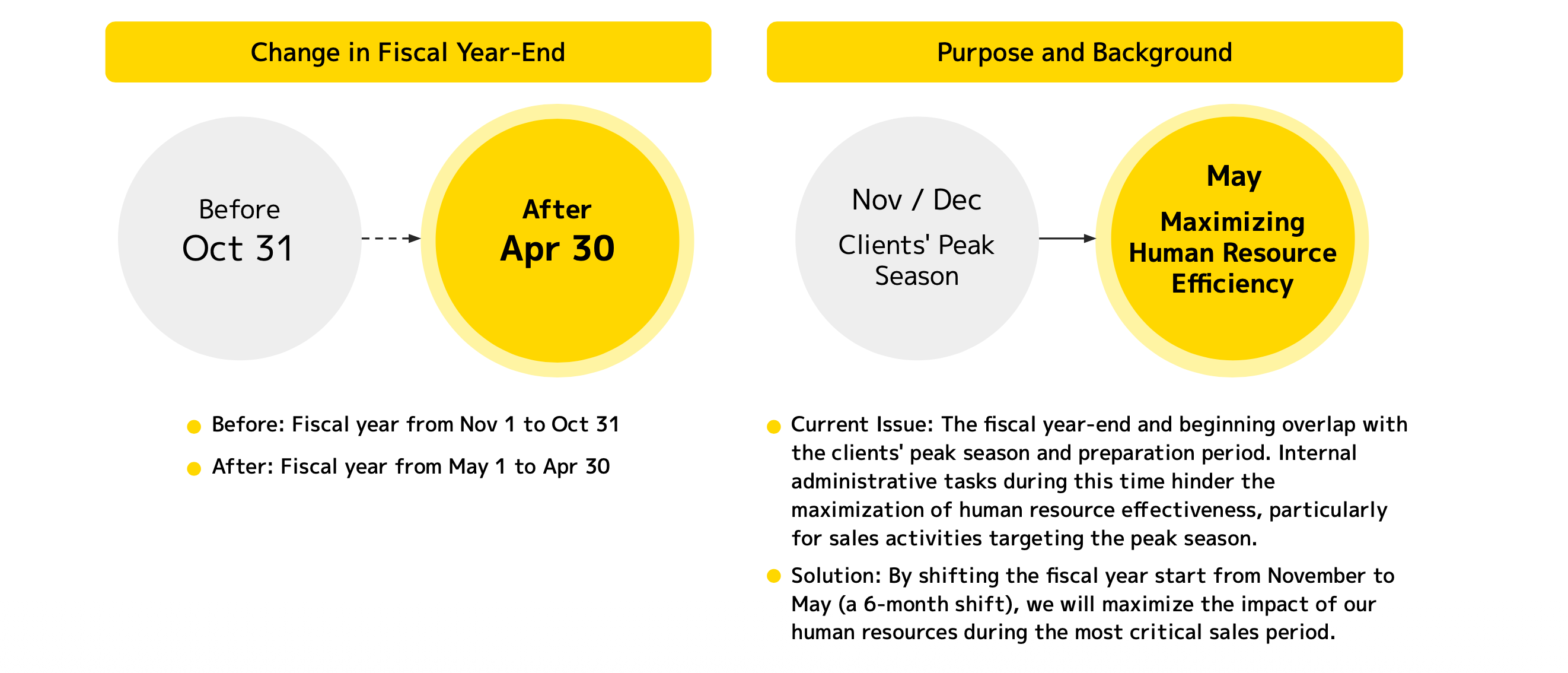
CEO Ryo Ogawa explained that the previous fiscal year-end, in October, created internal challenges, particularly during the November and December months, when the company struggled with handling the transition period’s administrative tasks while still preparing for the peak season ahead. As Ogawa put it:
“The reason background behind this is... the year end is a busy season not only for the logistics but also for the food and retail including Christmas sales period which is a crucial timing for everybody to make money. On the other hand, when the fiscal year ends in October, November and December coming, it becomes challenging internally for us within the company to handle the start of the period response and also the various administrative tasks. So the challenge was the crucial critical timing when we needed to have the greatest impact. We were unable to fully maximize the resources available. So this time we have decided to shift the fiscal period by half year to ensure we can properly allocate resources to engage with the customers."
Growth Outlook: Reinvesting for Long-Term Scalability
Despite the strong Q1 performance, management emphasized that this period would be characterized by aggressive reinvestment rather than focusing on immediate margin expansion. CFO Tomoaki Yagi clarified that Timee views the current phase as one of investment and preparation for future growth, stating:
“So as I mentioned earlier the this first quarter both this one and also the second quarter there is a plan to further accelerate the investment. So rather than starting from May, our current assumption is that this growth will apply to uh the next fiscal year based on the October uh the fiscal year. So okay so this means that starting from the next fiscal year second half under the new fiscal year period changing. Yes. So we will review the contribution of the investment to the sales revenue on quarterly basis. So there may be some fluctuation in timing. However, I we intend to continue investing steadily through first quarter, second quarter, third quarter as well as the second half of the next fiscal year period.“
The company’s strategy is to accelerate investments throughout the current fiscal year, with a focus on worker marketing, which will play a central role in expanding the workforce and scaling the platform.
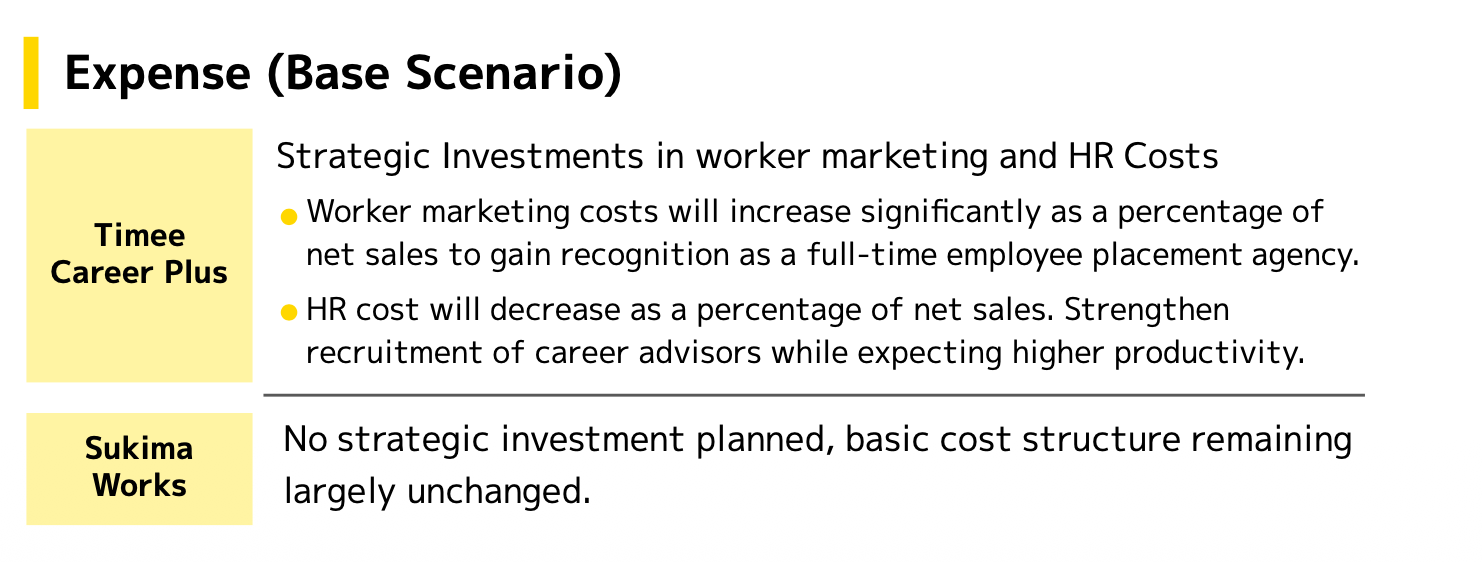
The intention is clear: Timee is preparing to continue on its growth reacceleration trajectory.
Shareholder Returns: A Conservative but Strategic Approach
When it comes to returning capital to shareholders, Timee’s management took a conservative stance, opting to prioritize growth investments first. However, as noted on one of the slides, “to prevent the excessive accumulation of internal reserves, any cash not utilized for growth investments is to be returned to shareholders.“ That’s not a typical comment considering that this is a Japanese management team.
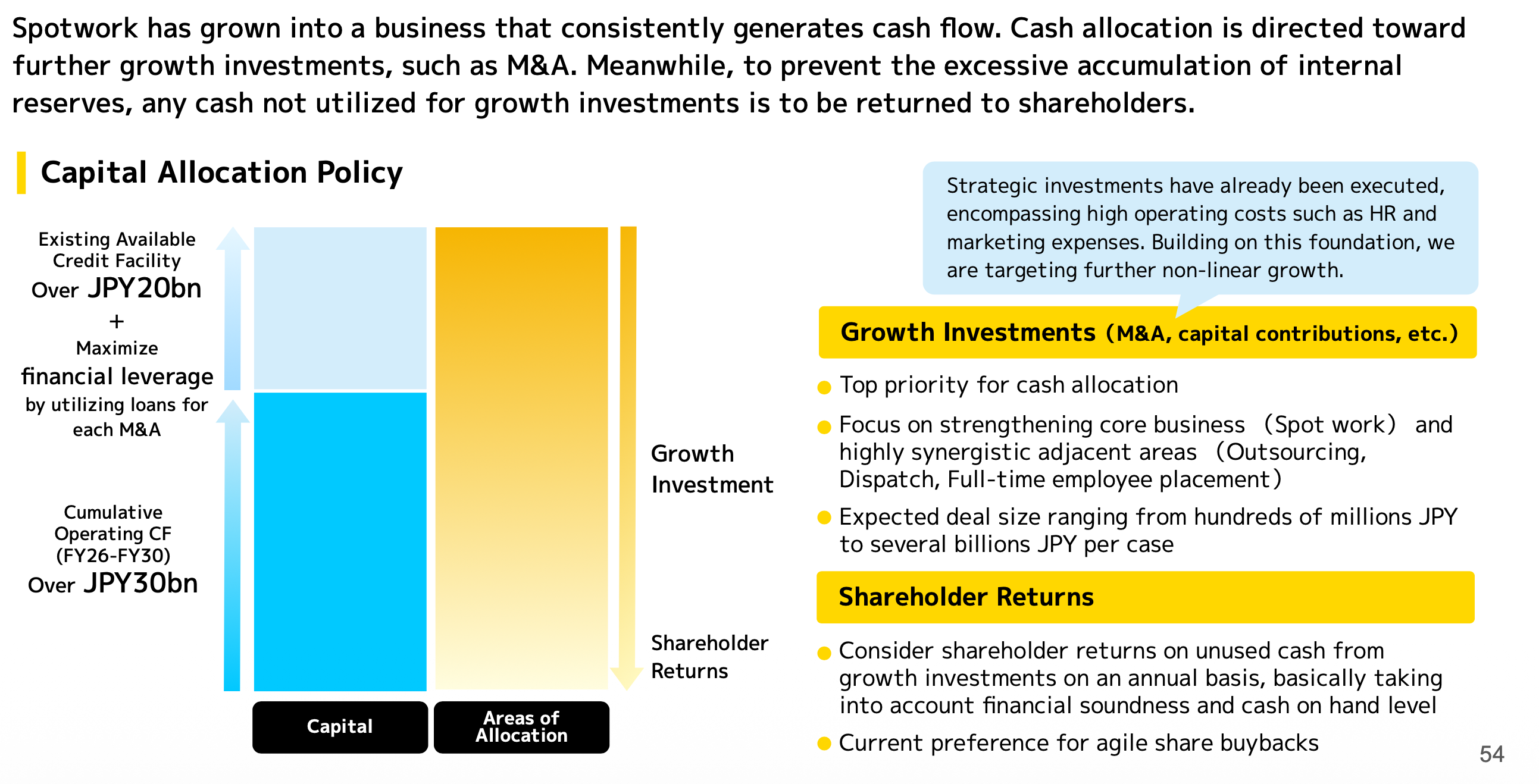
They maintained overall that expansion remains the top priority, with share buybacks being considered only if capital is not fully utilized for expansion efforts. Ogawa noted:
“We would prioritize growth investments first and foremost... if we are still unable to fully utilize that budget, taking into account cash liquidity... we will also consider buybacks or other forms of shareholder returns”.
Working Capital Requirements: Managing the Cash Flow Challenge
The nature of Timee’s spot-work business requires significant liquidity to handle the daily outflow of cash to pay workers. CFO Yagi explained the operational risks associated with the company’s cash flow management:
“The cash and the deposit equivalent to the total transaction volume expected in March should be available at the end of February... otherwise the money will be just flowing out every day throughout the month”.
This remark highlights the importance of maintaining a high liquidity buffer to ensure smooth operations, particularly as large sums of money are needed to facilitate worker payments before the company receives reimbursement from clients. Yagi further added that monthly transaction volumes could exceed 10 billion yen ($62 million), underlining the scale at which Timee operates and the importance of having sufficient capital to keep its operations running smoothly.
In sum, from the earnings call, it’s clear that Timee is in a critical phase of scaling its operations, with the focus on reinvesting profits into long-term growth strategies. The company is positioning itself for a growth acceleration phase in the coming fiscal year, and the transition of its fiscal year-end is a strategic move to ensure it can fully capitalize on resources during peak demand periods. While shareholder returns are important, they are secondary to ensuring that Timee continues to expand its capabilities and market presence.
The company’s focus on strategic investments, including worker marketing, long-term hiring support, and expanding into new sectors like social care, provides a solid foundation for growth. The upcoming second fiscal quarter will be key in accelerating these investments and ensuring that Timee’s future growth story is realized.
3) Insights from the Fireside Chat with Bristlemoon Capital
In a fireside chat with Bristlemoon Capital, CEO Ryo Ogawa offered an in-depth look at Timee’s strategic vision, market positioning, and future growth opportunities. He discussed the company’s dominant market presence, expansion into long-term hiring, and potential international markets, while also addressing the consumer-to-consumer (C2C) opportunity and potential technological risks.
The C2C Market Opportunity
A significant area of future growth for Timee lies in expanding into the C2C (consumer-to-consumer) market, which can be compared to platforms like TaskRabbit. TaskRabbit is an online and mobile marketplace, founded in 2008 and acquired by IKEA Group in 2017, that connects freelance service workers (”Taskers”) with local demand for everyday help. It specializes in furniture assembly, cleaning, moving, and handyman services across thousands of cities in nine countries.
Ogawa explained that Timee’s B2C model (business-to-consumer) needs to first establish a strong foundation of trust before moving into C2C services. The key element here is reliability, as trust is crucial when workers enter private homes.
“We definitely consider that a possibility. We first wanted to establish the B2C business because we wanted to know which worker is reliable and trustworthy. That is really important when establishing C2C because you need to consider crime risk—somebody visiting your house to deliver something or entering your house to help with chores. In order to expand to this, we need to reduce that risk as much as possible.”
Timee’s ability to vet workers through its platform and gather data on worker reliability is seen as the foundation for making a transition into C2C services, where safety and trust are paramount. Once this trust is established through their existing business model, Timee believes it can expand into the growing market for at-home services, such as home repairs or personal assistance, where consumers increasingly seek flexibility and trustworthiness.
International Expansion: The Korea Opportunity
Ogawa also spoke about Timee’s ambitions for international expansion, specifically targeting South Korea. He highlighted the structural labor shortages in South Korea, which mirror those seen in Japan due to an aging population, low birth rates, and limited immigration. These demographic trends make the country an ideal market for Timee’s on-demand labor solutions.
“Our intention is to leverage the knowledge we gained in the Japanese market and provide a solution to other countries who are suffering from severe labor shortages. We see a lot of similarities between the Korean market and the Japanese market—aging society, low birth rate, and few immigrants. That’s why we see the opportunity there. We have established a very close relationship with Lotte in Korea to work together.”
Timee’s partnership with Lotte, one of South Korea’s largest conglomerates – Lotte Corporation is the fifth-largest chaebol in South Korea –, underscores the strategic importance of this market.
By adapting its Japanese business model to South Korea’s specific needs, Timee is positioning itself to expand internationally in a way that is both scalable and impactful. This move is also part of Timee’s broader global growth strategy, where the company can bring its successful platform to markets grappling with similar challenges in workforce management.
According to my estimates, the opportunity for Timee in Korea is likely in the range of 0.4x to 0.5x of the Japan opportunity.
Strategic Shift to Long-Term Hiring
A major strategic shift for Timee, discussed in the chat, involves competing with traditional job boards by offering a “try-before-you-hire” approach. This initiative allows companies to use spot work as a trial period for permanent roles, effectively solving the high turnover problems that often plague traditional recruiting methods. This long-term hiring support aims to leverage Timee’s existing infrastructure to build stronger relationships between employers and workers.
“What we are offering is that if any business is willing to hire people for the long term, we open up an additional matching service. They can use the existing spot work service as a one-time trial, and if both sides like how the trial goes, it evolves into a long-term position. This is the way we offer the benefits that job boards offer... especially in this long-term market, our advantage is the fact that they can use Timee as a one-time trial before actually hiring somebody.”
This innovative approach creates value for both workers and employers, ensuring that companies can reduce hiring risks and workers can gain a deeper understanding of their potential future roles.
Overall, one key takeaway – or rather it’s confirming part of my thesis – is that Timee possesses a lot of options to continue growing at high rates for years to come. The excerpt below confirms this as well:
“Even just talking about spot work, we still have more room to grow this existing business because we are expanding to different segments. The new areas include elderly care, which requires qualified licenses, and also the rental car business—for example, workers who drive a car from a drop-off location back to the original location. And also, how we “fight back” within the food and restaurant industry. We are trying to go against traditional job boards, which are our competitors. What we are offering is that if any business is willing to hire people for the long term, we open up an additional matching service. They can use the existing spot work service as a one-time trial, and if both sides like how the trial goes, it evolves into a long-term position. This is the way we offer the benefits that job boards offer.
Also, another future opportunity could be fintech—we lend money to the workers utilizing the credit we have from our service. And also expansion abroad. We are currently investing in a Korean version. Globally, but mainly in Asia, we try to incorporate our knowledge of managing the spot work business together with local companies.”
Technological Risks: Robotics vs. AI
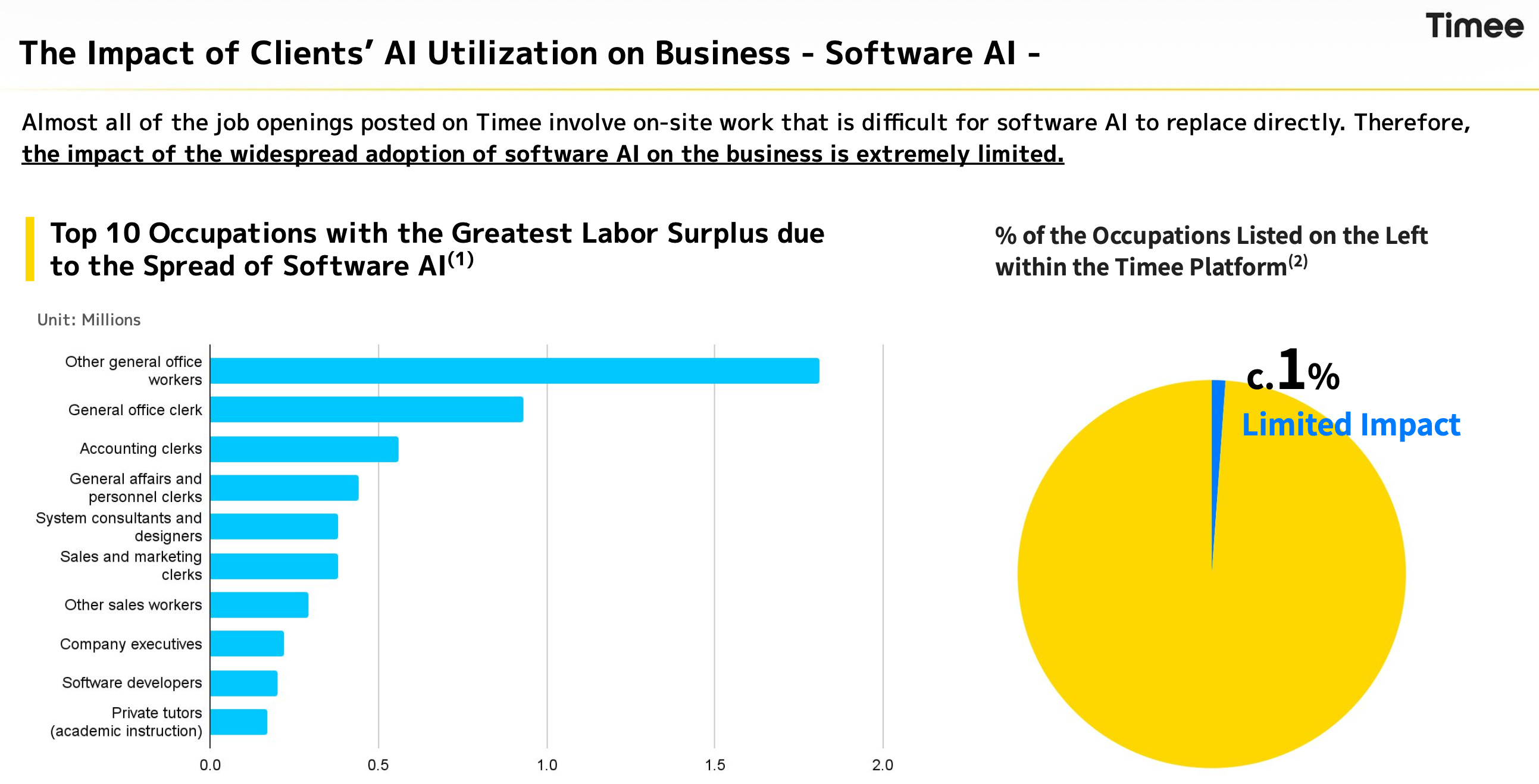
Finally, Ogawa acknowledged that while AI is already part of Timee’s platform, the real long-term risk to its business model could come from robotics – particularly in logistics and other physically demanding sectors. While he noted that robotics combined with AI is a potential future threat, he emphasized that such technological disruption is still years away.
“As part of the risk, we need to consider robotics. Robotics plus AI is something we might see as a threat—for example, in logistics centers if warehouses introduce more automation. In that case, the use of spot workers would decline. But building an automated warehouse takes a lot of time; it won’t happen over the next two or three years. We might see that threat in about 10 years. In order to counter that, we are looking for the right timing to expand our business into that area as well.”
While automation and robotics may eventually reshape sectors like logistics, Ogawa’s comments suggest that Timee has time to adapt and evolve its business model, integrating technology where appropriate, without sacrificing the human elements that are central to its value proposition.
In fact, Timee decided to make the slide below the very first one in their Q1 slide deck:
4) Updated Valuation
Let’s take a quick moment to dive into Timee’s valuation. Interestingly, Timee’s stock popped 7-8% on the day of reporting, but trended down again in the subsequent days. So are we looking at an attractive opportunity here?