

Dear Compounders,
As I recently shared, between roughly 2019 and 2023, I wrote a three-volume investment framework that runs to about 2,100 pages. Thousands of hours went into it, and most of those hours were spent doing something that looks inefficient from the outside: reading hundreds of books, listening to thousands of podcasts and YouTube videos, and trying to decode what I liked and didn’t like and writing down what I had understood in my own words.
“If you don’t want to ever miss a new “Visual Blueprint,” make sure you are subscribed and on the email list!”
Get 3 FREE GIFTS when you subscribe: 📈 Valuation Spreadsheet 📚 eBook: Investing Visualizations 💡 eBook: 250 Thought-Provoking Quotes - Join 4,900+ subscribers.
Today’s Blueprint comes out of a small foundational piece of that project, pats of “Lesson 8.2.” of my framework. The companies that appear in it as examples are simply the businesses I was studying at the time. Slack was still a young growth case. Peloton was the vertical integration showcase, GameStop the fading incumbent, and the Switch OLED an open question about whether Nintendo would move to an iPhone-style hardware cadence.
I finished that work before generative AI existed, and I am glad about the timing. Writing the framework myself is what made the lessons stick.
I am publishing this particular Blueprint now because the market has made its lesson urgent. Sentiment is euphoric, and more importantly, the structure of price discovery has temporarily shifted in a direction that makes business analysis feel like a handicap.
Retail speculators carry leveraged single-name exposure. High-frequency shops and pod-based multi-managers work holding periods measured in weeks. Large institutional allocators have become functionally valuation-agnostic, because career risk punishes them far more severely for being absent from a rising name than for owning it at forty times sales. Robinhood built the interface that trained a generation to check a position the way you check a notification. I discussed these dynamics and some of the implications more thoroughly in the piece below (with which many investors resonated quite a lot).

Whether you can hold anything at all for more than a couple of weeks is now a real-world question for many “investors.”
Are you an owner or a renter?
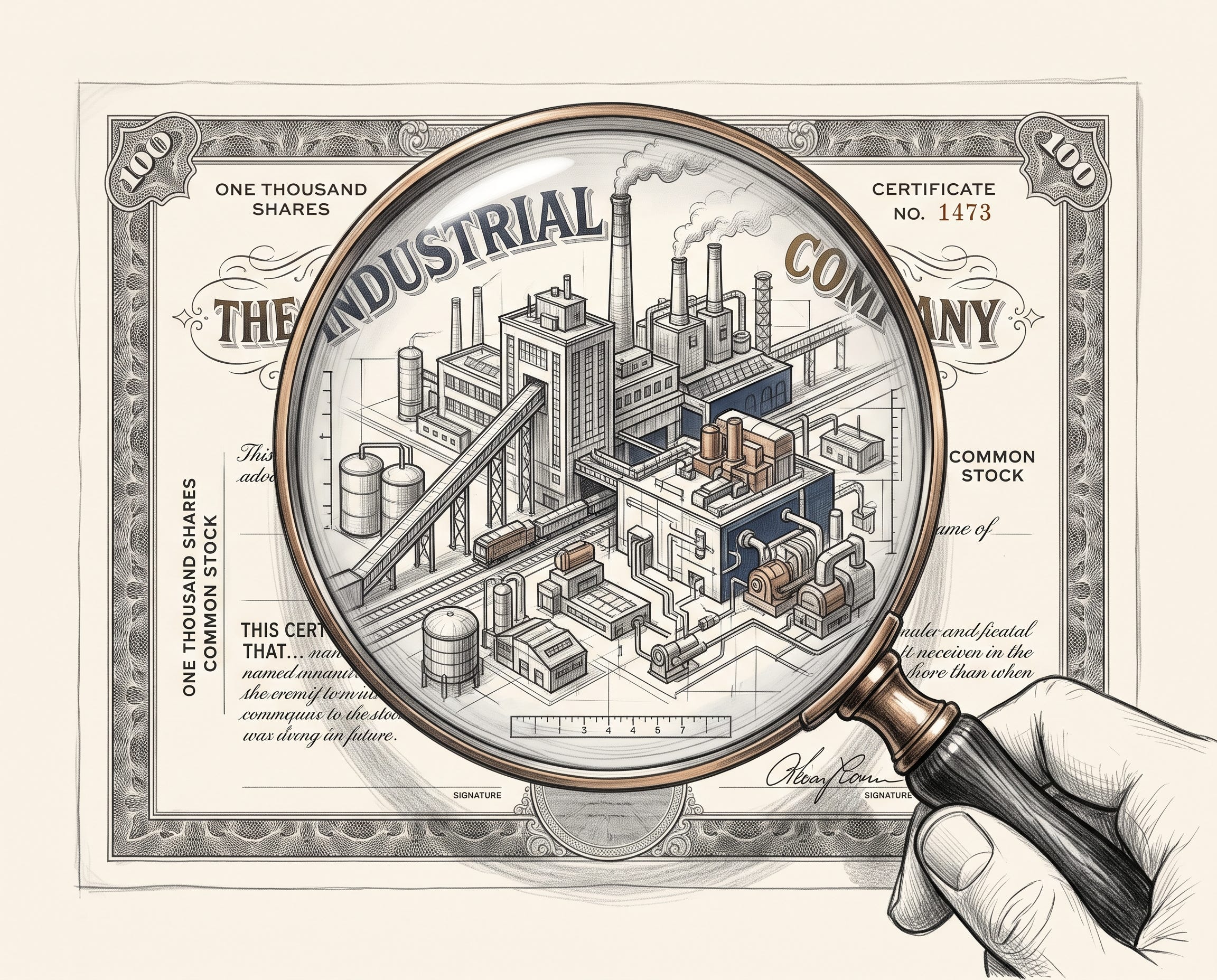
My framework opens with a mindset shift. Pretend you are buying the entire company. Not a share. The whole thing, funded out of your own pocket, with no exit available for a decade.
Graham established the distinction in chapter eight of The Intelligent Investor, and it is the distinction between price and value. Look at what the exercise removes. When you own a business outright, nobody shows you a price every ninety seconds. Your information set collapses down to profits, returns on incremental capital, and competitive position, and those things move slowly, so your behavior moves slowly with them.
Reintroduce a live price quote, and you have handed yourself a second variable, far noisier than the first, that almost everyone reacts to.

One of Buffett’s best investments
The cleanest demonstration of what the ownership frame strips away is Buffett’s purchase of the Washington Post.
If you did not know, Warren Buffett's investment in The Washington Post Company was one of the most successful and famous investments of his career. By 1985, his initial $10.6 million stake had grown to $221 million, compounding at roughly 35% per year. Over 40 years, the investment grew to roughly $1 billion by 2013, representing a return of over 9,000%.
Buffett did not calculate the stock’s beta. He ran no capital asset pricing model, checked no position on an efficient frontier, reviewed no average daily trading volume, and never asked whether the company belonged to an index. He valued the business and bought a piece of it at a substantial discount to that value. The full apparatus of modern portfolio theory was available to him, and he had no use for any of it, because none of it describes earning power.
On pro-rate stakes
There is a second-order point here that most investors miss. Public markets routinely price pro-rata stakes in excellent businesses at discounts you could never negotiate privately.
Pro-rata stakes refer to an investor’s ownership percentage in a company that remains proportional to the total equity.
A strategic buyer taking out a whole company pays a control premium.
You, buying two percent of that same enterprise through an exchange on a panic day, get the discount instead.
Berkshire operates in both markets precisely because the public one is periodically the cheaper of the two. Your inability to acquire entire corporations costs you nothing. The temperament of the people you transact with, exploiting behavioral mistakes, leaning into behavioral edge setups … that is what pays you.
Then run the thought experiment in the lesson. Assume the market closes for ten years the moment you buy. No quotes, no marks. What would you need to believe about the business to be comfortable? Answer that honestly and you have defined your actual research agenda.
Can you say it in two sentences?
Assume you have accepted the ownership frame. How would you know whether you understand a business well enough to act as its owner?
My test: Describe the company along a handful of parameters (I use eight) in one or two dense, unambiguous sentences, specific enough that a layperson with no market exposure could repeat the business model back to you. Product, monetization, customer, geography, distribution. No jargon, no hedging.
Try it on something you own.
Bonus points for sharing it in the comments below!
When I wrote the chapter in my book, I used Apple as the worked example, and the description took me considerably longer than the reading did. Two sentences had to carry the hardware suite, the software and services layer wrapped around it, the multi-channel distribution running from owned retail through third-party resellers, and a customer base split across middle- and higher-income consumers, small and mid-sized businesses, and educational institutions.
Every word in it does work, and cutting any of them changes what the business is.
The world-renowned multinational technology company Apple Inc. designs, manufactures, and markets high-end smartphones, personal computers, tablets, wearables, and accessories along with a variety of related software, services, peripherals, and networking solutions. Headquartered in Cupertino, California, Apple sells its products worldwide through its online stores, its retail stores, its direct sales force, third-party wholesalers, and resellers to middle to higher- income consumers, small and mid-sized businesses and educational institutions
Research of the University of Colorado
The reason the exercise works has a cognitive basis. Research out of the University of Colorado found that being made to teach a concept has a humbling effect, because articulation exposes the gaps that recognition conceals.
You read a sentence in a 10-K, it feels familiar, and familiarity passes for comprehension right up until you have to generate the sentence yourself.
That is overconfidence bias with an unusually cheap antidote. Teach it, and the holes announce themselves.
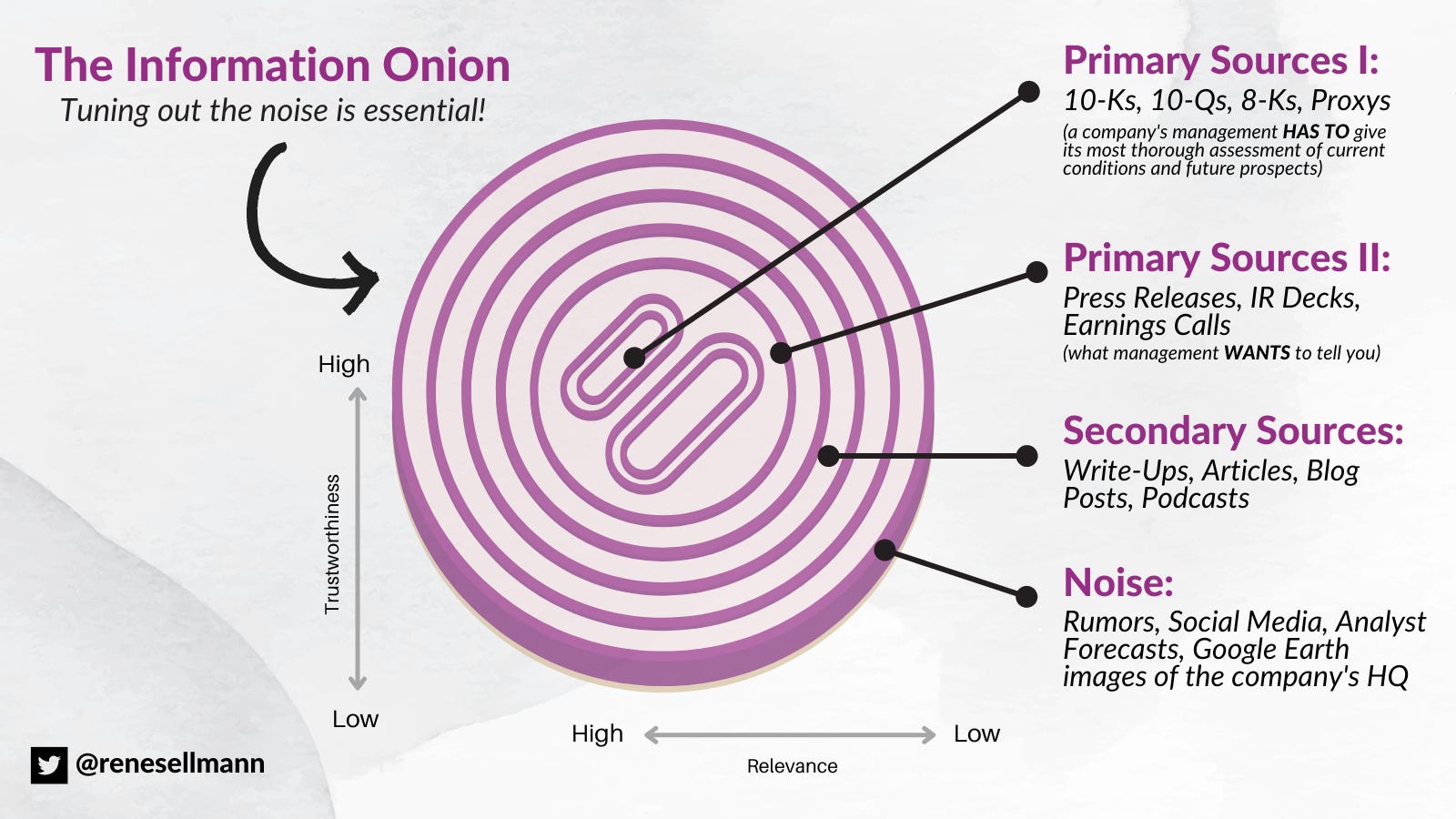
Which is why the input matters as much as the exercise. The parameters have to be filled from annual and quarterly filings, earnings call transcripts, and shareholder letters, not from a broker note or a thread summarizing a business on X.
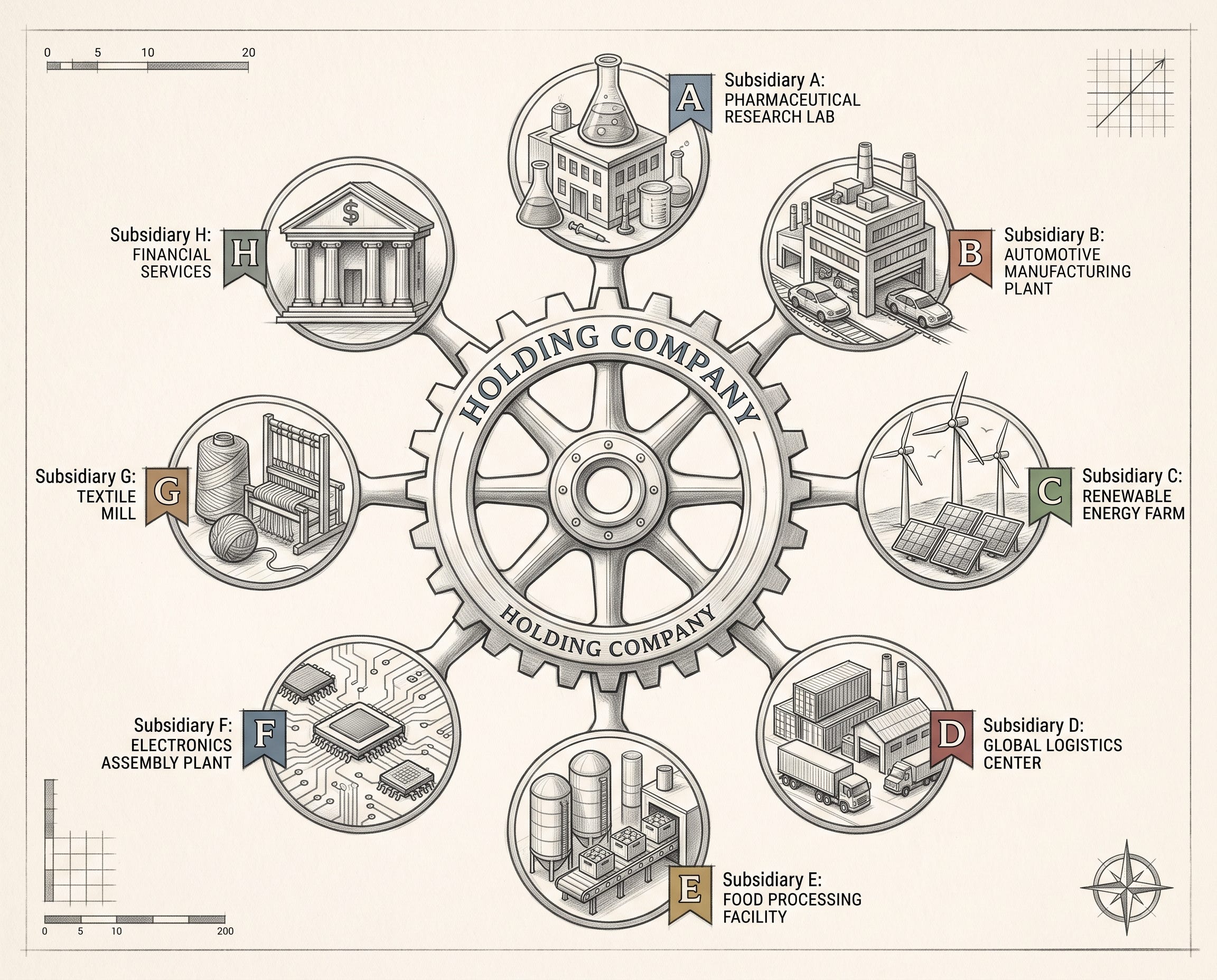
It is also why I keep telling newer investors to start with a focused single-industry operator. A conglomerate makes you define all eight parameters four or five times over, across merged financials and a single management team, and that is a genuinely hard analytical task wearing the costume of an easy one.
Structure sets the ceiling on economics
Another parameter in the lesson is the one I find most underused. Consider the product profile, which sits on three continua rather than in three boxes.
Goods against services, where services generally carry higher margins for the unglamorous reason that they tie up less physical capital.
Consumable against non-consumable, where consumables produce recurring revenue because the customer runs out and has to buy again.
Commodity against differentiated, which is the axis that determines whether you have pricing power at all. A commodity producer competes on cost, since every unit it makes is economically identical to a competitor’s unit. A differentiated producer gets to compete on something else, and branding alone can move a product a long way along that axis. You have a preferred brand of milk.
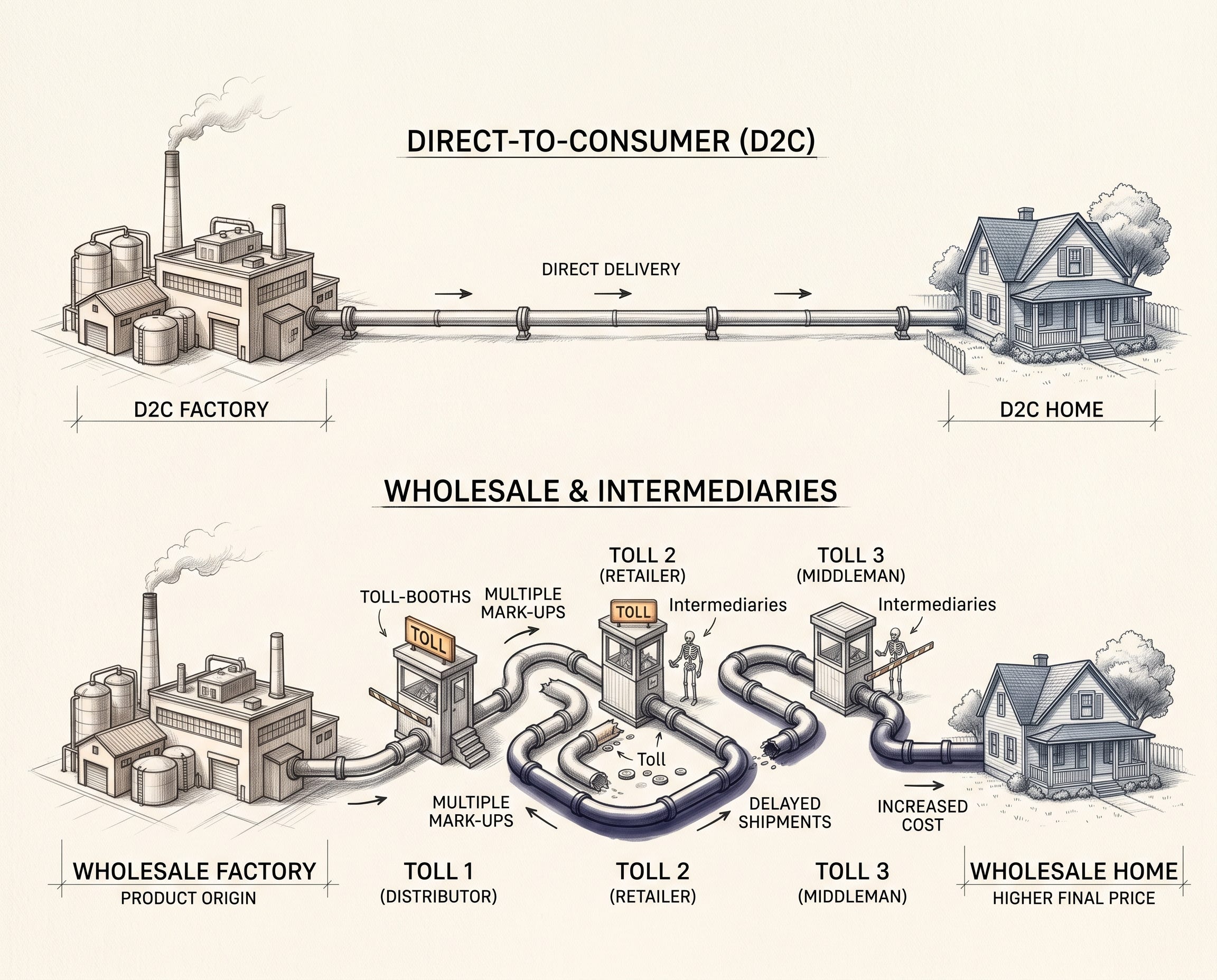
Distribution then reallocates the economics between the party that makes the product and the party that reaches the customer. The travel data I pulled at the time showed online travel agencies taking 44 percent of bookings in 2018 against 41 percent the year before, while direct bookings on the accommodation provider’s own website fell from 35 percent to 27 percent.
Direct-to-consumer structures keep more of the margin and hand the operator control over placement and presentation, which a retailer-dependent brand never has.
Operational form is worth being aware of too. Holding companies like Berkshire function as capital allocation hubs sitting above decentralized subsidiaries. Franchisors license the system and the trademark and earn royalties against almost no capital, an extremely attractive return profile when the concept travels. Vertical integration secures either the input or the customer relationship, and GrafTech is the tidiest case in the lesson: it bought Seadrift Coke to lock up petroleum needle coke, the one material without which its graphite electrodes cannot be made. That insulation from supply shocks and intermediary margin rarely shows up in a screen.
Horizontal integration buys scale on the same tier of the chain, as Capri did in assembling Michael Kors at roughly 4.45 billion dollars of sales alongside Versace at 900 million and Jimmy Choo at 650 million.
Two parameters people skip deserve a mention: Customer concentration decides how much bargaining power the business actually holds. A diversified base means one departing buyer dents revenue instead of breaking it, and it keeps customers from dictating price and quality terms.
Geography decides where the shocks come from.
Balanced demand, concentrated supply. You want to know that before the next disruption, not during it.
Life cycle bounds all of it. Startup, growth, expansion, maturity, decline.

The attrition numbers are worth restating because they are worse than most people assume: roughly 40 percent of new businesses survive past year four, and about a third make it through year seven. Mature enterprises invert the trade, offering dominant positions and cheap capital alongside saturation and bureaucratic drag.
Fading incumbents almost never pivot in time, because by the point management concedes the model is broken, the window has already closed. Then ask the growth question properly. Is the next expansion tied to the core, or is it an adjacency the company has no right to win?
What I would write differently in 2026
One perspective shared in that lesson needs an amendment. I wrote that we prefer industries with an ultra-slow rate of change, because slow change lowers disruption risk and spares you from owning a business that has to reinvent itself successfully and repeatedly.
As a default, it still holds.
My own style has drifted – for better or worse. I hold more exposure to businesses with a wider range of outcomes than Buffett ever wanted, and I lean more technology-adjacent than he did, because some of those companies compound intrinsic value at rates the slow-change universe structurally cannot reach.
The cost of that drift is specific. The low-rate-of-change filter used to do my risk management for me at the selection stage, before a single euro was committed.
Give it up and the work moves to position sizing.
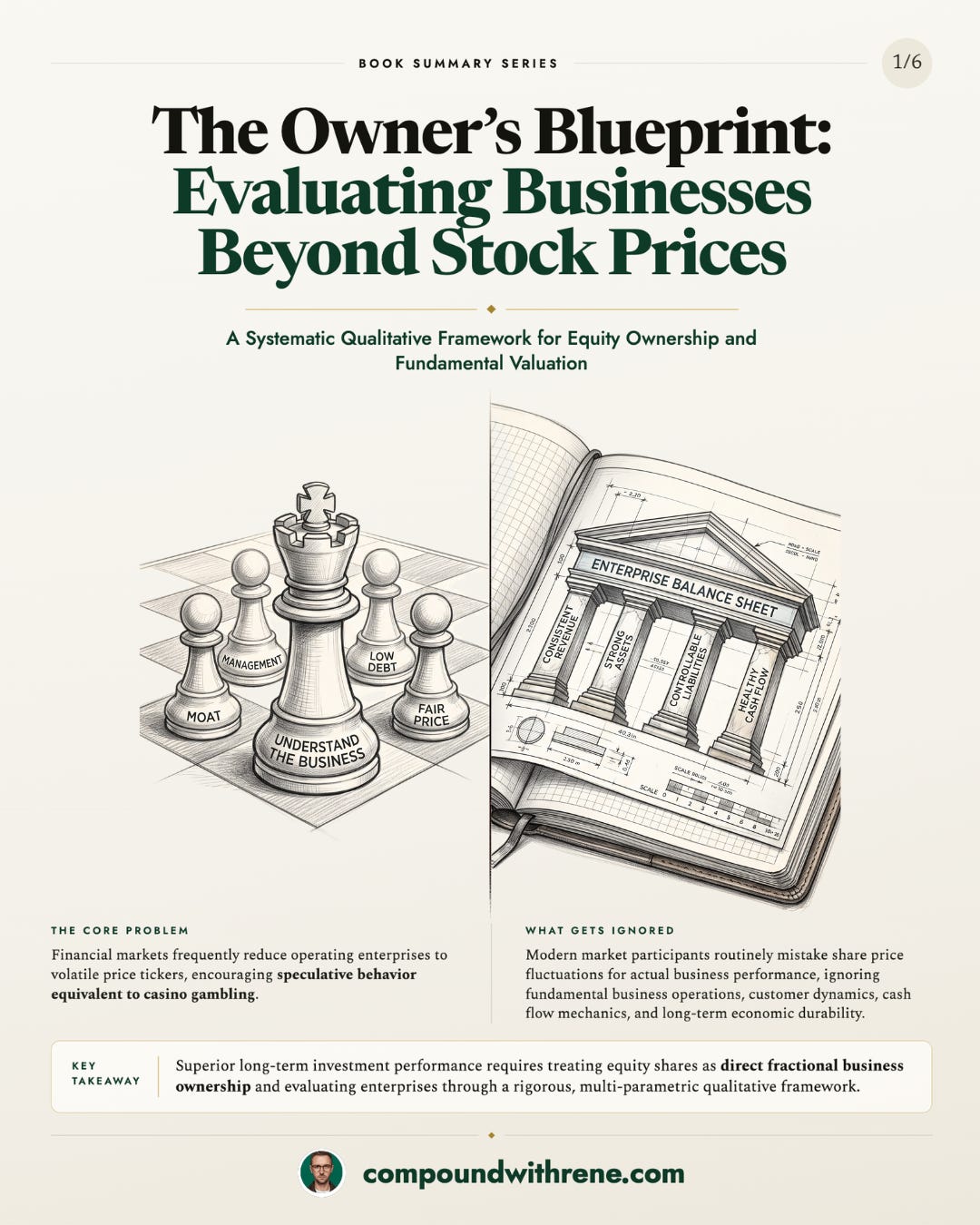
Owner Mindset Blueprint
I rebuilt the chapter as a condensed visual blueprint, anchored on the five-core-pillar framing I have used since the beginning.
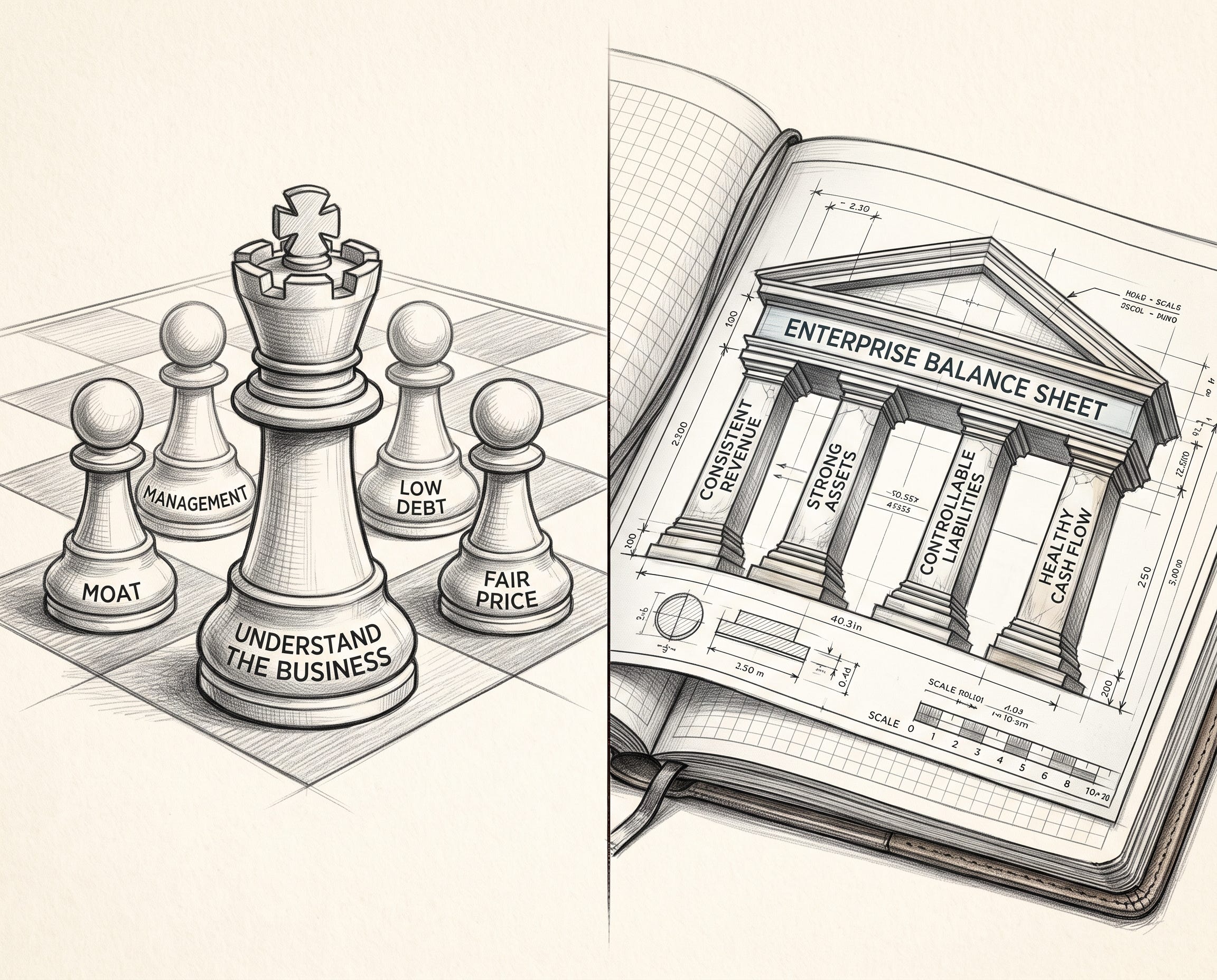
That framing comes straight out of the core pillars of the Buffett and Munger approach: understand the business, then the moat, then management, then the balance sheet, then the price.
The Blueprint is below. Print it, keep it next to whatever you are working on this week, and run your largest position through it before you add to anything.
Then share it with your investing peers.

Until next time, keep compounding.
René
Disclaimer: The analysis presented in this blog may be flawed and/or critical information may have been overlooked. The content provided should be considered an educational resource and should not be construed as individualized investment advice, nor as a recommendation to buy or sell specific securities. I may own some of the securities discussed. The stocks, funds, and assets discussed are examples only and may not be appropriate for your individual circumstances. It is the responsibility of the reader to do their own due diligence before investing in any index fund, ETF, asset, or stock mentioned or before making any sell decisions. Also double-check if the comments made are accurate. You should always consult with a financial advisor before purchasing a specific stock and making decisions regarding your portfolio.