

Dear compounders,
Welcome back to my perception change series. If you’re new here, the short version is this. Ember Infrastructure Management made a 615p per share proposal for Ashtead Technology, a company I own and have written about at length, and I started preparing for the possibility of having to redeploy that capital. Instead of letting a deal force my hand, I’m working through the seven highest-ranked companies on my watchlist one by one (in fact, I can think of more ideas that seem interesting, and I might add more to the list I cover in this format), each through the lens of my perception change framework.
So far we’ve covered Grab, Novo Nordisk, LVMH and Hermès - check out my homepage or the Library post to find them.
New here? Join 5,000+ readers and get 3 FREE GIFTS when you subscribe:
📈 Valuation Spreadsheet
📚 eBook: Investing Visualizations
💡 eBook: 250 Thought-Provoking Quotes
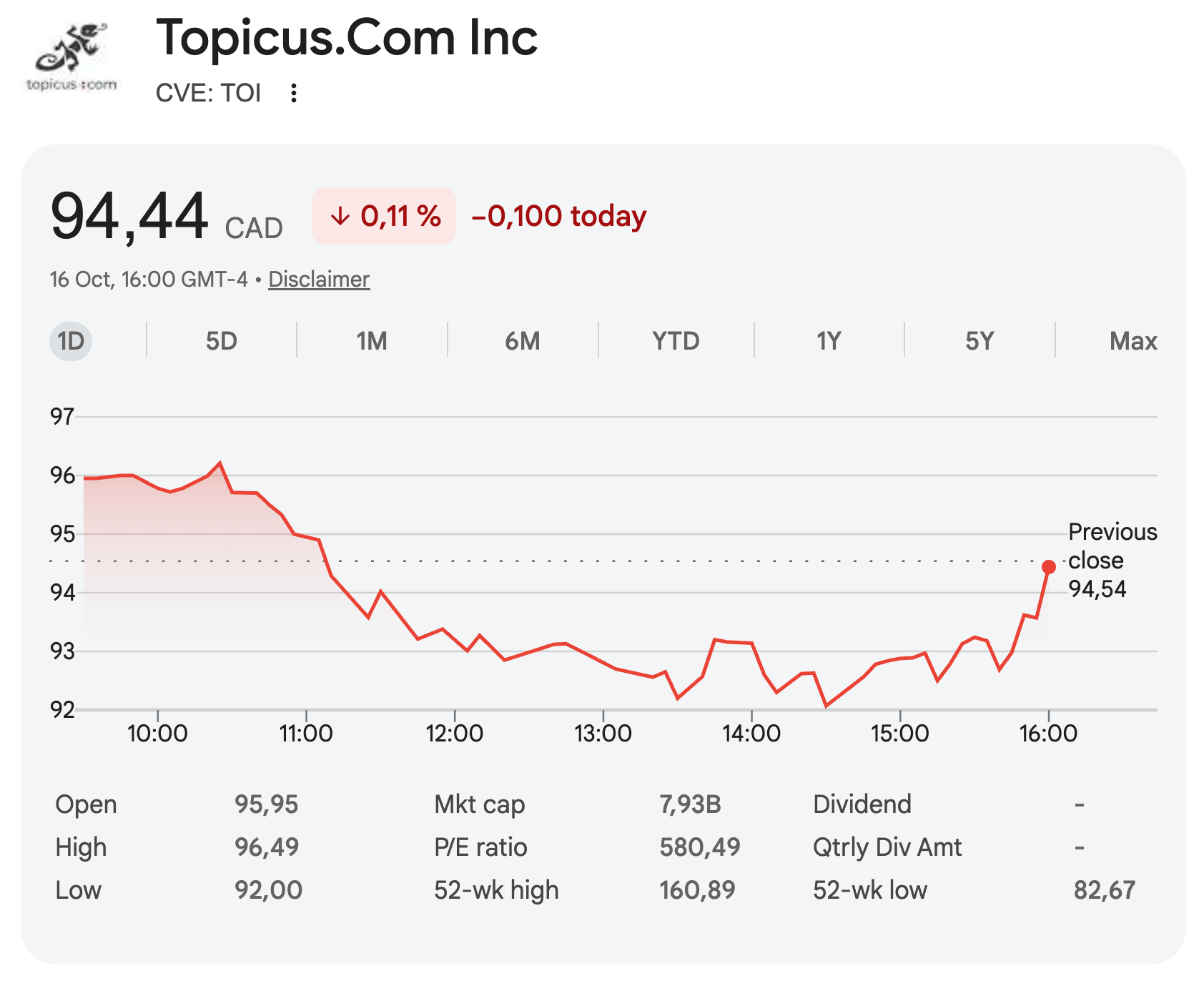
Idea #5 is a special case. I published my Topicus deep dive in March, when the stock traded at roughly C$94, and I decided to stay on the sidelines. Seven months later, the share price is almost exactly where I left it, while a lot has changed underneath. So I revisited the idea over this weekend and put together an update post.
The stock is optically cheaper (see updated valuation below). Yet, there have been some major developments that I consider net-negatives (even though the weighing of these is a subjective call you have to make). Arguably, the price stood still, and the perception didn’t, so the question is whether the market is now right to keep its distance.
Disclaimer: As of the date of publication the author owns no shares in the company; but that may change. The analysis presented in this blog may be flawed and/or critical information may have been overlooked. The content provided should be considered an educational resource and should not be construed as individualized investment advice, nor as a recommendation to buy or sell specific securities. I may own some of the securities discussed. The stocks, funds, and assets discussed are examples only and may not be appropriate for your individual circumstances. It is the responsibility of the reader to do their own due diligence before investing in any index fund, ETF, asset, or stock mentioned or before making any sell decisions. Also double-check if the comments made are accurate. You should always consult with a financial advisor before purchasing a specific stock and making decisions regarding your portfolio.
Idea #5: Topicus
Topicus is another idea in this series I have already covered in depth this year. I published my deep dive in March (linked below) – I’m pretty sure the most comprehensive analysis of Topicus on the Internet (and I’d refer you to this deep dive series for the initial hypothesis and all the details regarding this business, its structure, its ownership, how to value it, etc., etc.) –, when the shares traded at roughly C$94, and I ended up on the sidelines.
I liked the business, and I liked the setup, but I had no idle cash at the time, didn’t want to sell anything else, couldn’t get entirely comfortable with the AI risk (which I assess to be much lower compared to other software peers, though), and I wanted a wider margin of safety, ideally somewhere around C$60 to C$65.
Deep Dive: Topicus.com Inc. ($TOI) – Master Piece

What started as a curiosity about a Constellation Software spin-off evolved into a massive 40,000-word journey through the intricacies of European software consolidation. To make this research as accessible as possible, I’ve woven all four parts of the
My AI disruption risk weights back then were 50% defensible, 30% beneficiary and 20% “vertical market software is cooked,” and I built the overall case on five BAMs:
a record-low valuation,
a 2014/15-vintage Constellation,
European fragmentation,
experienced CSI-trained leadership, and
sticky software.
Seven months later, the share price is almost exactly where it was, at C$94 on October 16.
That stability hides a lot of change underneath. The CEO behind my fourth BAM has retired, and Topicus is pushing its decentralized model one level further up by turning its operating groups into autonomous, stand-alone entities – effectively the CSU-playbook.
“Enhanced Decentralization”?
In the September 14, 2026 press release announcing van Poelje’s retirement, Topicus also announced:
“As part of these leadership changes, the Topicus Board plans to implement an enhanced decentralization strategy for its TSS operating groups. Each such operating group will be expected to operate as an autonomous, stand-alone entity, while respecting the rights of the parties to Topicus’ Investor Rights and Governance Agreement.”
“The Total Specific Solutions Public operating group, led by Han Knooren, expects to change its name in the near future, as it transitions into an autonomous, stand-alone operating group, which name change will be publicly announced once complete.”
I’m not entirely sure what this truly means to be fully honest. Topicus has always been built on decentralization. The business units have always been decentralized, so this is about a different layer: the operating groups’ relationship to the top of Topicus. The release doesn’t spell it out, so everything below is just my interpretation.
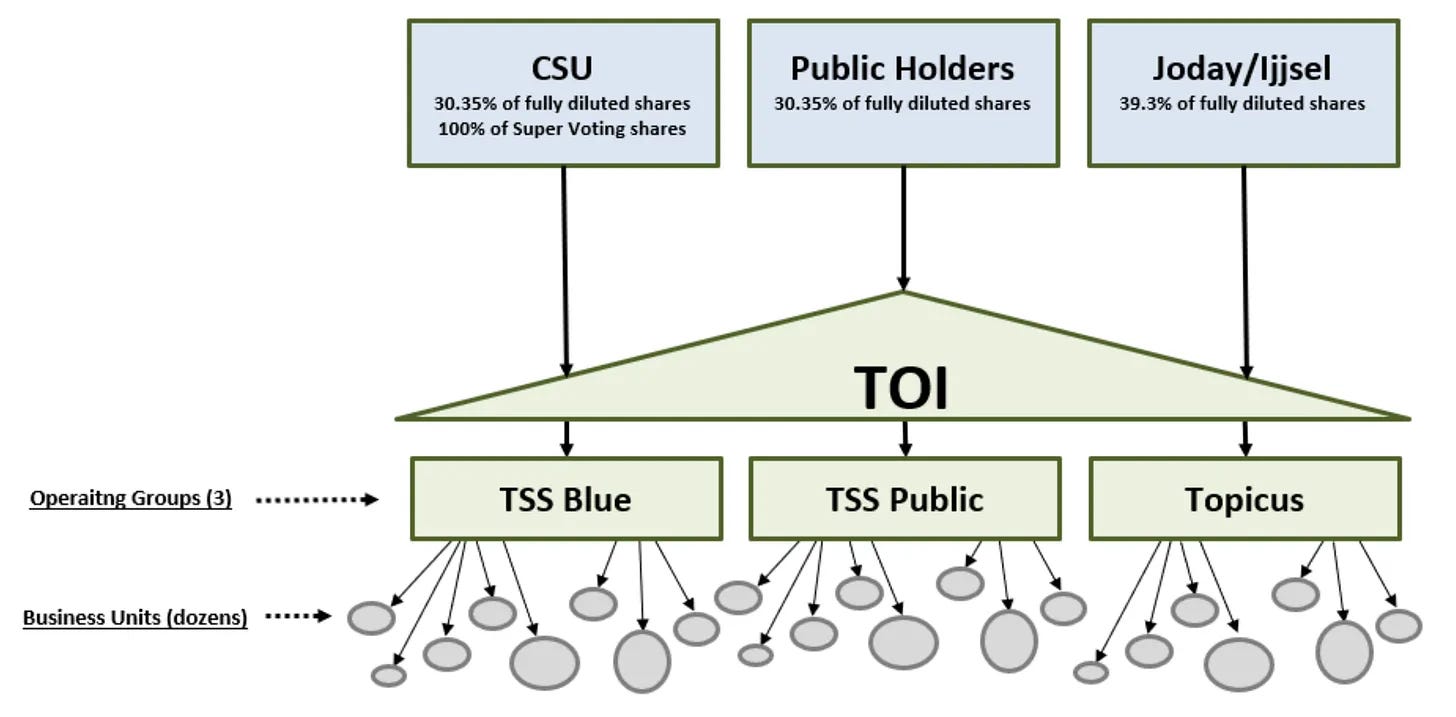
TSS Public and TSS Blue sit under one TSS umbrella (TSS Europe B.V.). They share a brand and, in practice, have had van Poelje as the single capital allocator and deal approver at the top. Making each group “autonomous, stand-alone” most likely means:
each group runs its own M&A pipeline, capital allocation and hurdle rates
capital moves between the groups and the top in a more formalized way, closer to how Volaris, Harris or Jonas work inside Constellation
Dropping “TSS” from TSS Public’s name is the visible sign that the shared umbrella is weakening. Each group becomes its own brand, like the Topicus operating group already is.
Why now? Zanders is both Topicus CEO and head of TSS Blue. If the umbrella stayed strong, Knooren, who runs TSS Public, would effectively report to the head of a rival group. Giving each group autonomy avoids that, and it means no one has to replace van Poelje as the central allocator.
In other words, the decentralization is the succession plan. This is my read of it at least - what is yours?
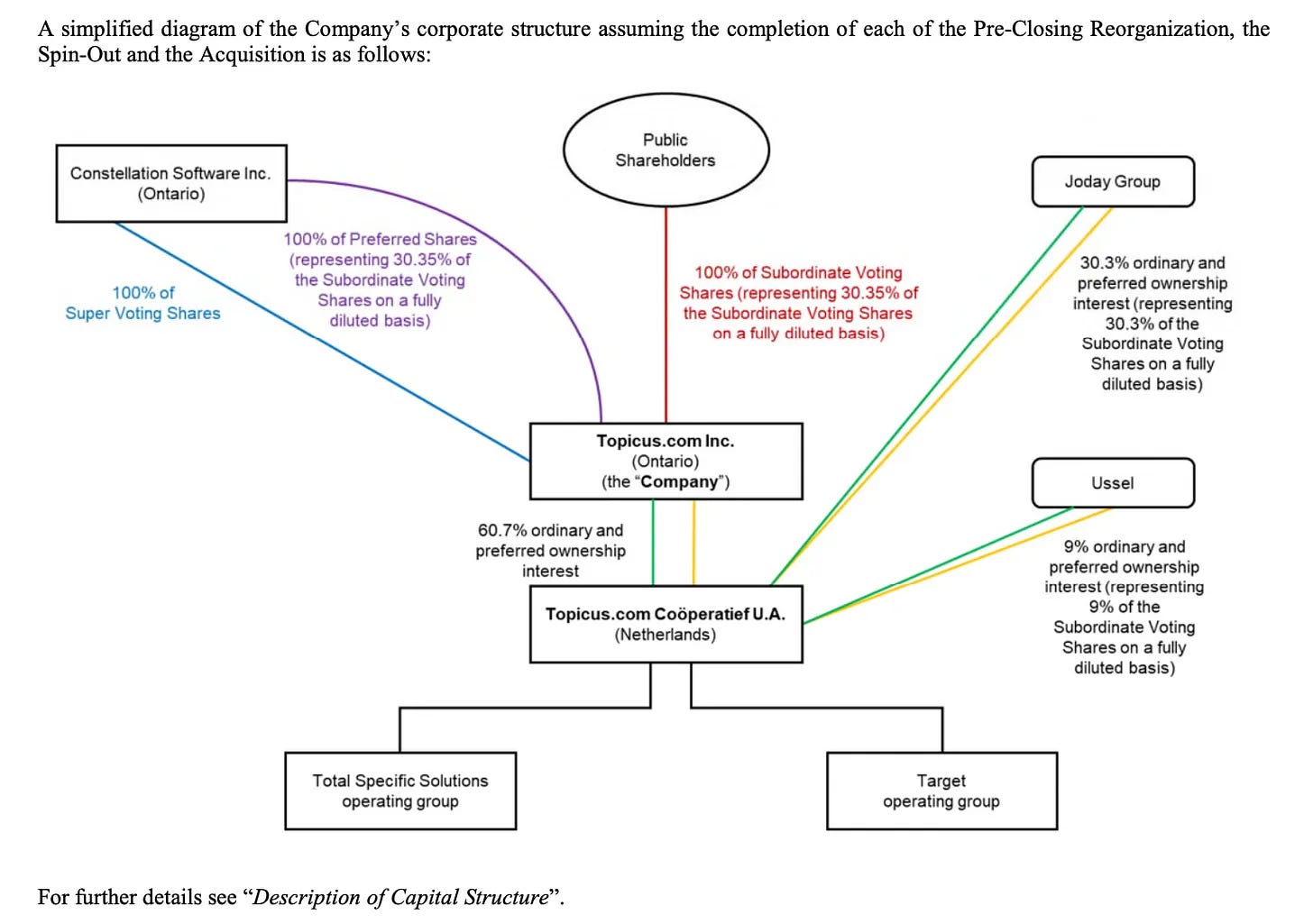
As a reminder, Topicus doesn’t own all of the businesses directly. They sit in Topicus Coop, where Joday, Ijssel and Constellation have contractual rights under the Investor Rights and Governance Agreement:
Joday must approve every acquisition
deals over US$100M need Constellation board approval
nomination rights
the call options, which are defined by holder group
So the clause says the operating groups gain autonomy inside that framework, not by changing it.
Furthermore, Topicus made its first public take-private attempt, in Australia of all places, and was rejected.
Deal activity slowed sharply while the balance sheet was deleveraged.
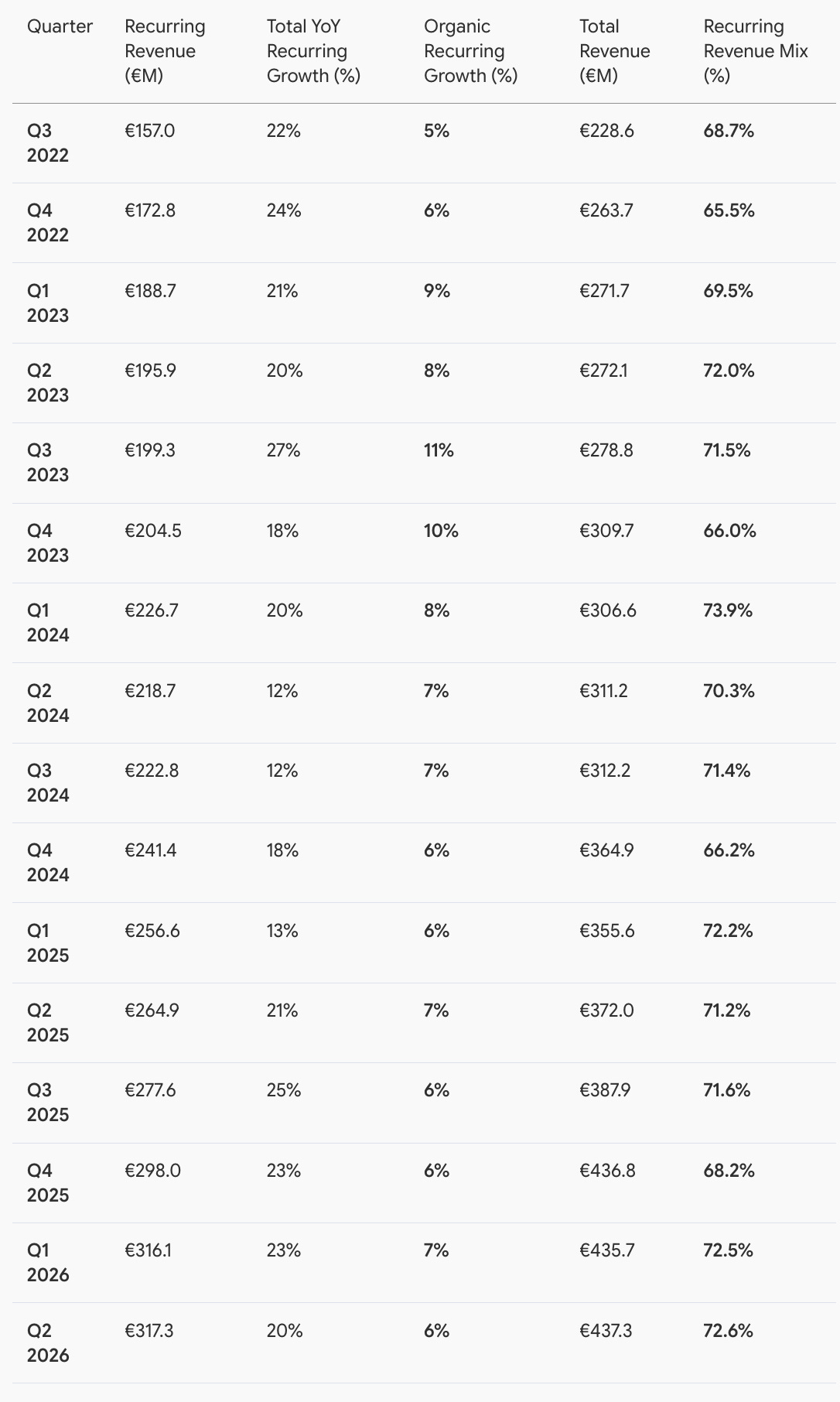
AI fears haven’t shown up in the numbers, with recurring organic growth steady at 6–7%, and still the stock has missed the software rebound that lifted Constellation about 40% off its lows.
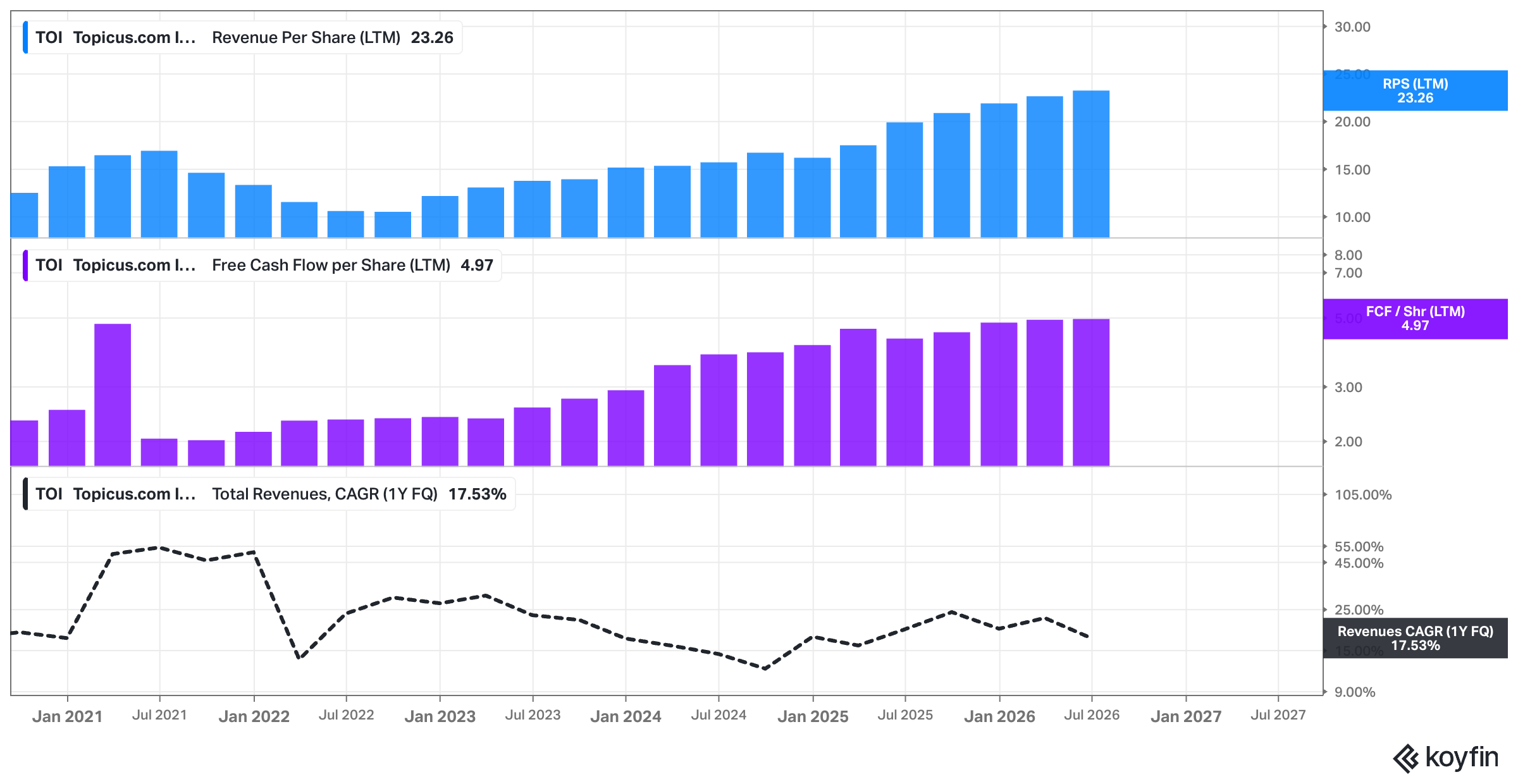
So the questions to ask have shifted slightly since March. This post is a brief update with some fresh thoughts and an emphasis on both quantitative and qualitative perception change analysis.
The rest of this post is FREE to read. I only ask that you subscribe, which costs nothing and can be undone with a single click whenever you like.
The wall also helps keep my writing from being freely scraped by AI crawlers, so I hope you understand the small extra step.
In return, you get every deep dive, earnings review, and process piece I publish, straight to your inbox.