

This post is a bit different from my usual deep dives. It’s closer to an evening of rambling that turned into something I wanted to write down. When the news broke today that Netflix had secured exclusive rights to every match of the 2030 World Cup in Spain, I shared a quick reaction in our community, and the thought stayed with me through dinner and well into the evening. A few numbers from Netflix’s last earnings call kept coming back to me, as did an analogy involving podcasts and old records, and a nagging sense that live sports might be changing Netflix’s economics for the worse. So what follows is me thinking out loud about the economics of live events at Netflix, testing my own first instincts as I go, and being open about where I’m unsure. If you hold Netflix, or are thinking about it, I hope it gives you a few useful questions to ask, even if you end up answering them differently than I do.
Today, Netflix announced that it will stream every match of the 2030 FIFA World Cup exclusively in Spain and Andorra.

Before I share my thoughts, I want to be upfront about what kind of post/analysis this is: Long-time readers know that I like to test an investment view along three dimensions of good decision-making:
common sense,
theory and
empirical evidence.
The more of these dimensions a view takes into consideration, the higher the quality of the assessment.
This post leans almost entirely on the first one. It is my common-sense reading of what live sports does to Netflix’s economics, built on a handful of numbers management has shared, with some theory borrowed where it helps. What it lacks is the empirical work – data on retention after live events, on returns from sports rights across the industry, and on how Netflix’s own returns change as live grows – that would turn a hunch into a conclusion.
Please read it as a hypothesis I intend to test further or encourage you to think about critically.
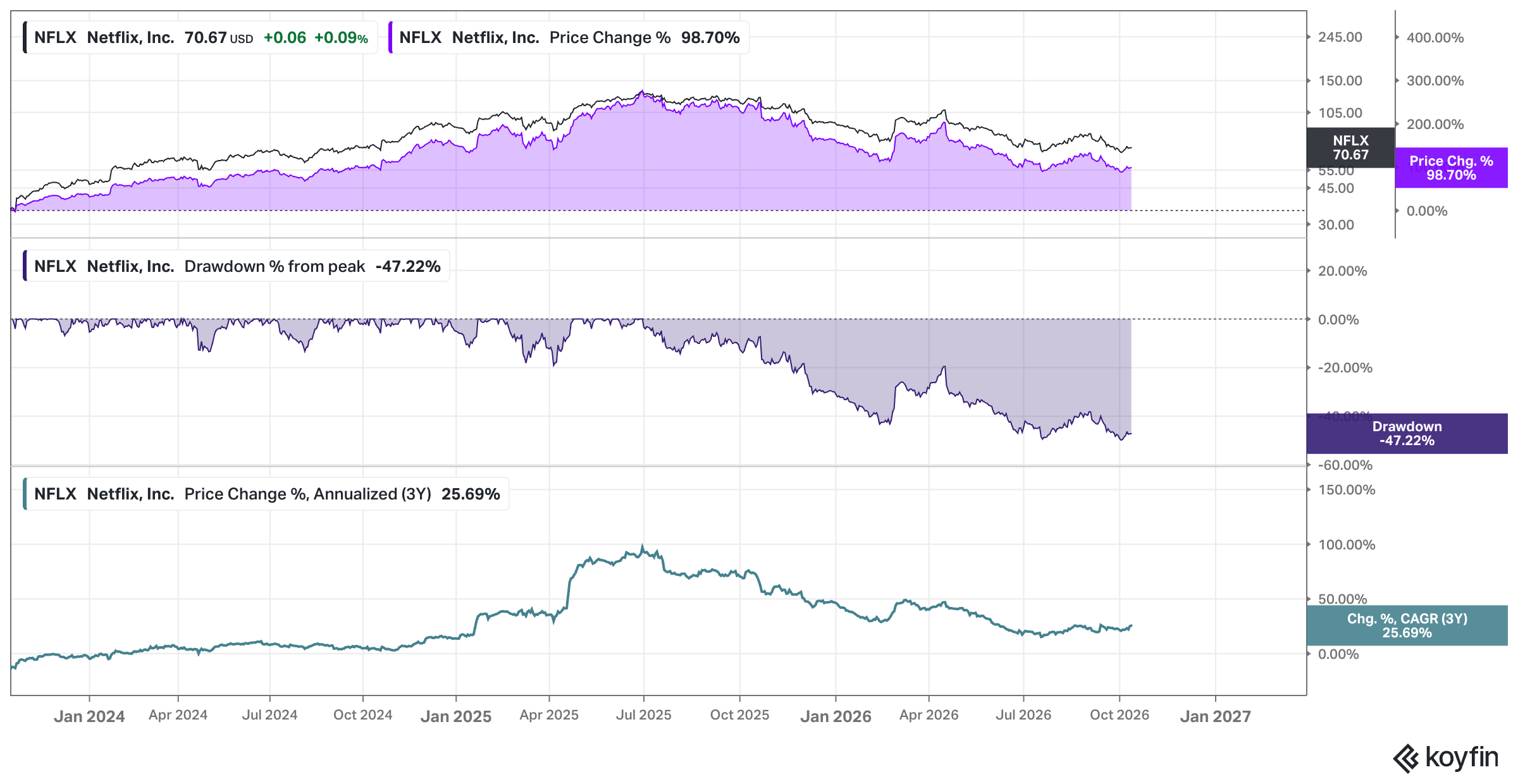
With that caveat, my first reaction was that this is the right strategic move. My second reaction was that it is probably also one of the least attractive dollars Netflix will spend this decade.
I think both can be true at once.
Disclaimer: As of the date of publication the author owns no shares in the company; but that may change. The analysis presented in this blog may be flawed and/or critical information may have been overlooked. The content provided should be considered an educational resource and should not be construed as individualized investment advice, nor as a recommendation to buy or sell specific securities. I may own some of the securities discussed. The stocks, funds, and assets discussed are examples only and may not be appropriate for your individual circumstances. It is the responsibility of the reader to do their own due diligence before investing in any index fund, ETF, asset, or stock mentioned or before making any sell decisions. Also double-check if the comments made are accurate. You should always consult with a financial advisor before purchasing a specific stock and making decisions regarding your portfolio.
The fine print behind the headline
The headline sounds more exclusive than the deal really is. Netflix will make one match a day free to watch in Spain, and a package that includes every Spain match, both semi-finals and the final will be shown on a national free-to-air broadcaster.
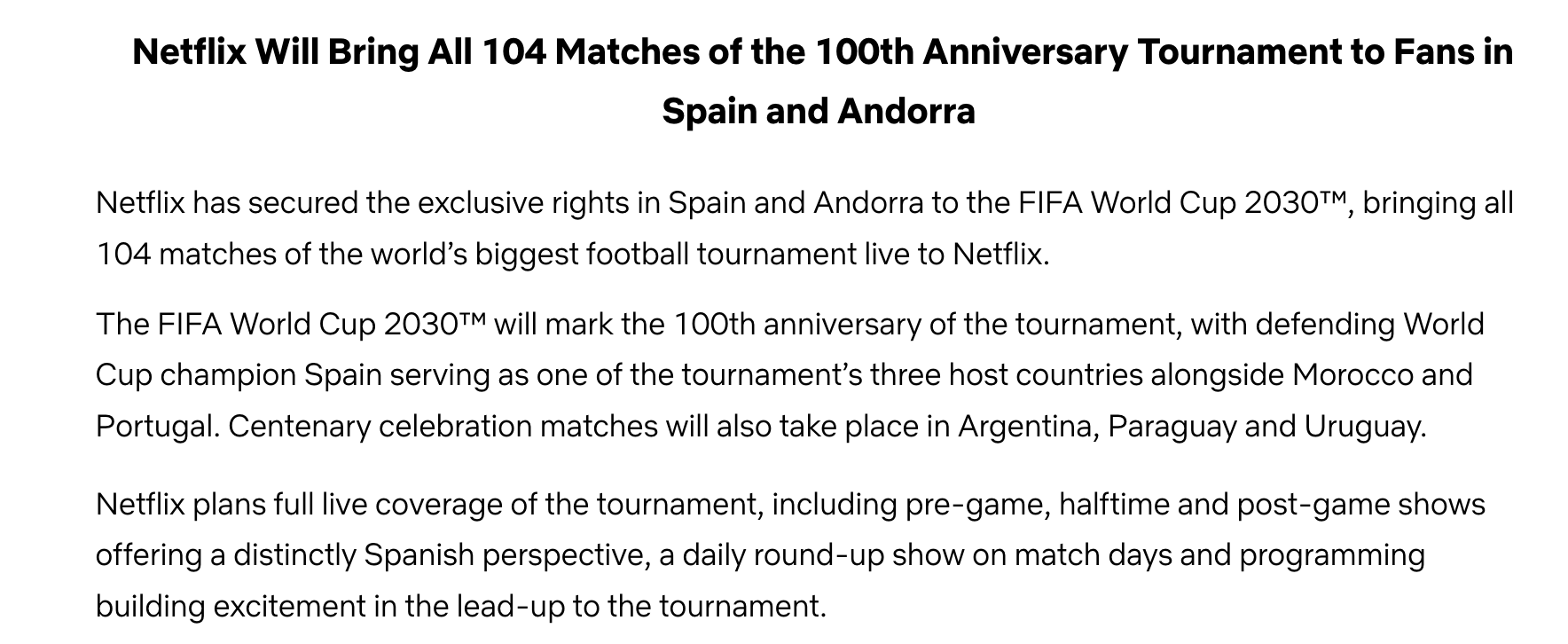
In other words, the games most likely to bring in a casual Spanish viewer who would not otherwise subscribe will be available without a subscription. This follows a familiar pattern. When Netflix bought the US rights to the Women’s World Cup, FIFA reportedly agreed to sell only on the condition that some matches were sublicensed to a traditional media company.
"Few events unite people like the World Cup. I was in the stands this year as Spain lifted the trophy and witnessed the passion, the pride, the stories – they all become part of a nation's culture and are remembered for generations. With Spain set to host in 2030, we're thrilled to bring every match to fans across Spain and Andorra on Netflix. For Spanish football fans, welcoming the world as reigning champions on Netflix will make this a moment unlike any other. And, our expanding partnership with FIFA, including the Women’s World Cup in 2027 and 2031 for the U.S. and Canada, reflects our continued commitment to bringing fans closer to the world’s biggest sports moments." -Bela Bajaria, Chief Content Officer, Netflix
FIFA wants reach, and Netflix wants subscribers, so the most valuable inventory ends up shared.
That is the first thing I would hold against the bull case. The exclusivity that justifies the presumably high price is narrower than the press release suggests.
Five percent of the budget, one percent of the hours
The second issue is one management has been unusually open about. On the Q2 call, Greg Peters said live programming will take about 5% of the content budget this year but deliver only about 1% of view hours. Live events produced six of the ten biggest new-member sign-up days in the past five years, even though Netflix has only done live since 2023.
“Start by saying there is not a linear relationship between view hours and revenue and profit because all hours are not created equal. All hours don’t provide the same kind of value to the business. And a really great example of this is live programming. So live events do a lot of lifting for us for acquisition.
They’re good for monetization. They drive ad revenue, fandom. They’re also a promotional platform, but they do not yield typically as many Raw view hours. So live, we expect will be 5% of our content budget this year, but we think that will only be 1% of view hours. Having said that, 6 out of top 10 new member sign-up days over the past 5 years have come from live events.” - Q2 Call
With annual content spend of around $20bn, that is roughly $1bn a year going into live.
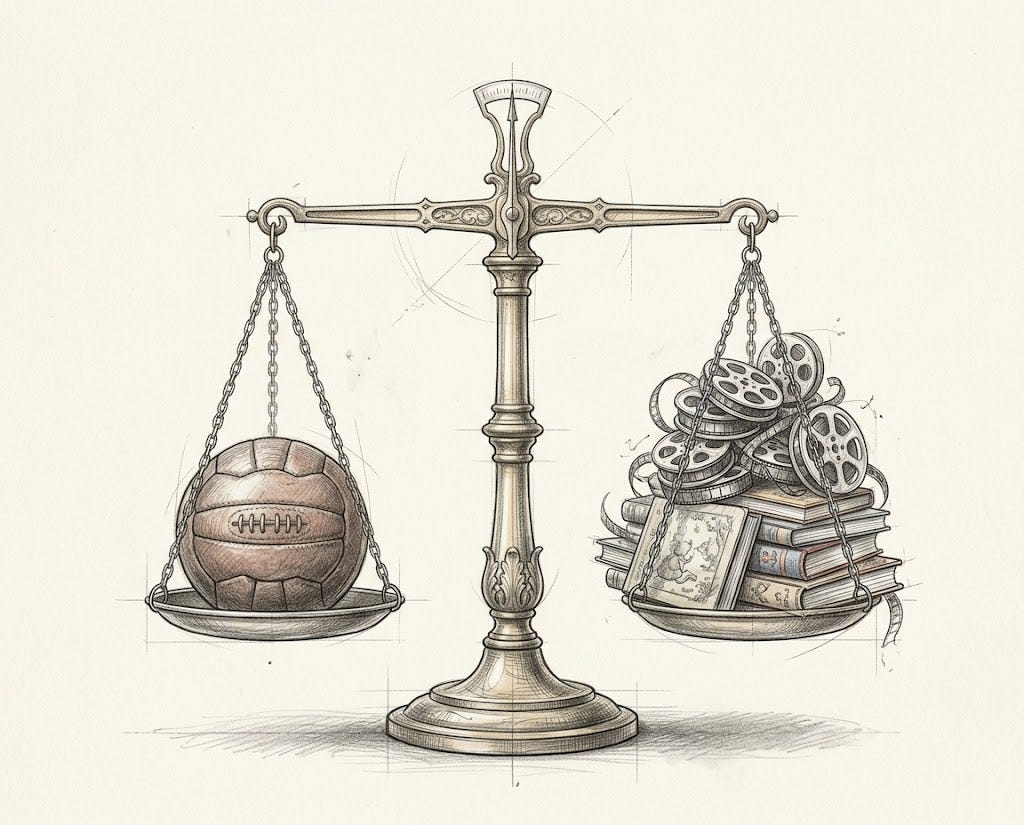
The comparison Peters chose himself is the important one. Kids and family animation takes about the same 5% of spend but produces about 8% of view hours. Per hour watched, live costs about eight times as much as animation and about five times the company average.
Management’s answer is that all hours are not created equal, which I accept.
“And if you compare that to another content category, take animation series, kids family TV, it’s also about 5% of our content spend, so the same amount of spend, but it’s going to drive, we expect 8% of view hours. So same spend and 8x the Raw view hours. You can see the differences there, even though because as indicated by the amount that we’re investing in both those categories being the same, we think they’re doing the same value for the business. So we’re constantly looking to improve across every dimension of engagement. We look at these as 3 dimensions: quality, variety, quantity, because they, taken collectively, drive acquisition, they drive retention, they drive the value that our consumers and our advertising partners ascribe to our service.
We described in the last few earnings calls the progress that we’ve made on quality over the years. We’re not going to go into the details of that quality metrics because, frankly, it’s taken years for us to develop it and vet it and assess it and improve it, and we think that those details are a competitive advantage. We’re also continuing to expand the variety of our entertainment offering. You see us launch new types of content like live, like video podcast, cloud TV games. Those are all doing things, different things in our portfolio to support different needs from our members.” - Q2 Call
I would still note that this is an argument Netflix now needs to make, and companies usually only need to make it when the simpler metric stops looking good.
One analyst put it well, saying the measure management now emphasizes alongside view hours is one the company will not detail. It does not help that Netflix will move its “What We Watched” report from twice a year to once a year starting in 2027, explaining that it wants the focus to stay on revenue and operating profit.
The way I explain the economics to myself is through shelf life. Consider podcasts vs. evergreen music as an analogy. I rarely listen to a podcast episode that is more than a few weeks old. There are exceptions, like Business Breakdowns or a good Acquired episode, but for most podcasts the value falls sharply within days. Music is the opposite. The industry calls it catalog, meaning tracks older than 18 months, and it is the asset that makes a company like Universal Music Group so durable. In 2025, catalog accounted for more than 75% of all US audio streams for the first time. A song recorded once can earn money for fifty years.

A scripted Netflix series falls in between. I might start watching a great show from 2021 tonight, and that is why Netflix’s library works as a moat: every subscriber who joins today gets fifteen years of accumulated content at almost no additional cost to Netflix.
A series is still worse than a song, though, because almost every episode is watched once, while a favourite song is replayed hundreds of times. And the older the series, the less likely it is that people choose it in the library. The shelf life might only be a handful of months for most series, and some years for others.
Live sport sits at the far end of this range, below even the podcast. The value of a World Cup group match is concentrated in about two hours. A replay the next morning is worth almost nothing, and in four years it has no library value at all.
The rest of this post is FREE to read. I only ask that you subscribe, which costs nothing and can be undone with a single click whenever you like.
The wall also helps keep my writing from being freely scraped by AI crawlers, so I hope you understand the small extra step.
In return, you get every deep dive, earnings review, and process piece I publish, straight to your inbox.