

In February 2026, a research piece by Citrini Research – arguably the most viral Subtack blog post ever released (the initial post on X alon was seen by 28 million people) – sent shockwaves through the investment community, with its bleak forecast for the software sector.

Titled “The 2028 Global Intelligence Crisis,” it painted a chilling picture: as AI progressed rapidly, human labor was being replaced at an unprecedented rate, leading to a collapse in consumer demand, a slowdown in economic activity, and a series of cascading market crashes. Software companies, once the darlings of Silicon Valley, were painted as primary victims in the race to automation.

The report’s key theme seemed simple enough: AI will eliminate jobs and disrupt entire industries, and the software sector – especially SaaS – would be no exception. By 2028, the thinking went, the market would be so flooded with automation tools and agent-based applications that even the biggest players would find themselves marginalized, struggling to compete with cheaper, faster, AI-powered alternatives.
Even the broader market reacted violently to such predictions, with some software stocks – of which fwiw, some were already down 40-60% – continuing their drawdown on the subsequent Monday trading sessions. Many analysts continued to warn that the best days for software were behind us.
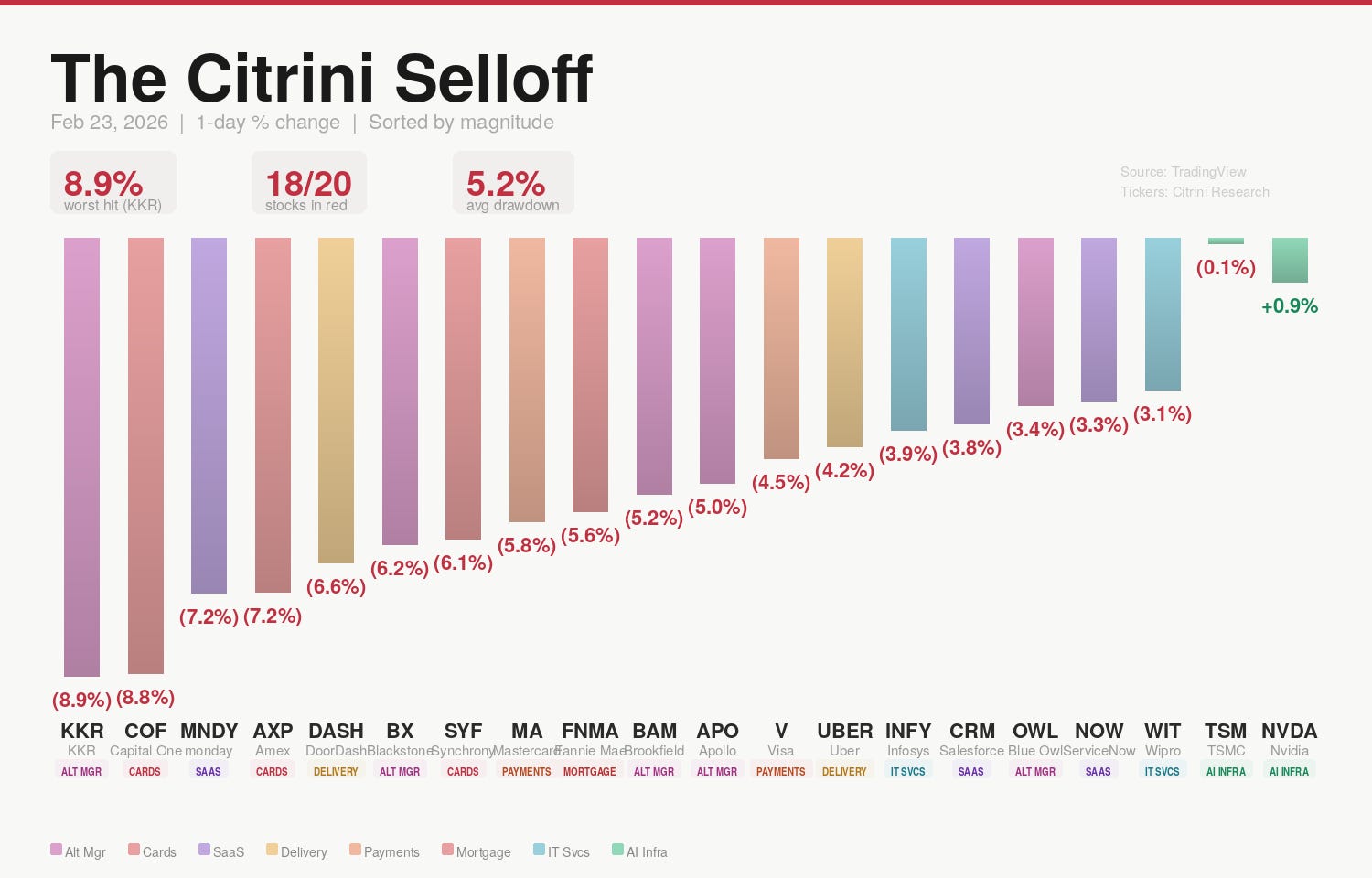
But what if the Citrini Research report came out just as the software sector was hitting rock bottom? What if 2026’s bearish sentiment marked the precise moment before a new era of growth for the software industry, fueled by AI?
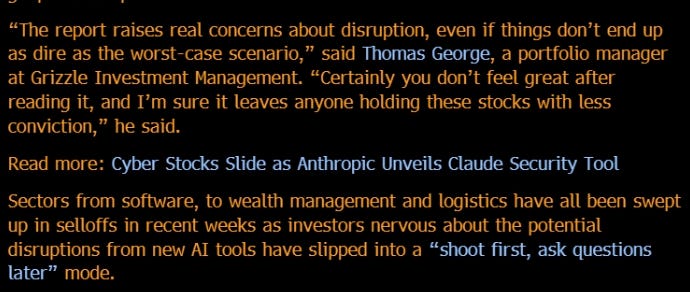
A New Era of Opportunity
It’s relatively easy to go viral with a doomsday scenario prediction.
However, it’s also “easy” to dismiss the idea that the worst may be over when looking at the present market – after all, software stocks have taken a hit, and the bears seem to have the upper hand.

However, beneath the surface, something important is happening. What if a revolution of the software space is already taking place, driven by AI, that could fundamentally reshape how software companies earn money, how much money they earn, how they operate, deliver value, and scale?
So in the spirit of Citrini Research, this post lays out a possible bullish 2030 scenario – two years beyond the market Citrini predicted – centered on individual software stocks rather than broad macro themes. It’s a thought experiment (!) designed to provoke, not to predict with certainty. The aim is to illuminate a bull-case path where AI accelerates the value of a select few established software incumbents, expands their total addressable markets, and deepens their competitive moats, even as the broader market remains wary. This piece deliberately foregrounds upside opportunities – drawn from real companies and plausible catalysts – while acknowledging that bearish risks still exist. By focusing on 2030 and beyond, we invite readers to test the thesis against evolving AI capabilities, customer adoption, and capital dynamics, and to consider how a handful of stocks could lead the next leg of software’s growth.
THE POST-INPUT ERA: GLOBAL GDP SURGES 8% AS 'VIRTUAL SWARMS' REPLACE TRADITIONAL SaaS; S&P 500 MARKET CAP CROSSES $120T | Bloomberg, January 2030
Following that line of thinking, by 2030, a handful of software companies will not only survive this AI-driven disruption – they will thrive, emerging as giants in their industries. These companies will be the net beneficiaries of AI, leveraging cutting-edge tools to accelerate growth, capture new markets, and deliver unmatched value to their customers. The same forces that seemed to threaten their very existence will, in many cases, be the catalysts that propel them to new heights.
SOFTWARE GIANTS LIKE SAP AND NETFLIX CAPTURE $100 BILLION IN ADDITIONAL NEW REVENUE AS AI INTEGRATION ACCELERATES ACROSS INDUSTRIES | Reuters, December 2030
The Roadmap of This Post: Software’s Second Act
In this post, we deconstruct the bull case for the 2030 software landscape through five structural pillars:
The Labor-to-Software Conversion (TAM Expansion): How software is moving from a “tool” to a “result,” capturing the trillions once spent on human salaries.
The “80/20” Rule: Why AI code generation only solves 20% of the problem, while incumbents like Atlassian and SAP leverage AI to automate the 80% of “hamster wheel” maintenance that keeps the world running.
The VMS Anti-Fragility Play: Why the “boring” Vertical Market Software (VMS) model – typified by Constellation Software – is the ultimate AI hedge, and in fact THE most obvious beneficiary.
Offense vs. Defense: Distinguishing between Shopify’s “AI-for-Growth” (Front-office/Sales) and Veeva’s “AI-for-Compliance” (Back-office/R&D). One captures the upside of consumer spending; the other builds a fortress around the trillion-dollar life sciences economy.
The Creative Feedback Loop: Why Netflix and Nintendo aren’t being replaced by AI video/games, but are using those exact tools to collapse production costs and expand EBIT margins to historic highs.
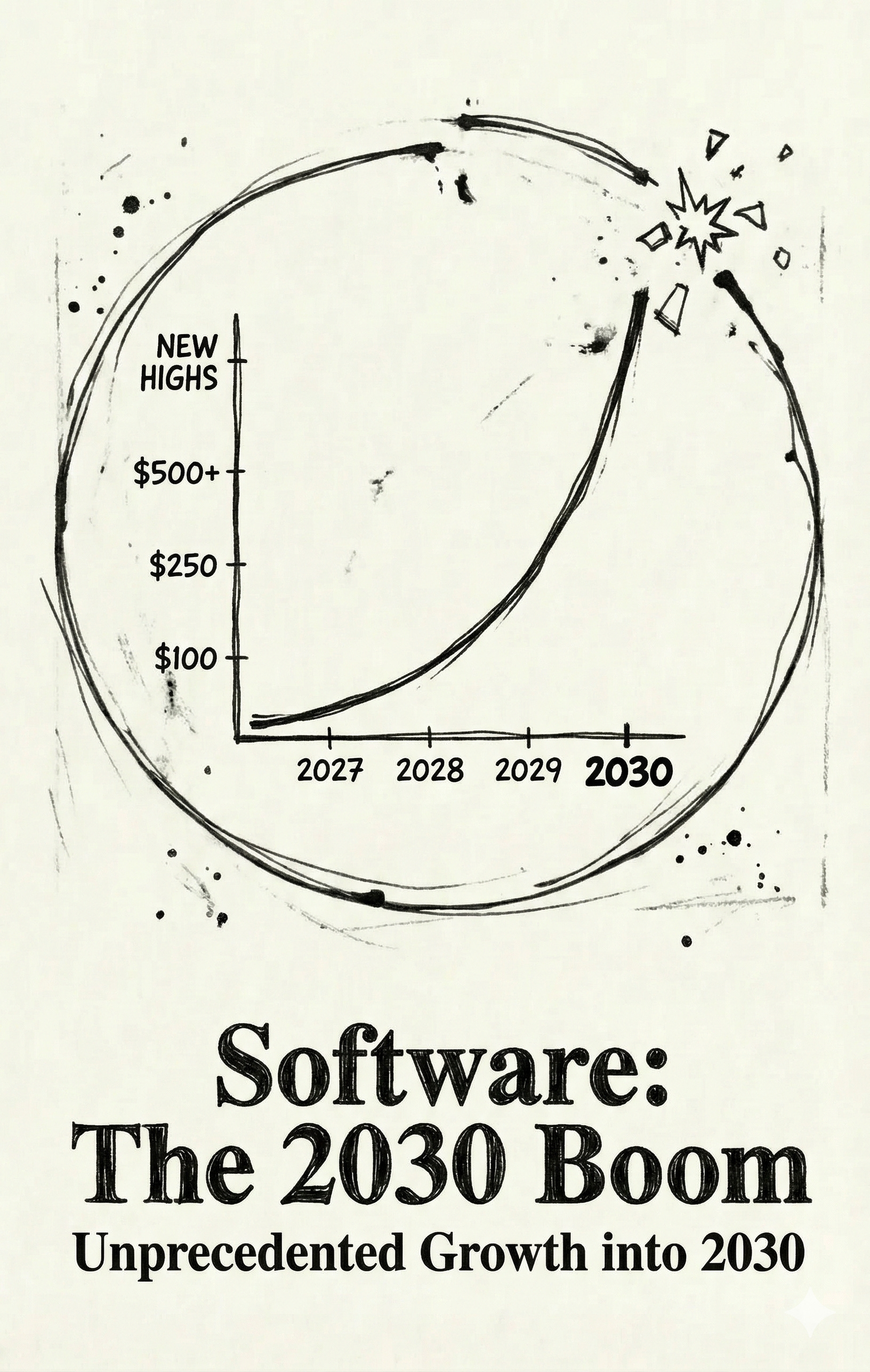
TAM Expansion through “Labor-to-Software” Conversion
In 2026, the co-founder of Monday.com, Eran Zinman, made the following provocative statement during a podcast:
“The TAM of software, how much companies are going to spend on software, is going to be 100x.”
What if he was right?
The aggressive bull case for software in the AI era centers on a fundamental shift: software is no longer just a tool for humans to use – it’s becoming a replacement for human labor altogether. This transition offers a massive expansion of the Total Addressable Market (TAM) for software companies, giving them a much larger slice of the corporate budget that was once dedicated to human salaries. The potential here is enormous.
THE MONDAY MIRACLE: MONDAY.COM SURGES 2,500% IN FOUR-YEAR HYPER-RECOVERY AS AI NATIVE GROWTH REACCELERATION TRIGGERS MASSIVE MULTIPLE RERATING FROM 2.1X TO 15X P/S MEAN | Seeking Alpha, May 2030
For decades, software has been sold as a “toolkit” for human artisans. Companies would pay $50 to $100 per month for a “seat” – a license for each employee who would use the software. Whether it was an Adobe creative license, a CRM tool for sales reps, or customer support software for service teams, these products were designed to augment human work.

The Opportunity of Labor Arbitrage
But as we move into the age of AI, something profound is happening: software companies are no longer selling tools. They’re selling the results of work – the work of employees, now done by autonomous digital agents.
THE DEATH OF THE CRM SEAT? SALESFORCE AI AGENTS HIT $35BN MILESTONE, MARGINALIZING TRADITIONAL SALES CLOUD AS AUTONOMOUS OUTREACH TAKES OVER | Forbes, December 2030
In this new world, AI is not just augmenting labor; it’s replacing it. Instead of selling a CRM license to a human sales rep, software companies can now offer an AI agent that performs the entire sales process – from outreach to follow-up to closing deals.
Imagine the possibilities: a company that once paid $300,000 a year to a team of five salespeople now pays $50,000 for an AI agent that works 24/7, closing deals and generating leads on autopilot.
The human role? Gone. Replaced by an infinitely scalable digital workforce.
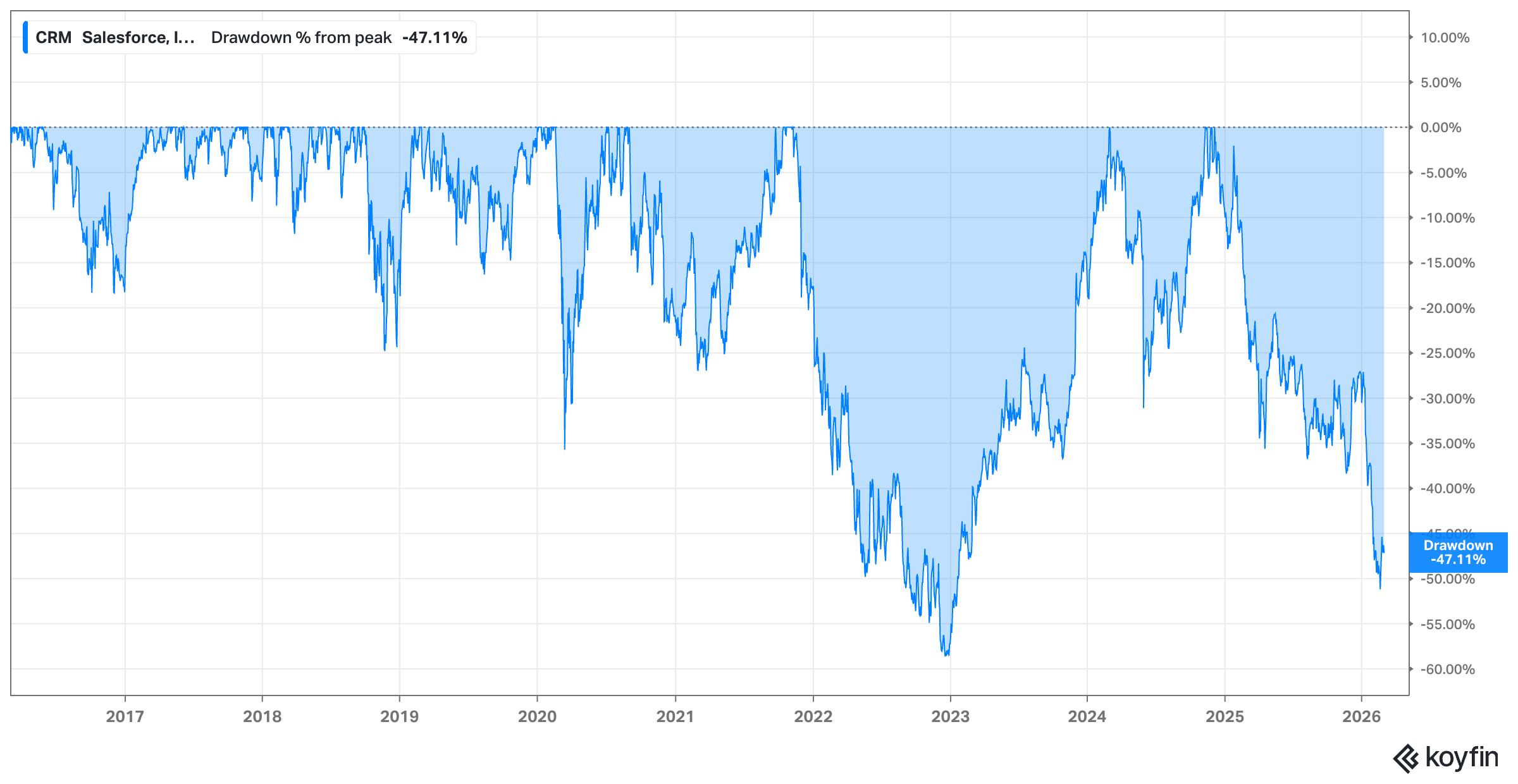
The catalyst for this shift – overlooked by markets in 2025/26 – already happened in 2024 with Salesforce’s launch of Agentforce. Moving away from the 'seat-based' stagnation of the 2010s, Salesforce pivoted to a consumption-based model, charging roughly $2 per successful autonomous action. By the dawn of the next decade, they aren't just selling a CRM for humans; they are selling 'digital employees' that handle the entire 'Vibe Building' and lead-nurturing process, effectively decoupling Salesforce’s revenue from their customers' human headcount.
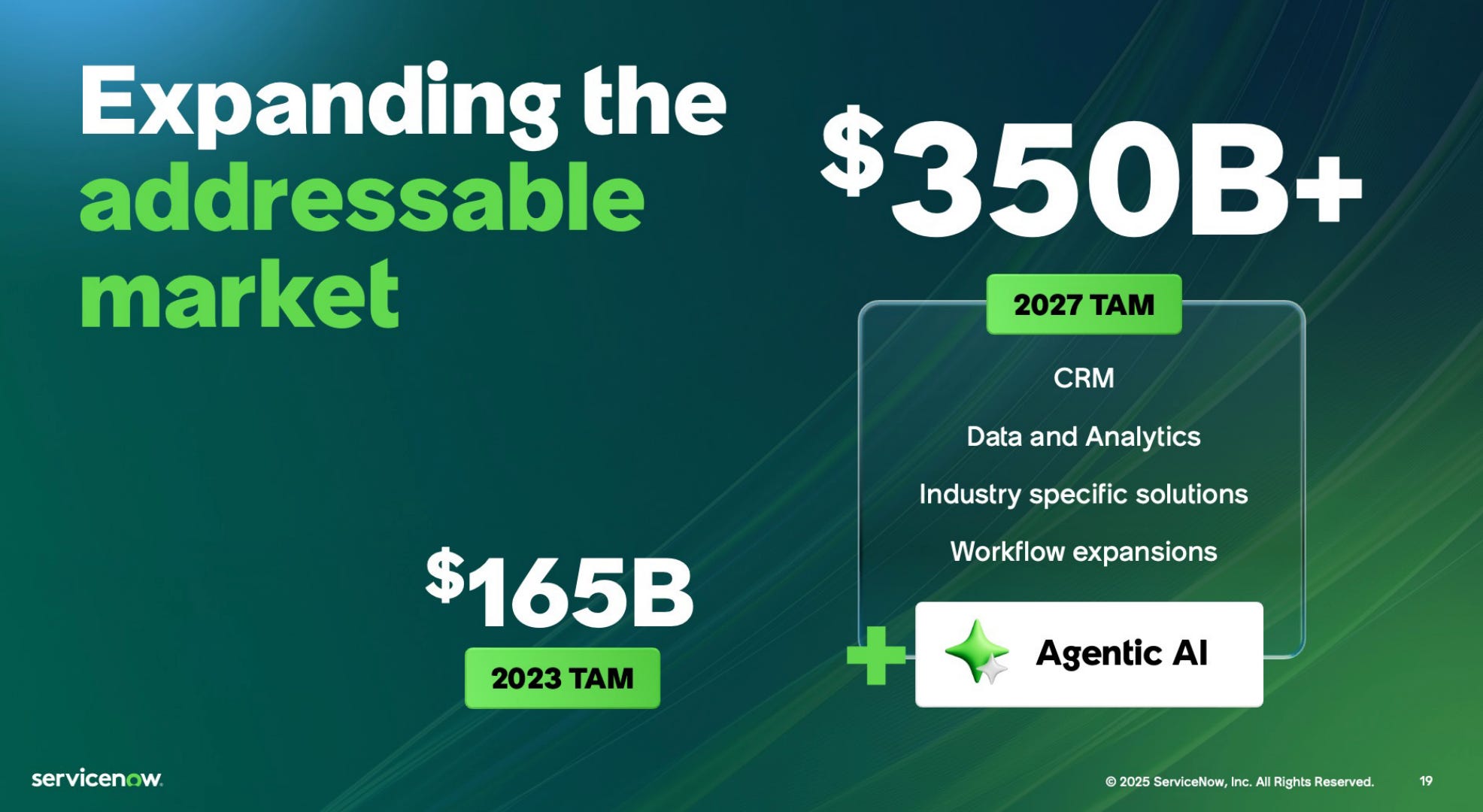
The numbers are staggering. While customers are still getting a 5x return on investment (spending $50k on an AI agent to save $250k in labor), the software company’s revenue per customer jumps by 50x or more. This is a game-changer. What was once a per-seat pricing model that only scratched the surface of the corporate budget is now a much more lucrative, value-based pricing structure, where the software company can capture a significant portion of the labor savings they’ve enabled.
Before we dive back in, a quick note…
These threads take time to write. I would appreciate sharing it with others to increase visibility - thank you! 🙏
From “Seats” to “Outcomes” and “Tokens”
But this shift in how software companies price their products is just the beginning. The industry is undergoing a reckoning – an inevitable move away from the traditional “per-seat” model. Instead, the future of software pricing is increasingly based on outcomes. Companies will no longer pay for seats; they will pay for results – for the value created by AI agents.
Imagine a customer support platform that charges $1 for each customer support ticket resolved, or a sales automation tool that charges based on how many leads are converted into customers. This new model will align the vendor’s revenue with the value they’re delivering, creating a system where pricing is more reflective of actual outcomes rather than the number of users.
Some experts are even speculating that a new form of currency will emerge: tokens. These tokens will represent the computational value created by AI agents. This shift could redefine how business transactions are structured, turning the entire industry on its head. As the software industry embraces these new models, we’ll see the rise of consumption-based pricing, where every action, every outcome, is measured and monetized.
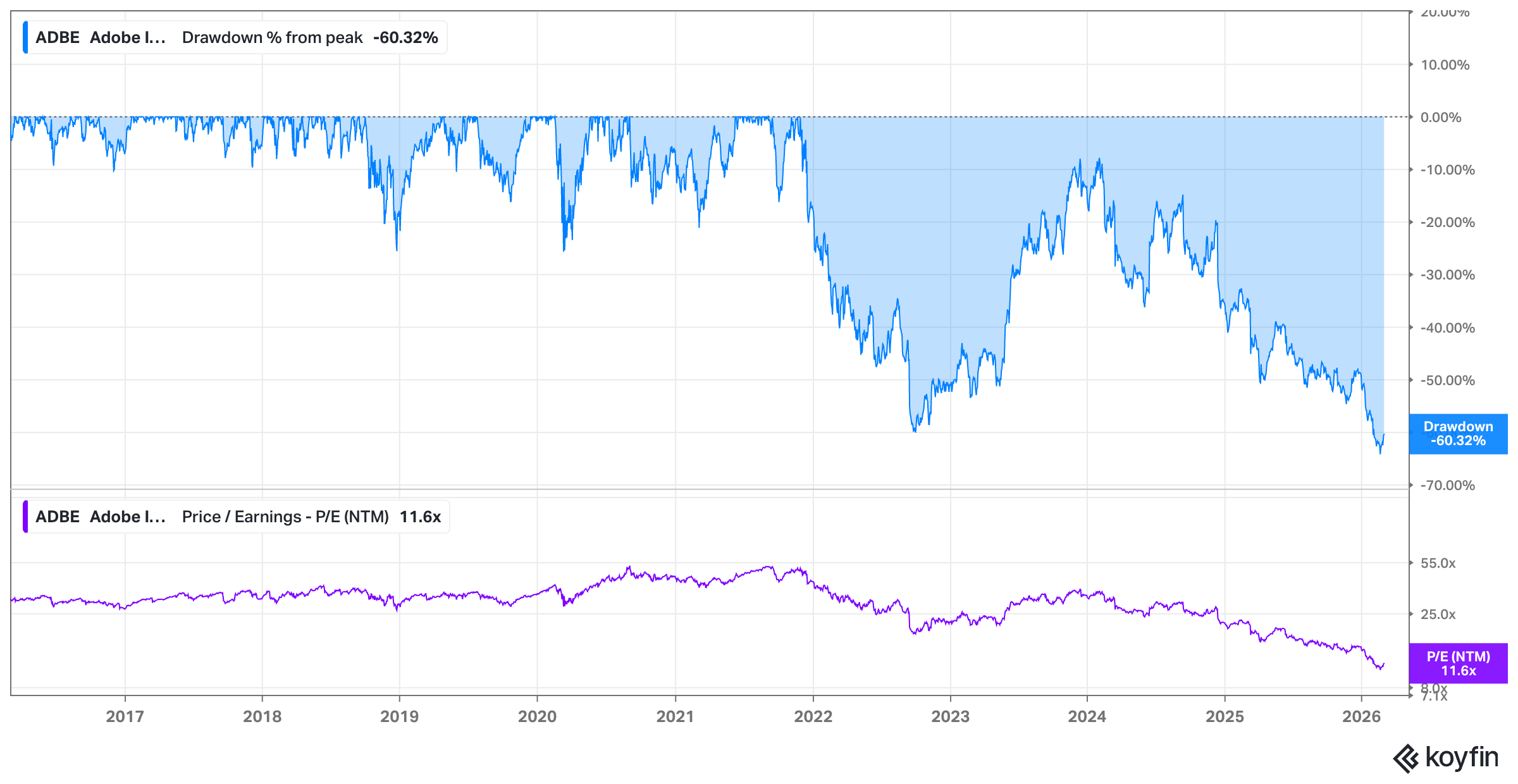
Take Adobe! While many viewed Adobe as an obvious “AI loser” in 2026, the company’s massive fall from its prior peak – down 66% and trading at a mere 11x earnings, like a legacy industrial – was premature.
As image and video-generating AI technologies rapidly improved, competitors like Figma emerged with their own AI-driven platforms, challenging Adobe’s dominance. But Figma didn’t defeat Adobe by writing code faster; they found a gap in Adobe’s existing workflow. Figma rethought the collaboration process itself, offering a more intuitive, modernized approach to design that Adobe struggled to adapt to within its legacy framework. Adobe’s inability to close that gap – without cannibalizing its own business model – seemed to signal its demise.
However, Adobe’s pivot was a textbook example of a company leveraging its strengths to adapt to AI’s evolving role. Instead of fighting the collaboration trend, Adobe doubled down on its deep-rooted value in the creative professional ecosystem. The model-agnostic approach of Adobe allowed it to leverage AI without massive investment requirements. By integrating various AI-driven tools into its suite – such as Adobe Firefly for generative image editing and AI-powered design assistants – Adobe is shifting away from its traditional “seat-based” model toward a more value-oriented, outcome-based pricing structure.
By allowing enterprises to train models on their own brand IP, Adobe transformed its business into a Creative Operating System for the entire enterprise, enabling a single marketing manager to orchestrate the creation of 10,000 brand-consistent assets in the time it previously took to design one.
Now it’s no longer about how many licenses you buy, but the AI-generated value Adobe can help you unlock. The result? Adobe’s tools become even more indispensable to professional users who rely on its software to streamline creative workflows and produce higher-quality work at scale. And the amount of content created exploded between 2026 and 2030.
ADOBE LEVERAGES AI-ENABLED CREATIVE TOOLS TO REINVENT DESIGN COLLABORATION, DRIVING $7 BILLION IN NEW REVENUE | Adobe Investor Relations, March 2029
This shift is positioning Adobe as a resilient contender in the AI-powered creative economy, with more room to grow as new AI capabilities continue to enhance its existing platform.
Transforming Customer Support with AI
Next, take Freshworks, a publicly traded company that has already embraced AI’s transformative potential in the customer support space. Historically, Freshworks provided a suite of tools for businesses to manage customer interactions. But as AI technology advanced, Freshworks recognized an opportunity to move beyond offering tools for human employees and instead provide AI-driven customer service agents capable of autonomously handling a wide range of customer queries.
This vision materialized in Freshworks’ AI-powered solutions, where intelligent agents are now able to manage customer tickets, offer self-service options, and even predict and resolve issues before they escalate, all with little to no human intervention. The integration of AI into its customer support platform has essentially transformed it from a toolkit into a solution that delivers outcomes – intelligent support that drives efficiency and reduces costs for businesses.
Since the integration of AI-powered capabilities, Freshworks has significantly expanded its customer base, with the company’s annual recurring revenue (ARR) rising substantially as a result of increased demand for its AI-driven support features. The integration of these intelligent systems allows businesses to provide faster, more scalable customer service, leading to an enhanced user experience at a fraction of the cost.
FRESHWORKS’ STOCK SOARS; COMPANY INCREASES CUSTOMER SUPPORT EFFICIENCY BY 50% WITH AI-POWERED AGENTS, DRIVING $900 MILLION IN ARR | Financial Times, November 2029
The “80/20” Rule of Software Engineering
In the world of software engineering, there’s a fundamental truth that few seem to recognize: while AI has made remarkable strides in code generation, it’s only a fraction of the total effort required to develop, deploy, and maintain software. The lion’s share of the work – the 80% that truly drives the cost and complexity of software engineering – lies in the continuous, often invisible, tasks that keep software alive and functioning. This is where the real opportunity for incumbents lies.
AI has revolutionized the code generation process. Generating code is now easier, faster, and much cheaper than ever before. But again: code generation only accounts for about 20% of the total work in the life cycle of a software product. The other 80%? It’s a “hamster wheel” of ongoing development, maintenance, updates, security patches, compliance checks, and human customer support. These are the tasks that keep the software machine running smoothly, and they represent a massive opportunity for companies with scale and infrastructure already in place.
This ongoing effort requires a deep well of resources, expertise, organizational memory, and infrastructure.
For example, every time a new security vulnerability is discovered, it has to be patched. Every time a new compliance standard is introduced (such as GDPR or HIPAA), software must be updated to meet these requirements. And then there are the endless rounds of product refinement – adding features, fixing bugs, and optimizing performance. It’s a never-ending cycle of improvement, one that requires continuous investment and effort.
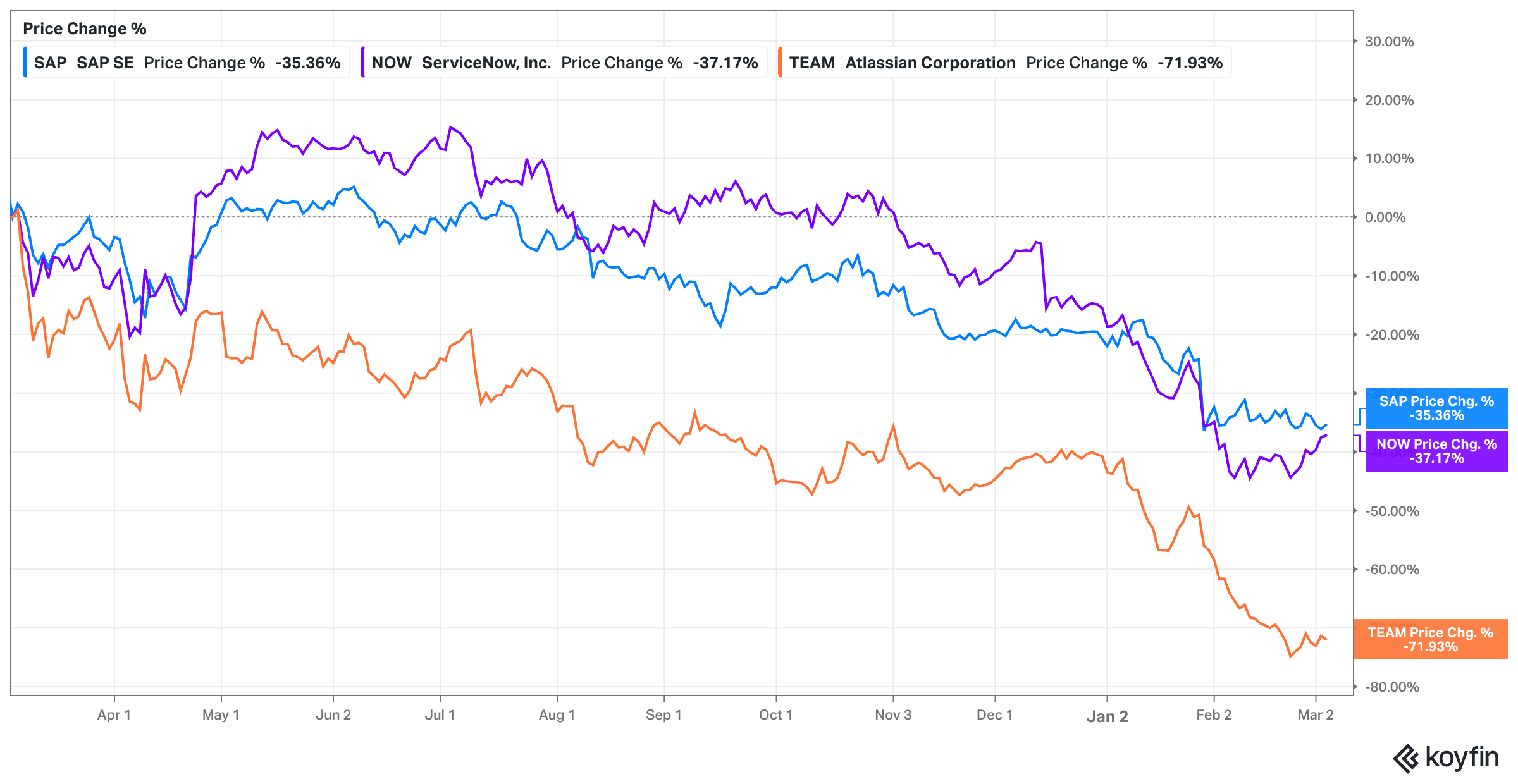
Here’s where incumbents like SAP, Atlassian, and ServiceNow – all perceived as “AI losers” in 2026 – hold an enormous advantage. These companies have already built the reputation, infrastructure, the support teams, gained the trust and the loyal user bases that allow them to weather the complexities of software maintenance. They already own the “real mines” – the massive amounts of data, user feedback, and operational expertise that new entrants simply can’t replicate overnight.
For these companies, AI is not just a tool to generate code faster; it’s the key to dramatically improving the efficiency of their ongoing maintenance efforts.
With AI stepping in to automate and streamline the tedious tasks of software maintenance, companies that already have the infrastructure and relationships in place stand to gain the most. AI can take over the “grunt work” of software engineering, such as generating repetitive code snippets, conducting basic security checks, or even answering common customer service queries. This allows incumbent companies to focus on what truly matters: continuous improvement, user experience, and innovation.
Before we dive back in, a quick note…
Want to compound your knowledge – and your wealth? Compound with René is for investors who think in decades, not headlines. If you’ve found value here, subscribing is the best way to stay in the loop, sharpen your thinking, avoid costly mistakes, and build long-term success – and to show that this kind of long-term, no-hype investing content is valuable.
For example, ServiceNow has already begun to integrate AI into its IT service management platform, automating workflows, ticket resolutions, and even predictive analytics to anticipate system failures before they happen.
In 2024 already, ServiceNow launched RaptorDB, a high-performance database specifically engineered to handle the massive transaction volumes required when thousands of autonomous agents – rather than just humans – are querying the system simultaneously, rebuilding the enterprise 'plumbing' to support a world where software doesn't just suggest work but executes it at scale.
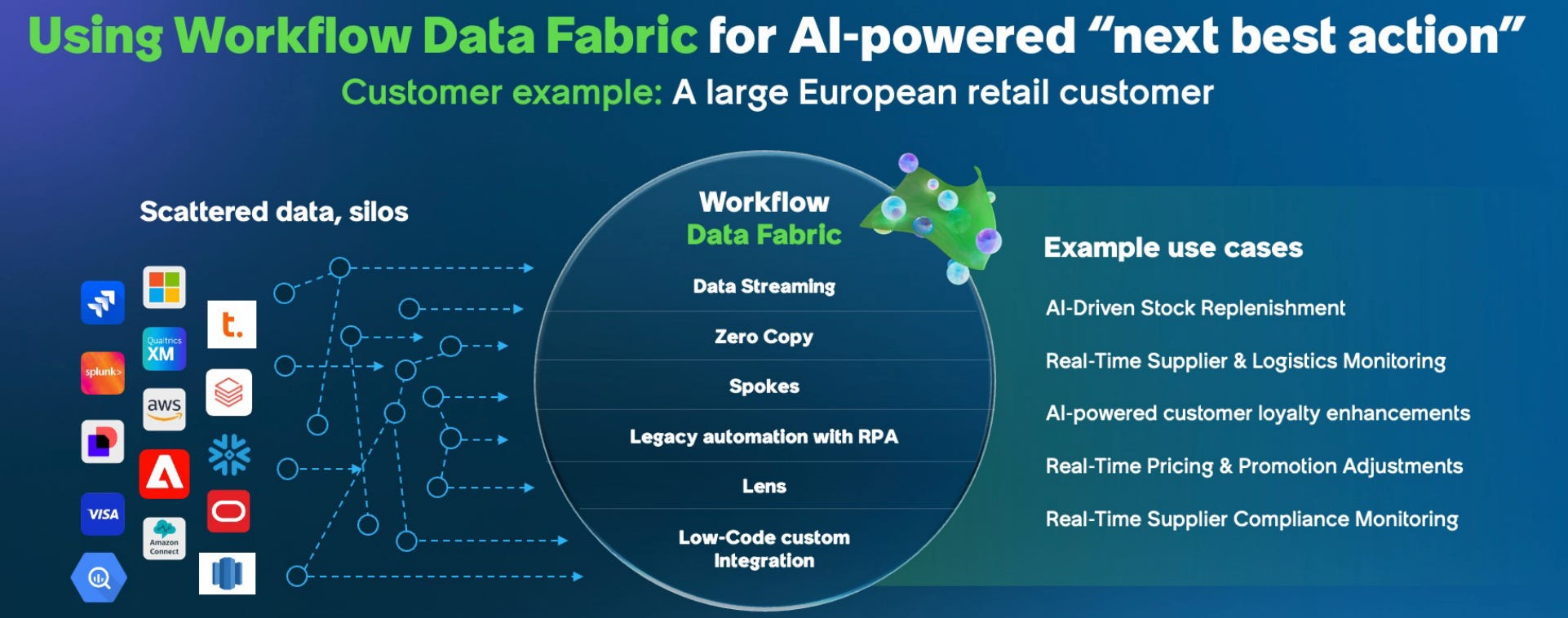
This means that the company’s engineers can focus on higher-level problem-solving and feature development, instead of constantly plugging holes in a never-ending maintenance cycle.
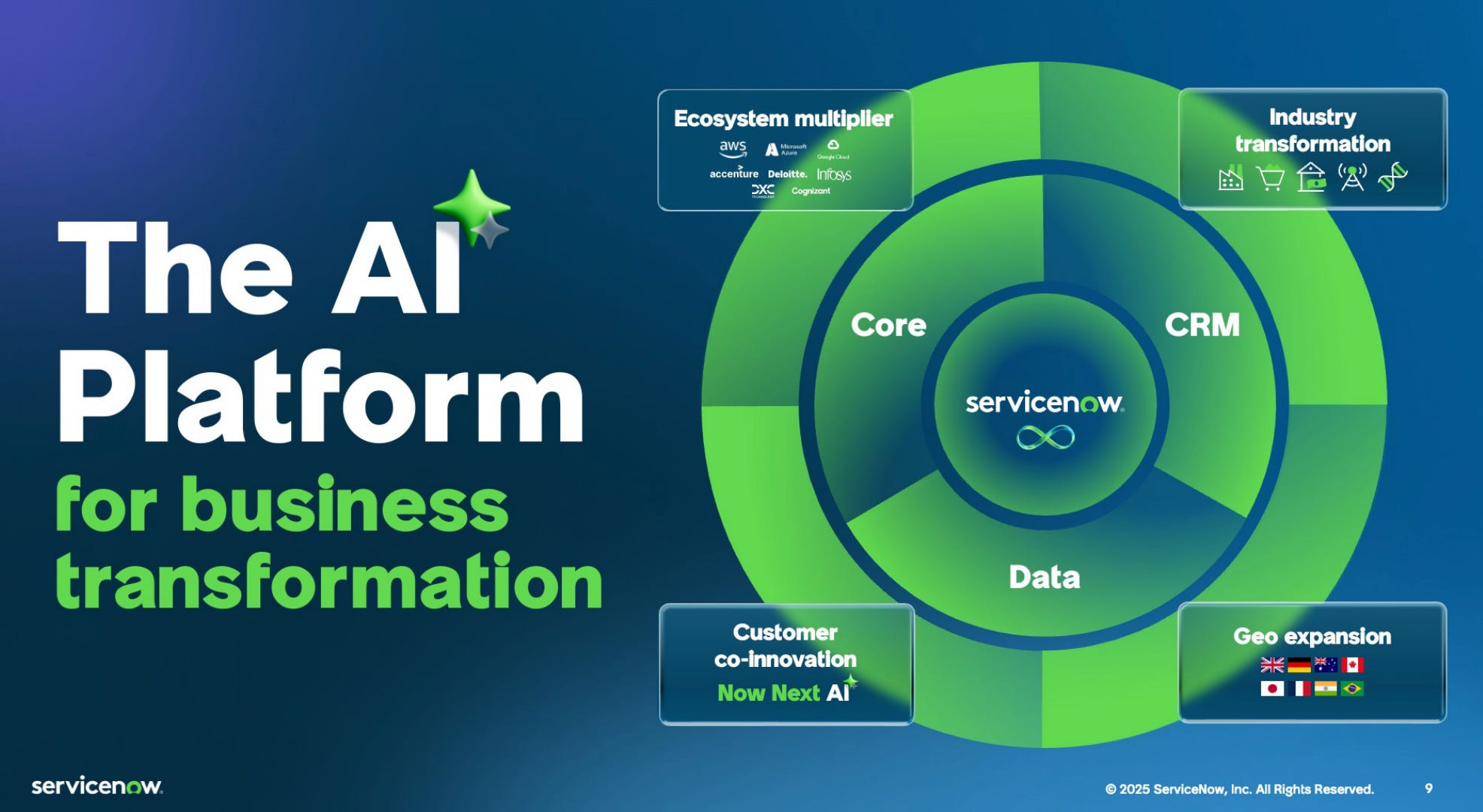
Atlassian and SAP are similarly positioned. While new software companies may have the advantage of AI tools to generate code, incumbents are leveraging AI to streamline their massive operational overheads – something new entrants can’t easily replicate.
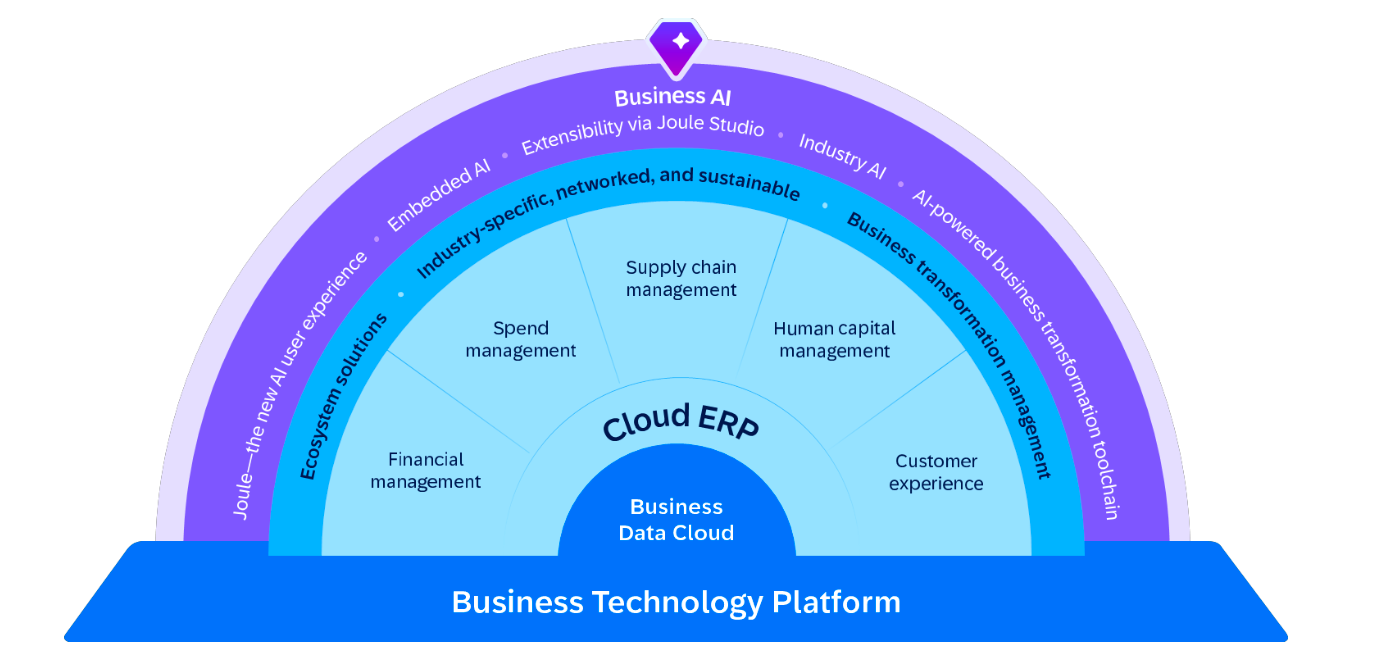
They already have the scale, the data, and the maintenance-heavy requirements that will make AI tools incredibly effective. In other words, AI is the shovel – but the real miners are the incumbents with deep, real “mines” to dig in.
SAP LEVERAGES AI TO DRIVE 60% INCREASE IN OPERATIONAL EFFICIENCY, CHANGING THE LANDSCAPE OF ENTERPRISE RESOURCE PLANNING | SAP Investor Relations, June 2030
SAP: Strengthening the Moat with AI and Strategic Licensing
The “moat” for SAP was significantly deepened by the introduction of the Joule Agentic CFO Suite, which automated complex, regulated financial tasks such as International Trade Classification and Cash Management. SAP leveraged its position as the “system of record” for enterprises to embed AI-driven processes that made their ERP system the indispensable “brain” behind every corporate decision. By integrating AI into the fabric of executive workflows, particularly through bidirectional integration with Microsoft 365 Copilot, SAP’s data flowed directly into the day-to-day activities of corporate leaders, making it the central hub of AI-driven corporate decision-making.
Beyond enhancing internal operations, SAP’s AI-powered integration with Microsoft 365 Copilot also became a critical tool in negotiating more favorable licensing deals with companies building on the SAP system. In fact, early signs of this shift were visible as early as 2026, when Zalaris, a small Scandinavian partner of SAP, revealed the economic terms of their renewed partnership. Zalaris agreed to give up some margin to benefit from the expanded AI capabilities embedded within SAP’s suite, recognizing that the value created through enhanced capabilities was far more valuable in the long run than the short-term cost.
This trend of value exchange would later proliferate as other companies in the SAP ecosystem saw the benefits of increased integration with SAP’s AI tools and agreed to similar terms – sacrificing some margin in exchange for access to a more powerful, AI-enhanced platform that could scale their own operations more effectively.
SAP LEVERAGES AI TO DRIVE NEW LICENSING DEALS AND EXPANDS ERP SYSTEM’S INTEGRATION, INCREASING MARKET SHARE BY 25% | SAP Investor Relations, June 2030
This growing AI ecosystem around SAP allowed the company to not only maintain its dominance in the enterprise software market but also strengthen its licensing power and strategic position in the rapidly evolving AI-driven business landscape. As more companies moved to integrate AI-powered tools into their business processes, SAP’s strategic value became undeniable – transforming it from a software provider into the nucleus around which enterprise innovation revolved.
Atlassian - Automating Maintenance at Scale
Take Atlassian, for example. The company, known for its software tools like Jira and Confluence, has a massive customer base and a deep infrastructure already in place. But rather than merely relying on traditional development cycles, Atlassian has started using AI to automate much of the maintenance and support that comes with running a product at scale.
THE UNIFIED SYSTEM: ATLASSIAN TEAMWORK COLLECTION HITS 100 MILLION SEATS AS 'SYSTEM OF WORK' REPLACES LEGACY ERP AS THE CORE ENTERPRISE OPERATING SYSTEM | Wall Street Journal, May 2030
The breakthrough came with Atlassian Rovo. Unlike general-purpose LLMs, Rovo utilizes a 'Teamwork Graph' to pull context across Jira, Confluence, and GitHub. By May 2030, Rovo Dev has moved beyond simple code suggestions; it now functions as an autonomous Site Reliability Engineer, identifying build failures and refactoring legacy codebases without a single Jira ticket being manually created by a human developer.
With AI handling repetitive tasks like bug fixes, user support, and even some aspects of code quality checks, Atlassian’s engineers can now focus on building new features and enhancing user experiences. The result? The company has been able to reduce the time spent on manual maintenance tasks by 30%, allowing it to deploy updates faster and more efficiently, spending more time on “strategic work.” At the same time, the AI systems are learning from user feedback and improving themselves, creating a self-perpetuating cycle of product improvement.
By leveraging AI, Atlassian is not only improving the quality and speed of its updates but also lowering operational costs in the process – something new, smaller competitors would struggle to achieve.
In sum, by 2030, the majority of software companies will have integrated AI not just as a code generator, but as an essential tool for maintaining and refining their products. AI-powered systems will be responsible for automating the lion’s share of the “hamster wheel” work, allowing companies to scale their operations more efficiently than ever before. Incumbents like SAP, Atlassian, and ServiceNow will leverage their existing scale, data, and infrastructure to dominate their markets, while smaller, new entrants will struggle to keep up.
SERVICE NOW DELIVERS AI-POWERED WORKFLOW OPTIMIZATION THAT AUTOMATES 80% OF IT MANAGEMENT TASKS, INCREASING PRODUCTIVITY AND COST-SAVINGS | ServiceNow Investor Relations, April 2030
Constellation Software: The Acquirer Poised to Dominate in the AI Era
In the AI-powered future, Constellation Software stands out as one of the most strategic players in the software industry. As a serial acquirer and VMS consolidator, Constellation has built a business model centered on acquiring niche software companies – many of them operating in vertical markets that are too small to attract venture capital or major AI-native entrants. This unique positioning allows Constellation to thrive even in the face of market volatility, AI disruption, and the growing pressures of lower valuations.
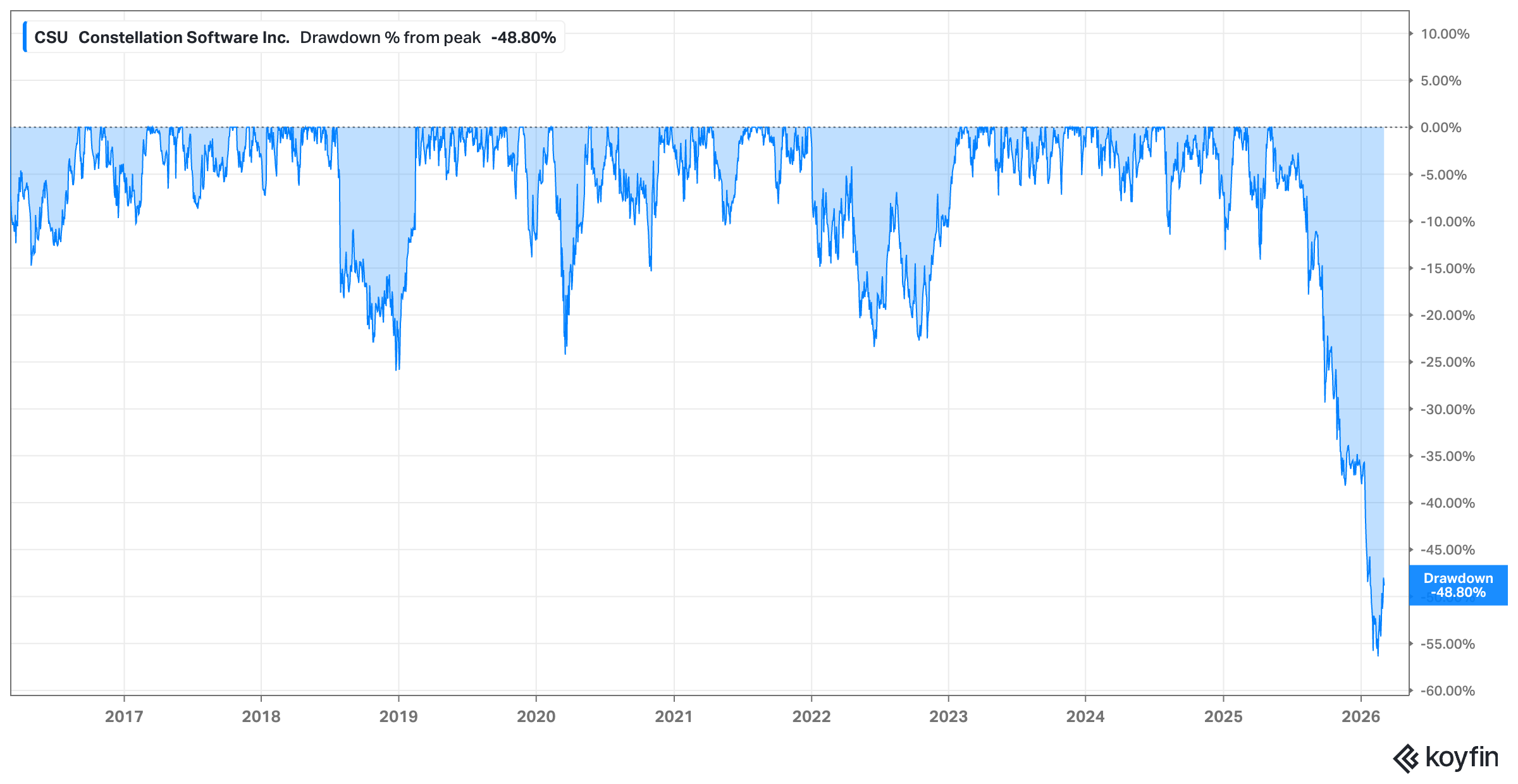
In the wake of the so-called “AI scare,” the opportunities for Constellation to deploy capital in high-quality software businesses have only increased. While many investors see the AI-driven downturn as a sign of broader market instability, Constellation views it as a net positive, accelerating its capital deployment strategy at higher internal rates of return (IRRs) than ever before, even venturing more aggressively into public markets to opportunistically make use of the depressed valuation of software stocks.
This is a strategy poised to unlock long-term value, particularly in the rapidly evolving VMS landscape.
The market’s 2025/26 response to AI’s disruptive potential has created a unique opportunity for Constellation Software. As stock prices across the software sector have plummeted, driven by concerns over the future viability of tech companies in the face of AI advancements, Constellation has found itself in an advantageous position. Lower valuations and indiscriminate selling pressure provide the perfect environment for serial acquirers like Constellation to deploy capital aggressively, acquiring undervalued companies at attractive multiples.
2026: CONSTELLATION SOFTWARE CAPITALIZES ON AI MARKET DOWNTURN, SECURES HIGHLY-VALUED VMS COMPANIES AT DISCOUNTED PRICES, GENERATING 75% IRR OVER 5 YEARS | Financial Times, November 2026
For those unfamiliar with Constellation Software’s strategy, the approach is simple yet powerful: buy high-quality software businesses at low, single-digit multiples, ideally depressed prices, integrate them into its already massive portfolio of VMS companies, and drive operational improvements. The result? Strong returns on investment (IRR) even in times of market uncertainty.

Historically, Constellation has seen its highest returns when market pessimism is at its peak – when others are hesitant, Constellation is busy acquiring the very assets others are ignoring. So lower software valuations are a net positive for Constellation’s capital deployment approach.
Winning Through AI in Niche Markets and Sustaining Innovation
Projecting out to 2030, Constellation Software has firmly cemented its place at the top of the VMS sector, having successfully weathered the disruption waves brought on by AI. A key factor behind its ongoing dominance is its strategic focus on hyper-niche vertical markets – industries that, although small in scope, are deeply profitable and difficult for AI-native startups to target effectively. These markets, which typically generate revenues in the range of $10 million to $50 million, represent an ideal sweet spot for incumbents like Constellation, offering stable, long-term growth.
While venture-backed AI startups chase the larger, horizontally focused markets such as CRM, accounting, or enterprise resource planning, the opportunity cost of entering smaller verticals is too high. These AI-native players often seek broader addressable markets with large, scalable potential to justify their high-risk investments. For Constellation, however, these small but lucrative markets represent untapped potential where AI disruptors simply cannot afford to play at scale. Constellation has long recognized this, capitalizing on its deep industry expertise and established relationships with niche sectors, from agriculture to healthcare to manufacturing.
By 2030, Constellation has greatly expanded its footprint, benefiting from the “small prize” protection. The company’s focus on verticals too small for major players to justify AI investments has allowed Constellation to thrive even as AI continues to evolve. Its vast portfolio of VMS acquisitions and “deal sourcing muscle,” combined with AI-enhanced efficiencies, has enabled it to scale quickly and capture more value than many of the larger AI disruptors targeting broader markets.
CONSTELLATION SOFTWARE ALMOST DOUBLES ITS 800-900 VMS BUSINESS PORTFOLIO OVER FIVE YEARS WITH AI-ENABLED ACQUISITIONS, ACHIEVING 30% ANNUAL GROWTH IN VMS SECTOR | Constellation Software Investor Relations, January 2030
AI has played a critical role in Constellation Software’s continued market leadership, not by disrupting its core business model but by enhancing it. In fact, AI has acted as a “sustaining innovation” – allowing Constellation to improve its existing legacy products without needing a complete overhaul or massive investment. For VMS providers, AI’s real value is not in creating entirely new products or markets, but in enabling the automation of key processes, streamlining workflows, and enhancing overall efficiency.
Constellation has fully integrated AI into its vast portfolio of vertical market software solutions within just five years, improving everything from customer support automation and compliance updates to predictive analytics and data-driven decision-making tools. These AI-driven enhancements have allowed Constellation to maintain its competitive edge while offering its clients more efficient, future-proofed solutions.
AI has also helped Constellation maintain a key advantage over potential disruptors: it has modernized and enhanced its existing solutions without overhauling the underlying models. For example, AI-powered automation now handles routine customer service inquiries across many of Constellation’s software platforms, freeing up human resources to tackle more complex tasks. This has allowed Constellation to scale its products efficiently, keeping costs down while increasing the overall value it provides to customers.
CONSTELLATION SOFTWARE USES AI TO INTEGRATE AUTOMATED SUPPORT AND PREDICTIVE ANALYTICS, DRIVING EFFICIENCY AND EXPANDING MARKET SHARE | CNBC, May 2030
E-commerce and Retail Hubs Resisting Disruption
By 2030, companies like Shopify and Toast have solidified their dominance as the operating systems for entire industries – e-commerce and restaurants, respectively. Their long-term success is rooted in their ability to aggregate and integrate the fragmented needs of their customers into a single, seamless platform. Unlike single-function tools, these platforms offer everything businesses need to operate smoothly, making them indispensable to their users.
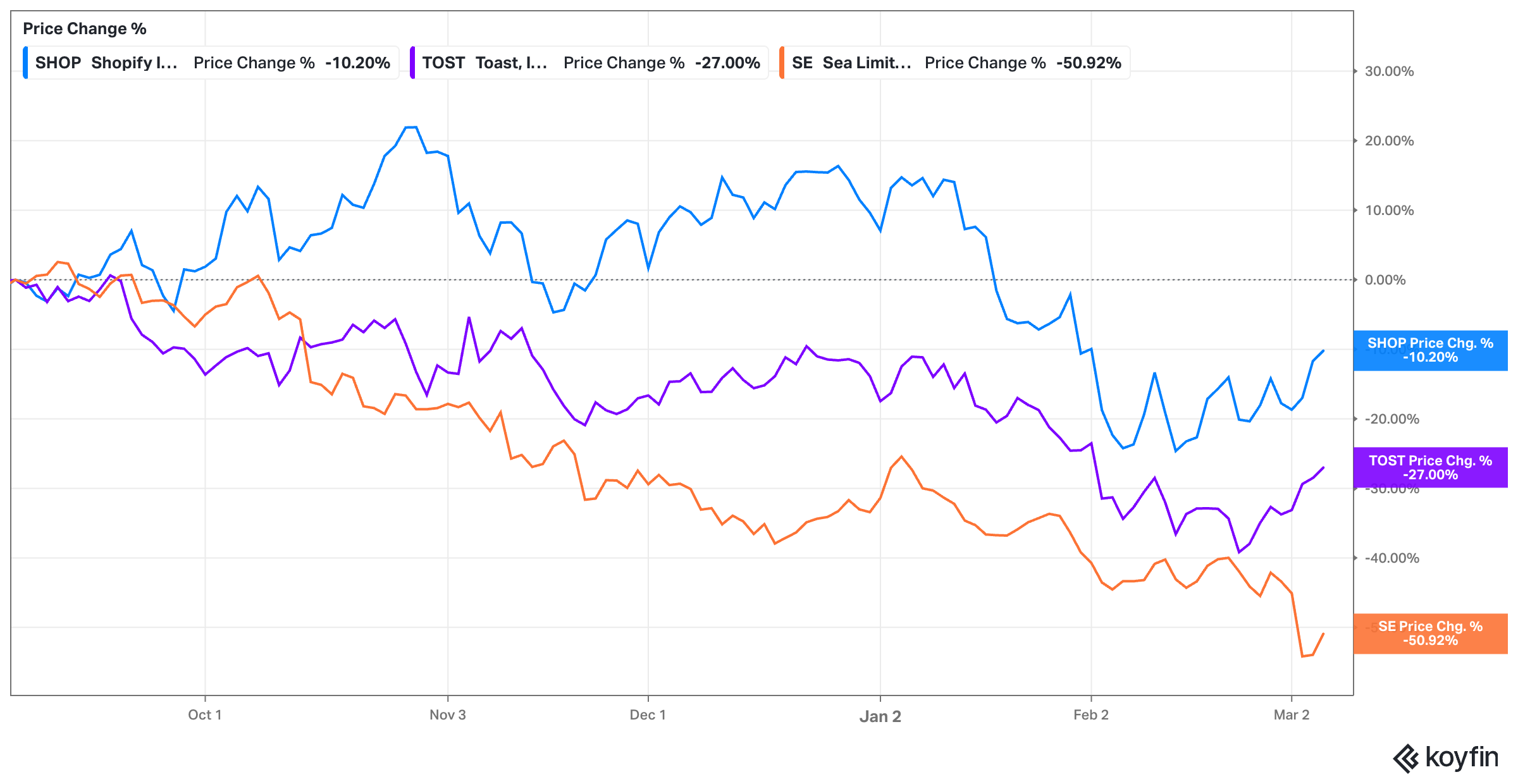
What truly sets these companies apart is their ability to adapt and integrate every new AI innovation that emerges. Far from being disrupted by AI, Shopify and Toast are the first adopters, seamlessly weaving AI-driven capabilities into their platforms, continually enhancing their value proposition without missing a beat. As AI-driven tools and services proliferate, these platforms don’t just integrate them – they expand their ecosystems, enhancing their role as central hubs for their customers’ businesses.
As we cross the 2030 threshold, Shopify has evolved far beyond its early days as a platform for online store management. Shopify has transformed into the central nervous system of the global retail industry, actively orchestrating every aspect of e-commerce operations. For more than a decade, Shopify’s core value proposition was its ability to integrate diverse tools into a unified experience. Retailers no longer have to stitch together separate tools for website hosting, payment processing, CRM, marketing campaigns, and logistics. Shopify offers all of that in one platform – acting as a powerful, AI-powered digital operating system for retailers.
But in 2030, Shopify has gone much further. It no longer just houses tools – it now orchestrates them with intelligence. Shopify’s platform has evolved into a self-managing agent that continuously analyzes retailer behavior, customer data, and supply chain logistics in real-time. Shopify is not just offering a set of services; it’s now actively making decisions for retailers – autonomously adjusting inventory, dynamically optimizing pricing, initiating and managing ad campaigns, and even generating personalized marketing content – all powered by cutting-edge AI.
SHOPIFY DOMINATES GLOBAL E-COMMERCE WITH $100 BILLION IN SALES, INTEGRATING AI-POWERED TOOLS TO DRIVE RETAILERS’ GROWTH BY 30% | Shopify Investor Relations, July 2030
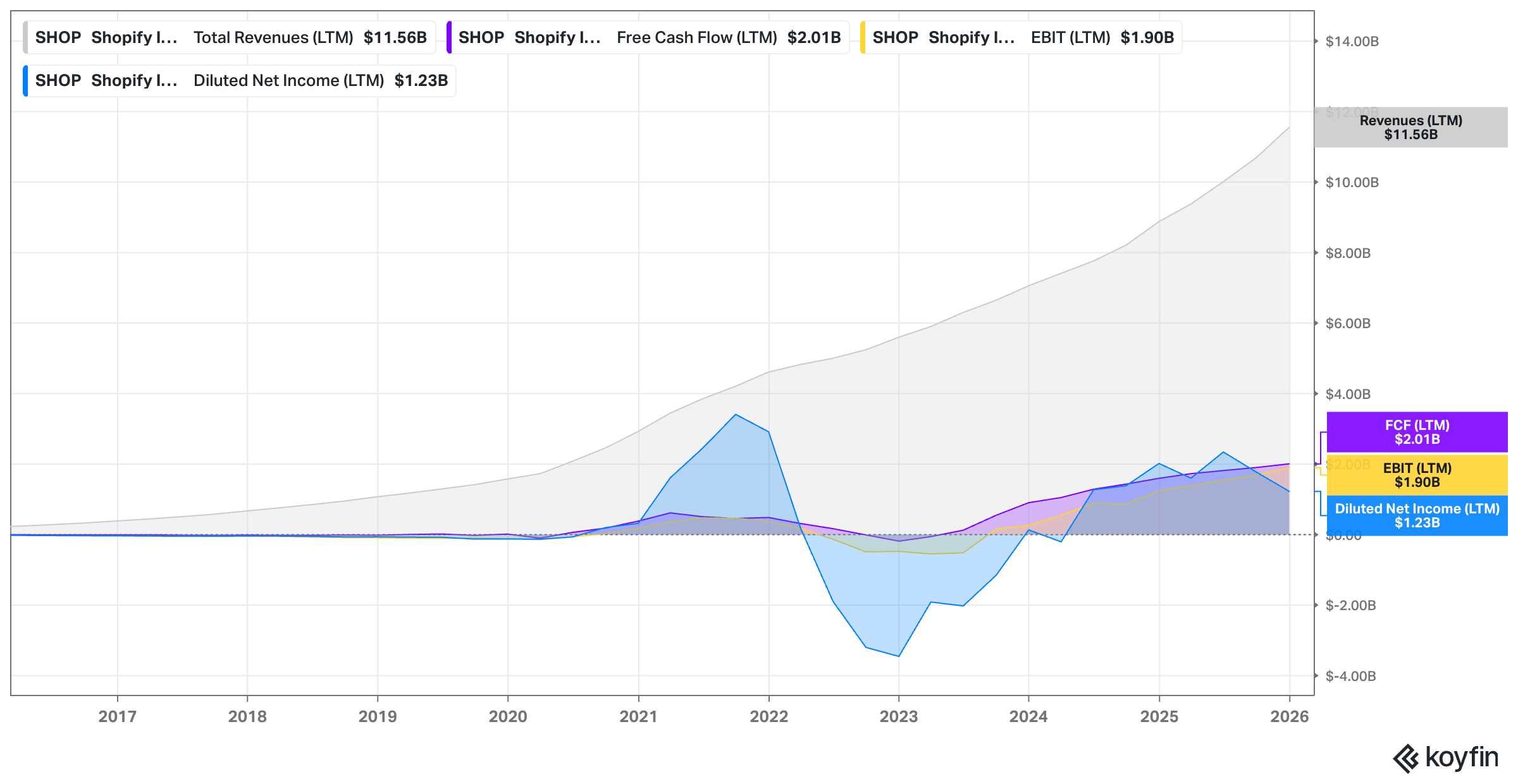
In this new reality, Shopify’s AI-driven agents are deeply embedded into every aspect of the business, constantly learning from millions of transactions to optimize performance. Retailers no longer have to make individual decisions about marketing campaigns, product recommendations, or inventory management. Shopify’s AI agents do that for them, analyzing vast amounts of data in real-time to predict demand, automate stock levels, and generate customized content.
SHOPIFY CANNOT BE STOPPED AND POWERS 65% OF GLOBAL E-COMMERCE SALES AS THE COMPANY IS LEVERAGING AI-DRIVEN AGENTS TO PROVIDE END-TO-END AUTOMATED SOLUTIONS FOR RETAILERS | Investing.com, July 2030
Shopify continuously optimizes retailers’ offerings and evolves based on its own AI-driven learnings. For example, the AI-driven agents behind Shopify’s platform can predict which products will be in demand in the upcoming weeks, automatically adjust inventory levels, and suggest personalized discounts to customers based on their previous buying behavior – all in a seamless loop of optimization.
This agentic power gives Shopify a competitive edge in 2030. Retailers no longer need to manually adjust their strategies. Shopify’s AI agents drive decision-making autonomously, allowing businesses to scale rapidly without having to invest in additional human resources or third-party solutions. As AI continues to evolve, Shopify’s platform will only become smarter, more efficient, and indispensable to the growing retail industry.
Toast: The Essential Operating System for Restaurants in 2030
Similarly, Toast has emerged as the central hub for restaurants. Fast-forward to 2030 and Toast’s platform is no longer primarily about point-of-sale (POS) transactions; instead, the firm has evolved into a fully-fledged operating system for the entire restaurant ecosystem, offering everything from automated ordering and staff scheduling to inventory management and customer engagement. The restaurant industry, like e-commerce, is full of fragmented tools. Toast has unified these functions into a single, easy-to-use platform, enabling restaurants to focus on serving food and creating great customer experiences, rather than managing complex software.
Toast’s true strength lies in its ability to integrate new AI-driven features seamlessly into its platform. In 2030, AI-powered recommendations for menu optimization, predictive ordering based on demand patterns, and automated scheduling are all core features. For restaurant owners, this means faster decision-making, more efficient operations, and better customer experiences – all delivered via Toast’s unified platform.
TOAST DRIVES $15 BILLION IN REVENUE, TRANSFORMING THE RESTAURANT INDUSTRY WITH AI-POWERED OPERATIONS AND AUTOMATED ORDER MANAGEMENT | Toast Investor Relations, May 2030
As the operating system for restaurants, Toast is the key to streamlining restaurant operations, enabling restaurants to scale quickly, and adapting seamlessly to new AI tools that improve every facet of their business. Toast’s position as the central hub for restaurant technology makes it an essential tool for millions of eateries, and by 2030, it remains largely immune to disruption from AI-native competitors, thanks to its holistic platform and ongoing AI integrations.
Similarly, upon reaching the 2030 milestone, Sea Limited has seamlessly integrated AI into every facet of its multifaceted business, transforming into the central operating system of Southeast Asia’s digital economy. Originally known for its e-commerce platform, Shopee, Sea Limited now actively and automatically orchestrates operations across its entire ecosystem, which includes e-commerce, digital entertainment, and digital payments. AI-driven agents manage everything from dynamic inventory and price optimization on Shopee, to personalized in-game experiences on Garena, and even automated financial services within SeaMoney. Rather than offering discrete tools, Sea Limited now delivers a fully integrated experience, where AI agents autonomously manage customer interactions, optimize payment flows, and adjust marketing spend and strategies in real-time. This intelligent infrastructure enables Sea Limited to scale rapidly in its geographies, continually enhancing value for users and businesses while maintaining a dominant position across multiple sectors in the region.
Revolutionizing Entertainment with AI
The year 2026 marked a critical turning point in AI’s role in entertainment, shifting from novelty video clips to full-fledged, AI-integrated production workflows. AI models that could generate high-quality 4K video, synchronize audio, and ensure character consistency dominated headlines. At the same time, AI-driven game development tools were evolving beyond procedural worlds into creating autonomous characters and dynamic narratives.
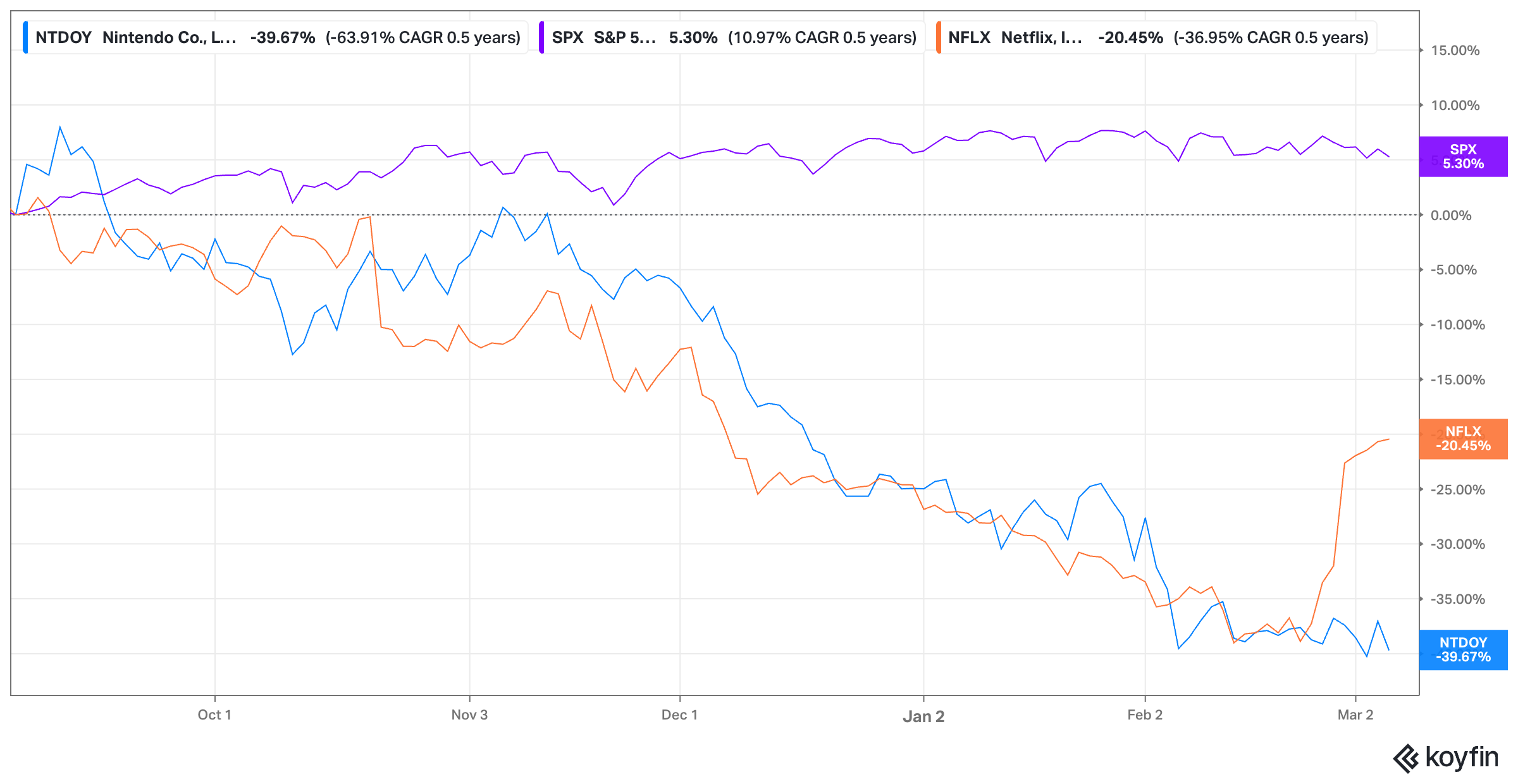
For Netflix and Nintendo, these advances sparked both fear and opportunity. As AI-generated video content and game development tools gained momentum, stocks in the entertainment sector plummeted – Netflix and Nintendo saw steep declines, largely due to the surge in AI-powered video creation and game development tools that disrupted traditional production models.
Netflix
In 2026, Netflix’s share price took a sharp dive, much like its peers, as AI video generation models like OpenAI’s Sora 2, Kling 3.0, and LTX-2 revolutionized content creation. Sora 2, for example, partnered with Disney to allow users to generate 4K clips using popular intellectual properties like Star Wars and Marvel – a tool that shook the content creation industry to its core. With AI-generated clips now cheaper and faster to produce, questions about the value of traditional production were raised, leaving Netflix in a precarious position.
However, Netflix didn’t retreat. Instead, it embraced these AI advancements as a natural extension of its content creation process.

As a result, by the time 2030 arrives, Netflix had fully integrated these video generation tools internally to streamline production while enhancing creativity. The company even embedded AI tools so seamlessly that subscribers of a premium tier can generate their own series, with AI allowing them to customize storylines and even use their own faces as the main characters, creating a deeply personalized viewing experience that blurs the line between audience and creator.
NETFLIX TRANSFORMS CONTENT CREATION WITH AI, CUTTING PRODUCTION COSTS BY 40% AND INCREASING GLOBAL VIEWERSHIP BY 50% | Wall Street Journal, March 2030
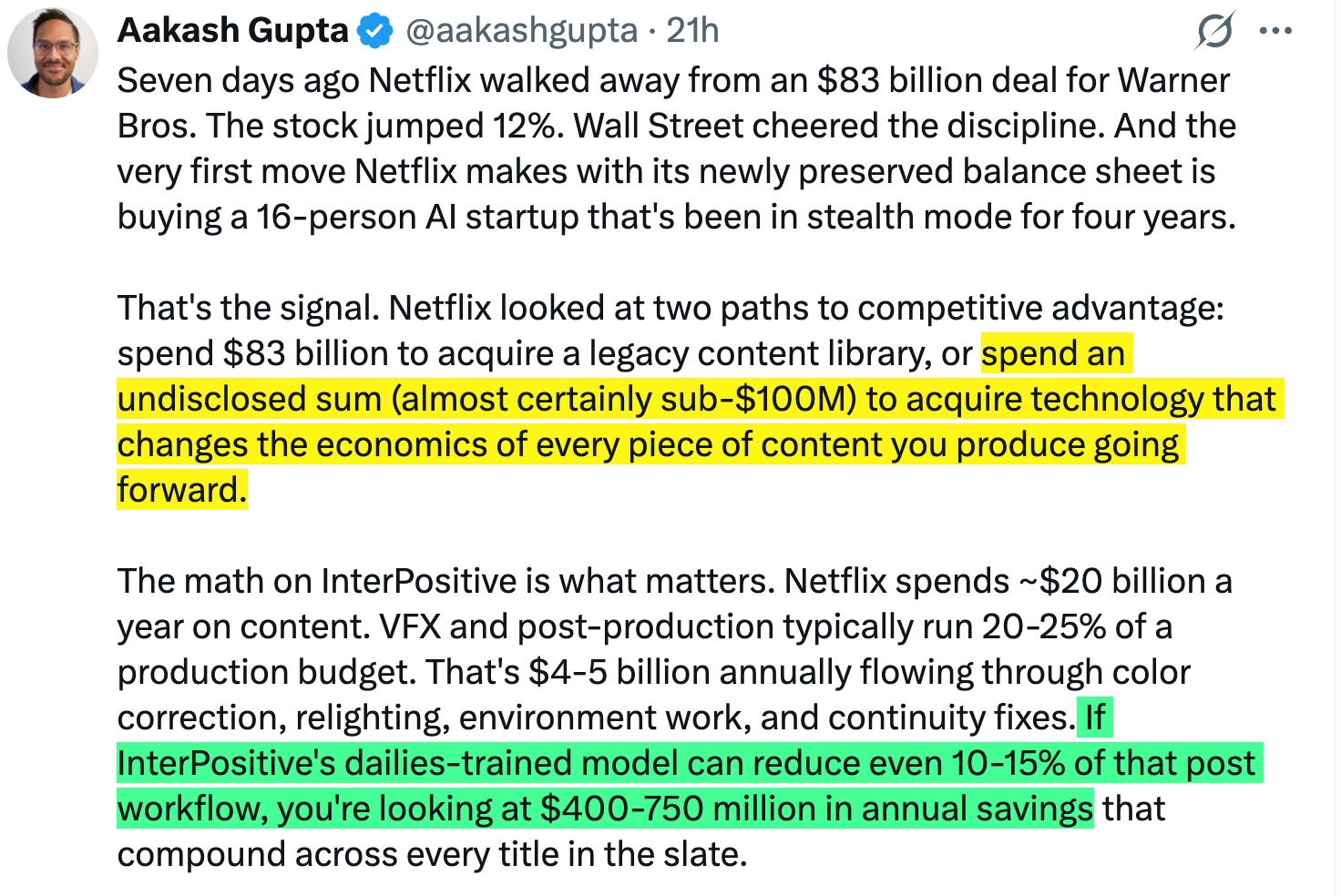
By embracing the tools that initially triggered its stock sell-off, Netflix has not only survived the AI-driven disruption—it has thrived. The company integrated AI video generation models into its production pipeline, which now powers a constant stream of high-quality content while retaining creative control. AI isn’t replacing Netflix’s content—it’s helping to augment the creative process, making production more efficient and its output more dynamic.
Nintendo: Leveraging AI to Lead Game Development Innovation
In 2026, Nintendo’s stock followed a similar trajectory downward, as AI tools like Google Project Genie, NVIDIA’s ACE and Promethean AI began transforming the gaming landscape. ACE enabled NPCs to engage in unscripted conversations with players, while Neural Shaders and DLSS 4 promised an AI-boosted frame rate and real-time texture generation – shifting the way developers built game worlds.
Nintendo has fully embraced the potential of AI to revolutionize the gaming experience, going beyond traditional game design and offering players the ability to become creators themselves. In partnership with Google, Nintendo developed its own version of Project Genie, an AI-powered game development engine that allows players to create entire worlds, levels, and characters within Nintendo’s most iconic franchises, like Mario and The Legend of Zelda.
Through this collaboration, Nintendo integrated this AI engine into its platforms, enabling players to use intuitive tools powered by neural networks to design custom levels, generate dynamic environments, and even craft interactive storylines. For example, Zelda fans can now build their own Hyrule landscapes, create quests, and design intricate puzzle systems within seconds; all while incorporating AI-driven elements that adapt based on player choices. Meanwhile, Super Mario enthusiasts can use the engine to design complex 2D or 3D levels via voice input that seamlessly blend with existing game mechanics, adding their own AI-enhanced obstacles, characters, and story elements.
In a further leap forward, players can even import their own avatars, or use AI to insert their faces as characters in their creations, making these worlds even more personal and immersive.
This level of customization and creativity has turned Nintendo games into endless playgrounds, where fans are no longer just players – they are creators, shaping the games they love.
This AI-powered revolution has sparked a massive shift in the way gamers engage with their favorite franchises, providing them with tools that were previously reserved for professional developers.
NINTENDO LEVERAGES AI-POWERED PROJECT GENIE PARTNERSHIP WITH GOOGLE, ALLOWING GAMERS TO CREATE CUSTOM LEVELS AND WORLDS IN MARIO AND ZELDA | Nintendo Investor Relations, April 2030
The company also embraced agentic AI tools like Claude 4.5 and GPT-5 to accelerate game testing, debug code autonomously, and even refactor game physics in real-time, drastically cutting down development time.
NINTENDO POSTS 60% EBIT MARGINS AS THE JAPAN-BASED COMPANY USES AI TO DRIVE 20% GROWTH IN THE GLOBAL GAMING MARKET, CREATING IMMERSIVE, DYNAMIC EXPERIENCES FOR 500 MILLION PLAYERS | Nintendo Investor Relations, May 2030
In summary, in five years, Netflix and Nintendo have proven that AI can coexist with creativity rather than disrupt it. In the wake of their initial stock sell-offs, both companies adapted by embracing AI as a complement to their existing business models. While smaller competitors used AI to disrupt or replace traditional workflows, Netflix and Nintendo focused on augmenting their existing processes, leveraging AI to enhance efficiency, creativity, and user experiences.
For Netflix, AI isn’t just about faster content creation – it’s about delivering higher-quality and more personalized content at scale. For Nintendo, AI is the key to creating richer, more responsive game worlds while allowing their development teams to focus on the most creative aspects of game design.
NETFLIX AND NINTENDO REDEFINE ENTERTAINMENT AND GAMING WITH AI-ENABLED TOOLS, DRIVING TENS AND TENS OF BILLIONS IN COMBINED ADDITIONAL REVENUE | Reuters, February 2030”
Larger Themes: How AI Will Elevate Software Businesses
As we’ve seen, AI’s influence in the software industry goes far beyond simple automation or task replacement. For companies like Netflix, Nintendo, and Shopify, AI is not a disruptor; it is a tool that enhances their ability to create, scale, innovate, and maintain their market dominance.
But as we move into more nuanced territory, it becomes clear that AI’s impact will be felt across industries in ways that go well beyond the obvious applications.
Rather than focusing solely on how AI could replace jobs or disrupt markets, the next phase of this conversation centers on how AI will elevate the businesses that adopt it. In industries like entertainment, gaming, and SaaS, incumbents who embrace AI will harness it to improve operational productivity, gain a stronger foothold in regulated industries, and leverage compliance advantages that startups simply cannot replicate.
The primary advantage that AI offers to established software businesses is its ability to supercharge internal productivity, reduce costs, and as a result, boost margins. From automating routine tasks to enabling more efficient resource allocation, AI can reduce operational costs while boosting throughput across various functions. For large software platforms, this means being able to scale their offerings, improve service delivery, and accelerate the development of new features – all without dramatically increasing overhead.
AI ENHANCES SOFTWARE COMPANIES’ OPERATIONS WITH $1 TRILLION IN REVENUE FROM AUTOMATED SYSTEMS AND SMARTER DECISION-MAKING | Reuters, October 2030
Regulatory Barriers Won’t Stop AI-Driven Incumbents
For many industries, regulatory barriers represent a significant challenge for newcomers, particularly in sectors like healthcare, finance, and pharmaceuticals. Epic Systems and Veeva are prime examples of companies that have built their success not just on the quality of their software, but on their ability to navigate complex regulatory environments. Their deep industry expertise and longstanding relationships with regulatory bodies have established strong barriers to entry for newer players.
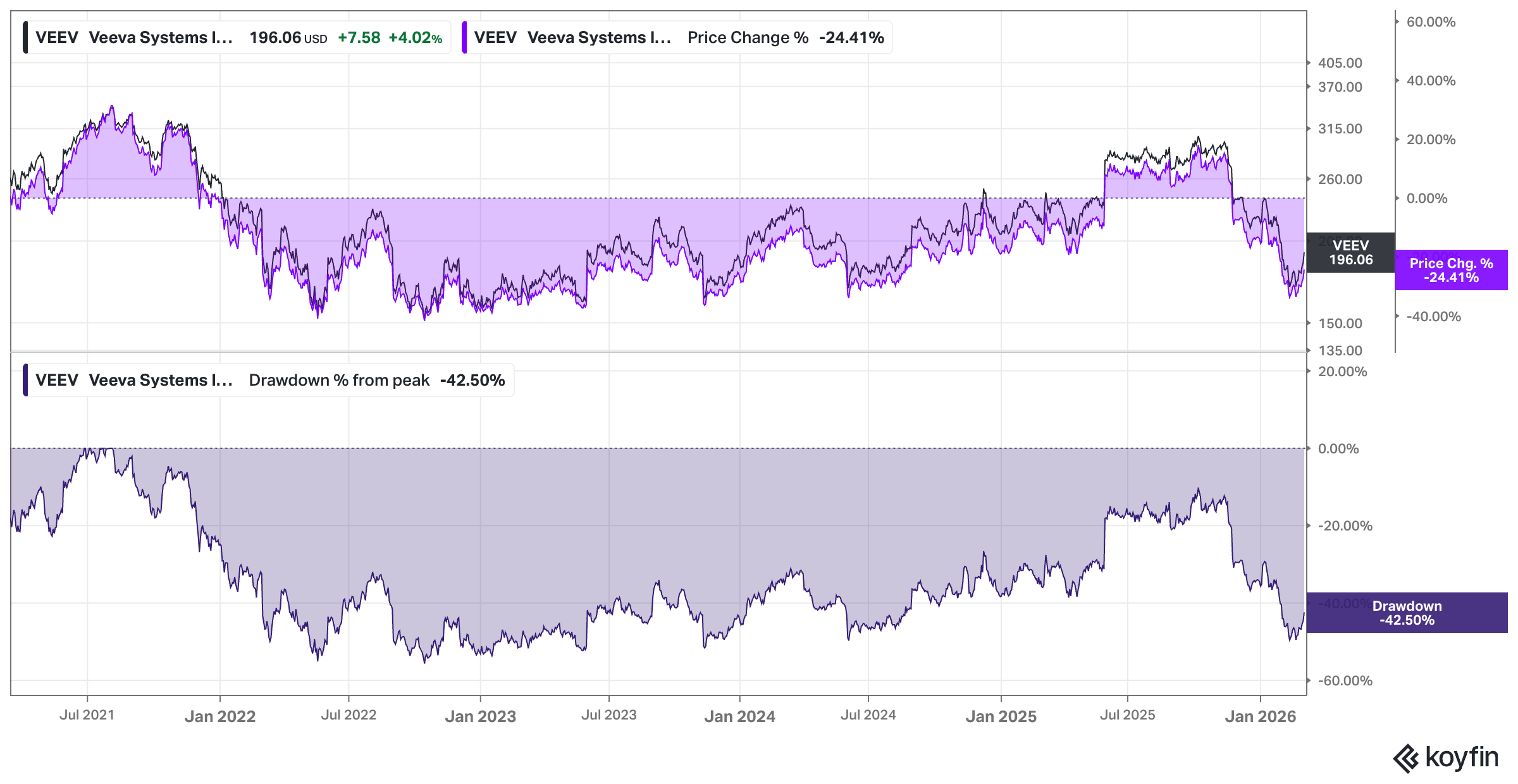
But AI is about to lead a Cambrian explosion in healthcare and drug development, where innovations previously confined to specialized research labs are now within reach of mainstream companies. In this new era, AI will revolutionize drug discovery, clinical trials, and patient care, unlocking new opportunities for rapid advancements that were once unimaginable. The ability to run AI-powered simulations, predict disease patterns, and generate new compounds at unprecedented speeds will change the landscape of the healthcare and pharmaceutical industries.
For companies like Veeva and Epic Systems, AI is the ultimate tool for accelerating the transformation of these industries while ensuring compliance with increasingly complex regulations. By using AI for automated compliance tracking, data auditing, and automated reporting, these incumbents are not just keeping up – they are leading the charge in creating a more efficient, error-free regulatory process.
Veeva, for example, is leveraging AI to streamline regulatory submissions for its life sciences clients, making the process faster, more accurate, and less prone to human error.
VEEVA AND EPIC SYSTEMS LEVERAGE AI IN COMPLIANCE AND AUTOMATED WORKFLOWS, CREATING A 62% PRODUCTIVITY BOOST IN HEALTHCARE AND LIFE SCIENCES | Barron’s, September 2030
In this Cambrian explosion of possibilities, Veeva benefits by providing the regulated infrastructure that can support this AI-driven transformation. While new AI-driven companies might develop innovative technologies, they’ll still face steep regulatory hurdles in a market that demands rigorous compliance standards. Veeva’s established position as the leading provider of cloud-based solutions for the life sciences sector gives it the advantage of being first in line to integrate AI into the complex, regulated world of drug development and clinical trials.
Conclusion: The Future of Software Is AI-Enhanced, Not AI-Replaced
In the years ahead, the software industry will be defined not by who can create the most disruptive technology, but by who can adapt fastest and best leverage AI to enhance and elevate existing business models. For incumbents like Netflix, Shopify, Salesforce, ServiceNow, Atlassian, SAP, Nintendo, Adobe, and Veeva, AI offers a golden opportunity to boost internal productivity, maintain their market positions, and continue innovating without the existential threat posed by new entrants.
Rather than fear AI’s disruptive potential, these companies will embrace it, using it to scale their businesses and remain relevant in a rapidly changing world. In this future, AI will not be the great disruptor – but the ultimate enabler for those companies who understand how to integrate it into their existing strengths.
THE AI ASCENDANCE: HOW SAP, NETFLIX, AND VEEVA ARE ANNIHILATING LEGACY CONSTRAINTS, LEVERAGING AUTONOMOUS INTELLIGENCE TO TRIGGER UNPRECEDENTED MARGIN EXPANSION AND A MASSIVE 3X EXPLOSION IN TOTAL ADDRESSABLE MARKET ACROSS THE GLOBAL SOFTWARE ECONOMY | Citrini Research on Substack, January 2030
This conclusion strikes me as spot on.
In the years ahead, the software industry will be defined not by who can create the most disruptive technology, but by who can adapt fastest and best leverage AI to enhance and elevate existing business models. For incumbents like Netflix, Shopify, Salesforce, ServiceNow, Atlassian, SAP, Nintendo, Adobe, and Veeva, AI offers a golden opportunity to boost internal productivity, maintain their market positions, and continue innovating without the existential threat posed by new entrants.
I think that direction is more likely. Some of these huge companies have the capital to deploy or gobble up start ups they see coming. With the cashflow and margins some of these businesses have, the valuation is absurd.