You can’t schedule creativity – ideas usually just hit you out of nowhere. You can prompt them by consuming good content in your niche, talking with peers, or taking long walks to let your mind wander, but the spark itself isn’t on a timer.
Anyway, yesterday evening one of those ideas popped up. It’s nothing groundbreaking, but it adds a helpful bit of nuance to how you view and react to drawdowns. I shared a quick version on X yesterday, but it deserved a full write-up:
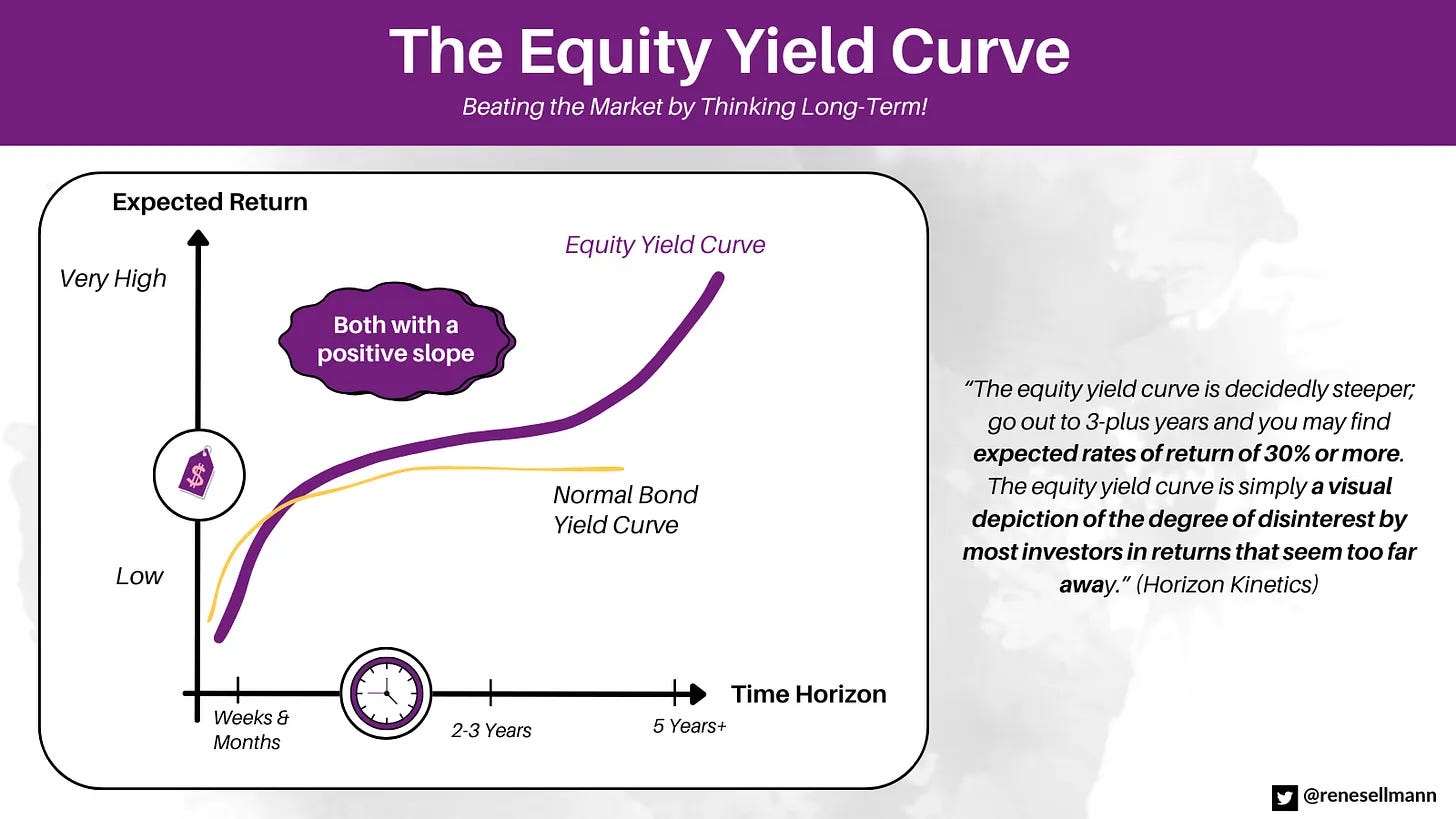
Investor temperament has two breaking points – and they sit at opposite ends of the clock.
Warren Buffett often notes that once you possess ordinary intelligence, investing success has little to do with IQ. What you need is the temperament to control the urges that get others into trouble.
Help me get over the 5,000 subscriber mark – only 5 more needed – and get 3 FREE GIFTS when you subscribe: 📈 Valuation Spreadsheet 📚 eBook: Investing Visualizations 💡 eBook: 250 Thought-Provoking Quotes - Join 4,900+ subscribers.
Howard Marks echoed this:
“Emotion is one of the investor’s greatest enemies.”
I’ve nodded along to that for years. But what does it look like in practice?
From my observations, most investors can handle moderate volatility reasonably well. They might get nervous when the market drops 3% in a day, or call a peer when a stock slides 10% to 20% over a few weeks or months.
But they still think rationally.
Michael Mauboussin splits an investor’s edge into four sources: informational, analytical, technical, and behavioral. The first three get competed away a little more every year. The behavioral edge – the one Buffett constantly stresses – belongs to whoever stays rational while everyone else panics.
So where exactly do investors crack? I believe, broadly speaking, there are two specific setups that push people over the edge:
1. The Sudden Shock: Sharp Volatility over a Short Timeframe
Two variables drive this reaction: the length of the window and the size of the move.
Length: A 20% slide spread over six months is something most people can stomach. Compress that same 20% into a single trading session after a bad earnings report, and a good chunk of self-proclaimed “next Warren Buffetts” freak out. They sell the position because they cannot handle the uncertainty. They check their phone every 30 seconds to find hidden “news.” Etc.
Magnitude: Plenty of investors can manage 20% over six months. But a 50% plunge over that same stretch causes many to throw logic out the window – regardless of underlying business performance.
Behavioral economists call this myopic loss aversion, a concept Mauboussin has written about for years. We feel the pain of losses roughly twice as intensely as the joy of equivalent gains, and the more frequently we check, the more losses we see.
A sudden drop hits both nerves at once, since everyone refreshes their brokerage app on earnings day, and when they see a -20% down move, they’ll refresh the app – or X app or their investing platform – again and again literally every 97 seconds...
2. The Long Grind: A Slow Loss (or Sideways Drag) Over Years
The second setup flies under most radars: a slow, grinding decline over an extended timeframe.
In fact, it doesn’t even have to be a loss. A position that does nothing for multiple years breaks people just as easily. In an era of short attention spans and immediate gratification, twelve months of sideways movement is unbearable for many.
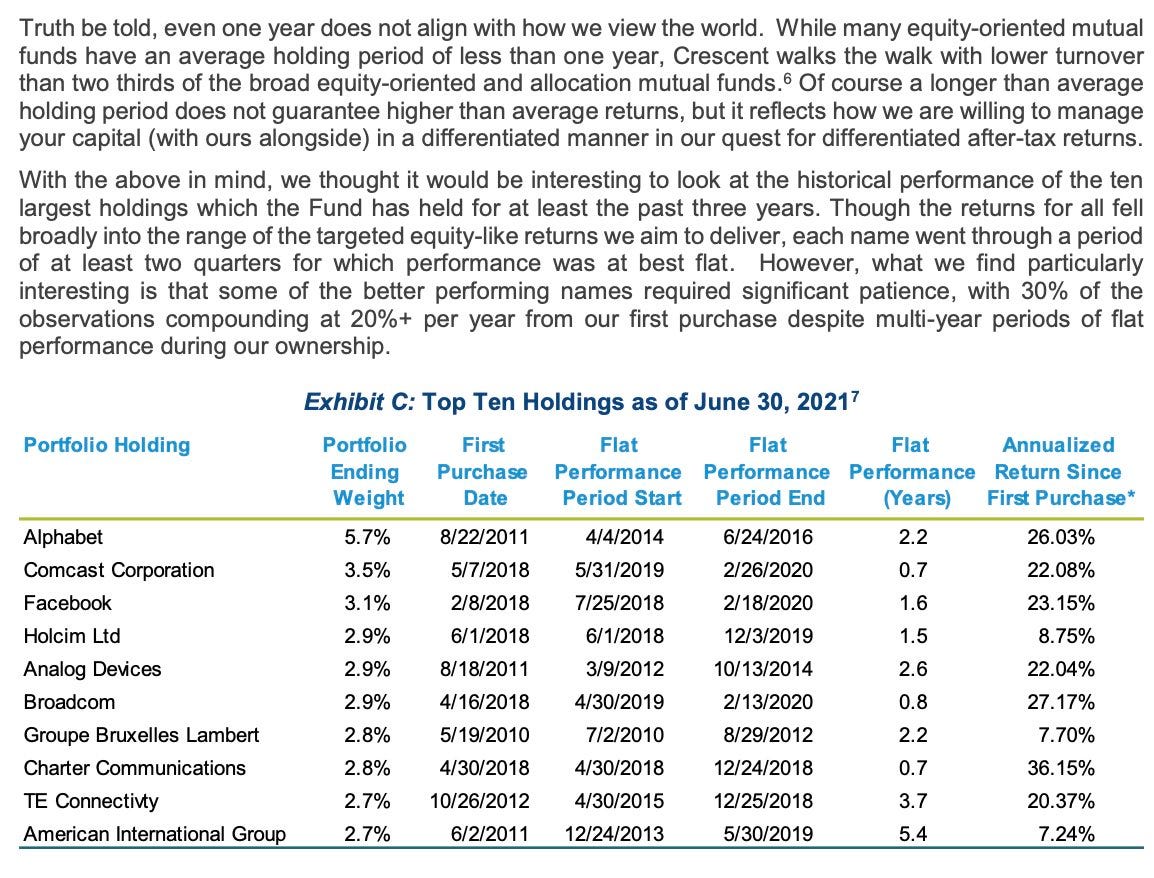
But when investing in stocks with a long-term mindset, you have to prepare for multi-year flat return periods in individual equities. And they can still outperform tremendously with 20%+ CAGRs, despite periods of underperformance. Here’s a chart from a fund letter I keep coming back to.
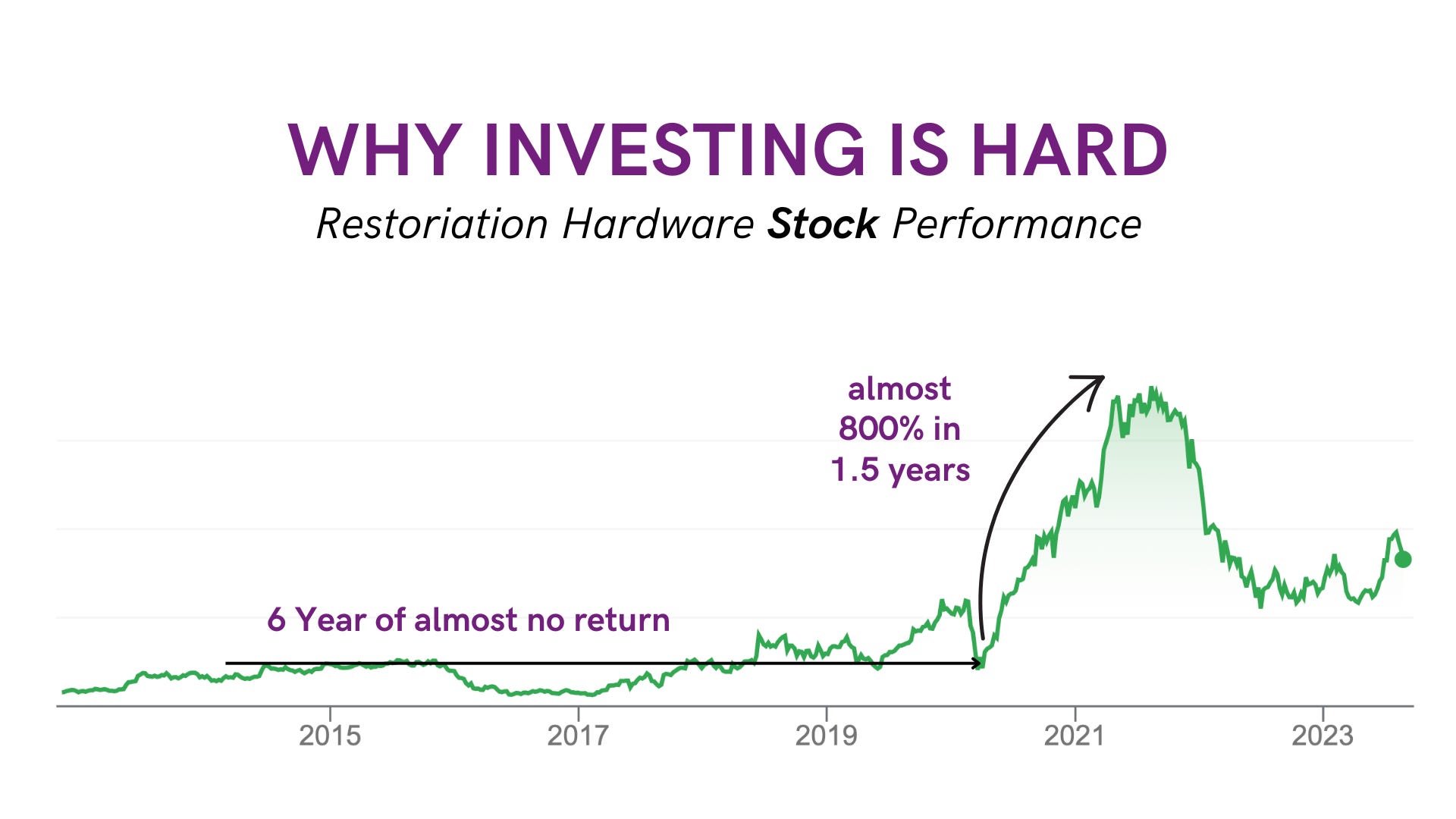
Now picture a stock that is not only flat, but drops 20%, 30% or 66% over a couple of months, or years, and stays stuck there a looong time … Close your eyes and truly imagine the feeling of “feeling stuck” with the stock. You know the math of losses and gains is counterintuitive because a percentage loss requires a much larger percentage gain just to break even.
Maybe you pitched it to your peers.
Maybe you wrote about it publicly.
Maybe you tied your online identity to it.
For three years, you sit on that paper loss while the underlying business performs perfectly fine. Most investors simply can’t take it – three years feels like an eternity. They question their thesis. They wonder if they missed something. They start believing that the business deteriorated even if it didn’t.
Price drives narrative.
And then they decide to cut losses. To cut the pain.
And usually that’s the worst time to do it. I’ve seen it time and time again, when multiple investors “just cannot take it anymore,” a stock subsequently starts rebounding and shoots up triple digits.
The painful truth is that this grind is closer to the norm than the exception. In their study Drawdowns and Recoveries, Michael Mauboussin and Dan Callahan examined more than 6,500 U.S. stocks between 1985 and 2024. The median maximum drawdown was a staggering 85%, and the drop from peak to trough took 2.5 years on average.
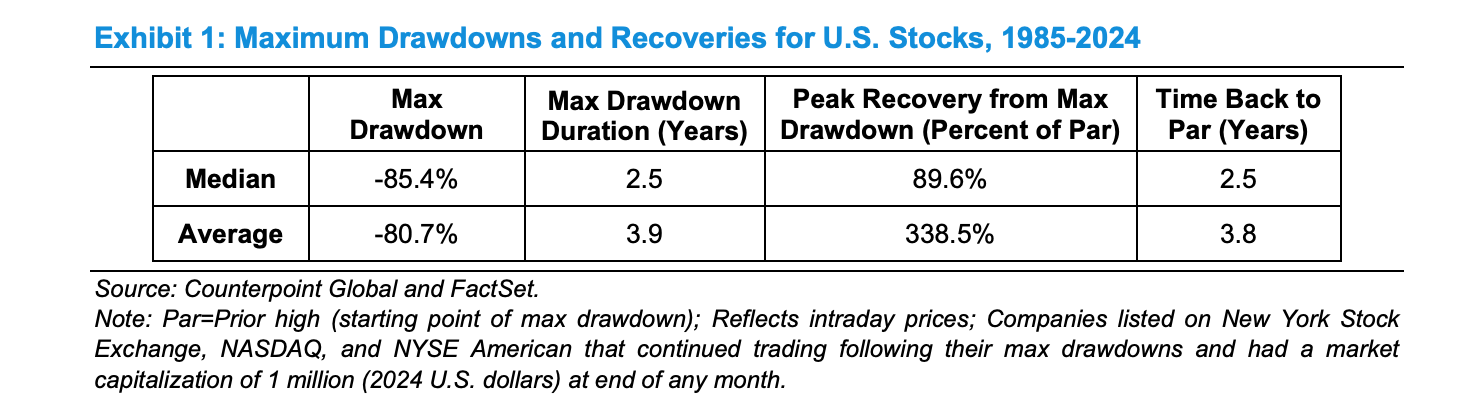
Two and a half years – just to reach the bottom.
Roughly 54% of those stocks never recovered to their prior highs, so the grind doesn’t even come with a guaranteed reward.
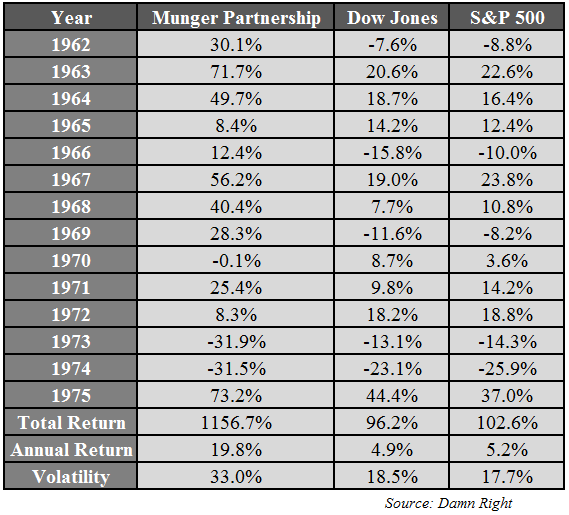
Great investors aren’t spared either. Charlie Munger’s partnership compounded at 19.8% annually from 1962 to 1975, yet suffered a brutal 53.4% drawdown between 1973 and 1974. Berkshire Hathaway itself has endured two separate 50%+ drawdowns. Munger argued that an investor who can’t calmly handle a 50% decline two or three times a century isn’t fit to own common stocks and deserves mediocre results.
Mouboussin and Callahan concluded that large drawdowns are simply the cost of admission for long-term outperformance.
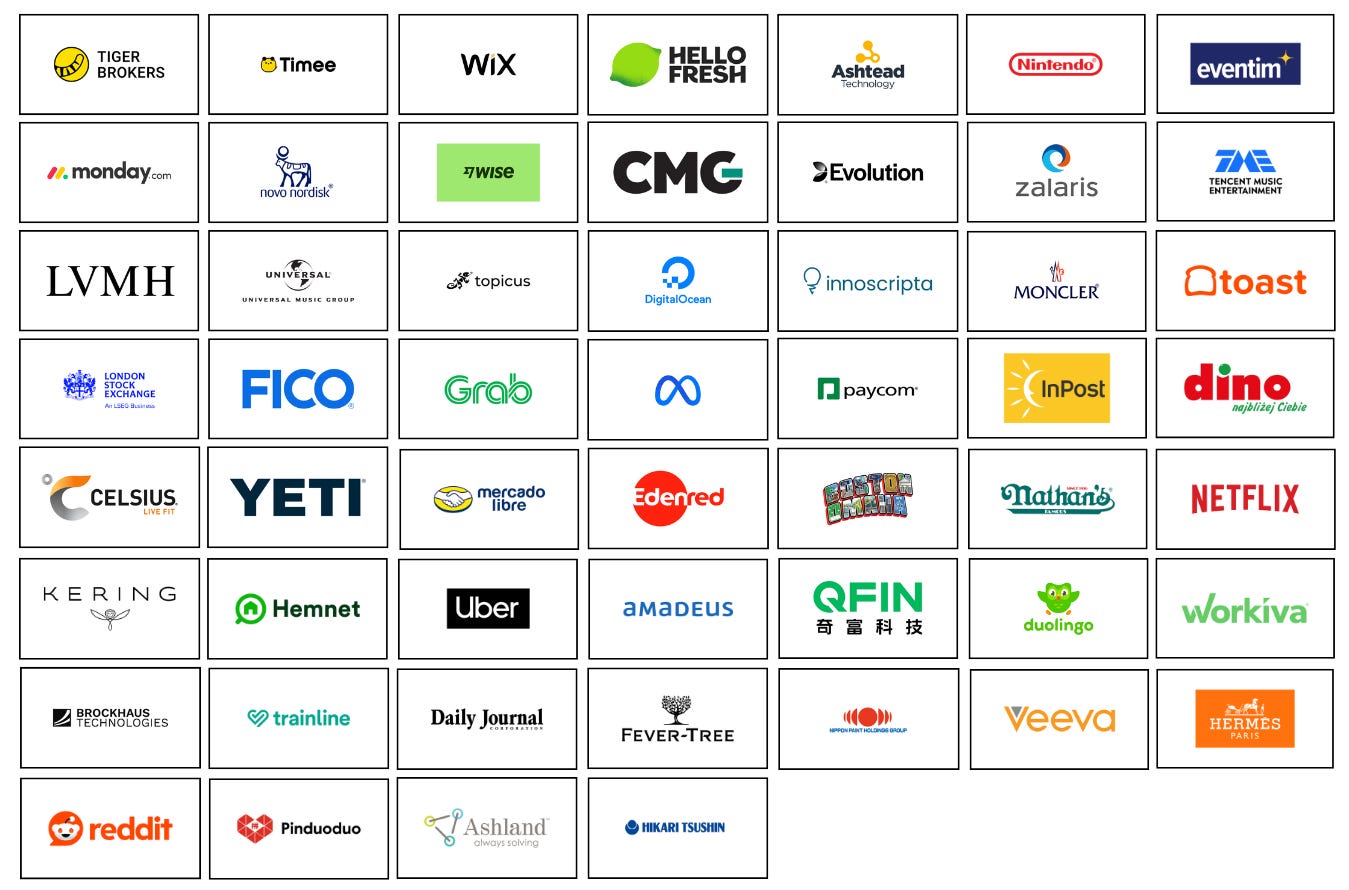
Welcome to Compound with René. You can find an overview of the companies I shared a deep dive on in the visualization below.
If you haven’t subscribed, you can join 4,900 readers who enjoy the quality of the deep dives, the process-oriented pieces, the analytical insight, and the valuation discipline, here:
Holding Is an Active Skill
Holding through these periods isn’t passive—it’s a deliberate skill. A story shared by @pitdesi illustrates this well:
“Once met a prospective LP. Minutes before the call, I looked him up and saw he was a schoolteacher... I was confused. His dad had invested in the Home Depot IPO and held on. Every $1K invested then is worth ~$17M today, beating Apple ($4.5M).”
@sidecarcap captured the core lesson:
“Love these stories. While there is luck involved, this is not getting lucky. Both the dad and teacher decided to hold. Most investors never come close to this outcome because they don’t try to. The first step is behaving in a way that puts the possibility on the table.”
When you map investor temperament across time, the pattern becomes clear: investors break at both extremes of the clock.
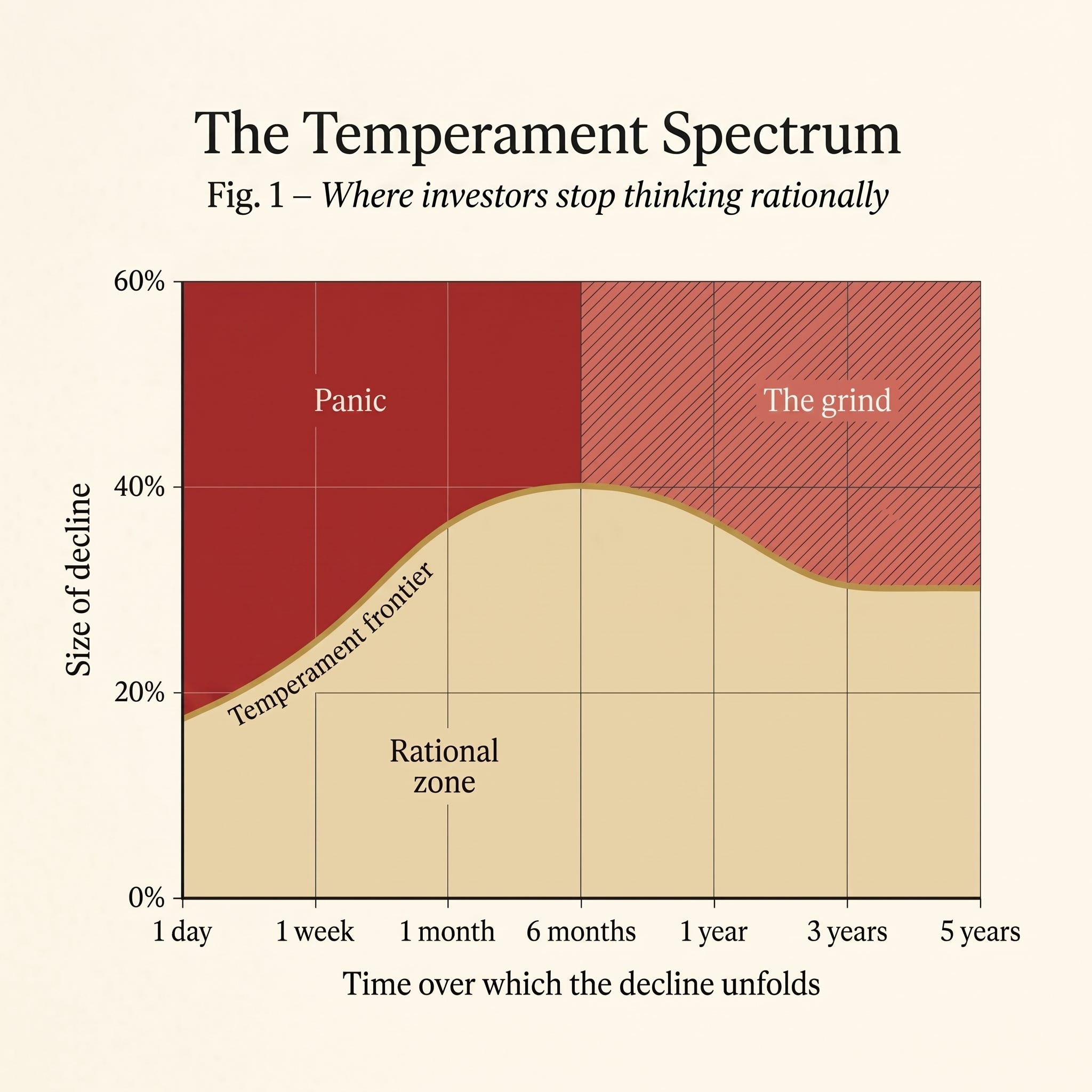
They crack when sharp declines hit hard or in rapid succession, and they crack when flat returns or slow drawdowns drag on for years. The middle of the spectrum is where almost everyone feels comfortable – and acts like a superstar investor.
As Peter Lynch put it:
“Everybody in the world is a long-term investor until the market goes down.”
The long end of the time spectrum is what many call time arbitrage – and it may be the last true edge no data provider can sell you. You have to earn it the uncomfortable way.