

When Monday.com went public in 2021, many investors dismissed it as just another project management tool competing with the likes of Asana, Smartsheet, and Trello. In a sector flooded with flashy SaaS IPOs, it was easy to overlook a company that presented itself not with bold visions of "changing the world," but with a rather modest mission: making work easier and more transparent.
Fast-forward a few years, and Monday.com has quietly built one of the most impressive growth and profitability track records in the entire cloud software industry. Despite operating out of Tel Aviv – and weathering the enormous human and operational challenges of the ongoing conflict in Israel – the company has consistently posted strong top-line growth, expanded margins, and steadily grown its cash pile without relying on aggressive marketing spending or high leverage.
Today, Monday is far more than a project management tool. It has evolved into a flexible Work Operating System (WorkOS) that powers workflows across departments, from sales to software development to customer support. It's competing not just with legacy project management apps, but with giants like HubSpot and even Salesforce in broader enterprise markets. And unlike many of its SaaS peers, Monday has made this leap while maintaining a rare balance between growth and profitability, boasting a Rule of 40 score north of 44% (EBIT margin + 3Y revenue CAGR), a rule of X score of 64% ((2*1Y revenue growth) + EBIT margin) and gross margins approaching 90%.
Since going public in mid-2021, Monday.com’s stock has taken investors on a volatile ride. After initially surging post-IPO, the shares declined sharply during the 2022 Tech selloff, hitting a low below $90. Since then, however, the stock has rebounded strongly and more than tripling off the bottom as the company proved it could grow efficiently and generate real cash.
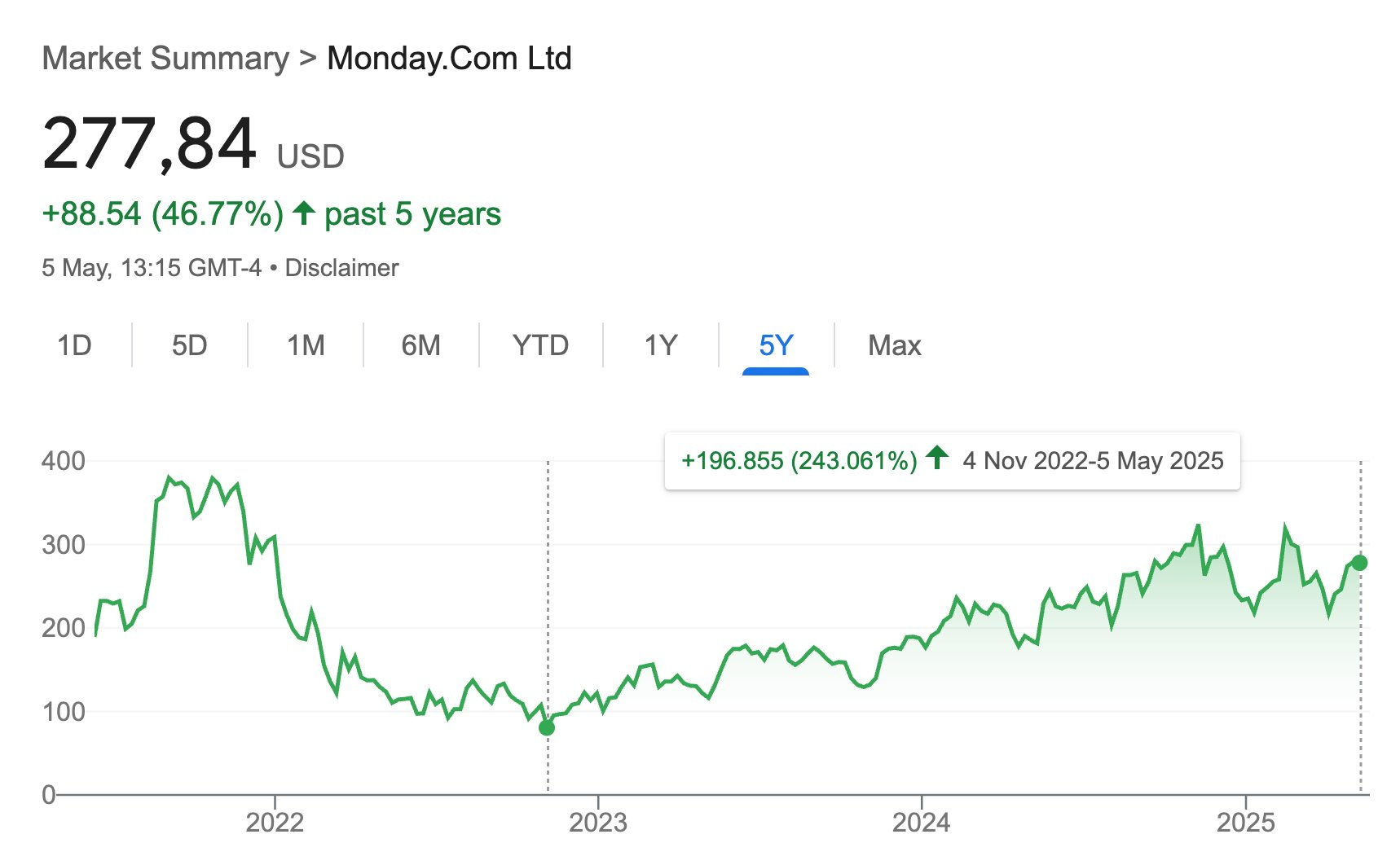
Yet despite a tripling of the stock price since late 2022, Monday.com still seems to fly under the radar compared to other names in the SaaS hall of fame as the stock, even after this impressive recovery, remains priced below its post-IPO high of around $379. Once could argue that many investors either don't fully appreciate the business model transition that has occurred or continue to lump Monday in with smaller, less scalable workflow tools. This presents an opportunity, but only if the story behind the numbers holds up to scrutiny.
In this deep dive, we'll explore how Monday built its competitive edge, whether the management team can sustain its momentum, and what the company's evolving strategy, including its new push into AI-driven workflow automation, means for the future.
We'll also examine whether today's valuation leaves enough margin of safety for long-term growth-oriented investors, and what risks could derail the story.
Monday.com may have started as a simple building block for project collaboration. But the way things are shaping up, it might just end up becoming the operating backbone for the future of work itself.
Buckle up for an exciting business analysis!
Disclaimer: The analysis presented in this blog may be flawed and/or critical information may have been overlooked. The content provided should be considered an educational resource and should not be construed as individualized investment advice, nor as a recommendation to buy or sell specific securities. I may own some of the securities discussed. The stocks, funds, and assets discussed are examples only and may not be appropriate for your individual circumstances. It is the responsibility of the reader to do their own due diligence before investing in any index fund, ETF, asset, or stock mentioned or before making any sell decisions. Also double-check if the comments made are accurate. You should always consult with a financial advisor before purchasing a specific stock and making decisions regarding your portfolio.
Understanding the Business
1. Monday.com's Product: Building the Backbone for Modern Work
At its heart, Monday.com sells non-consumable, subscription-based software. The platform is not something corporate customers purchase once and discard – it becomes deeply embedded in the daily workflows of teams and organizations.
This creates stickiness!
Because of this stickiness, customers typically keep expanding their usage over time, which directly drives higher subscription revenues.
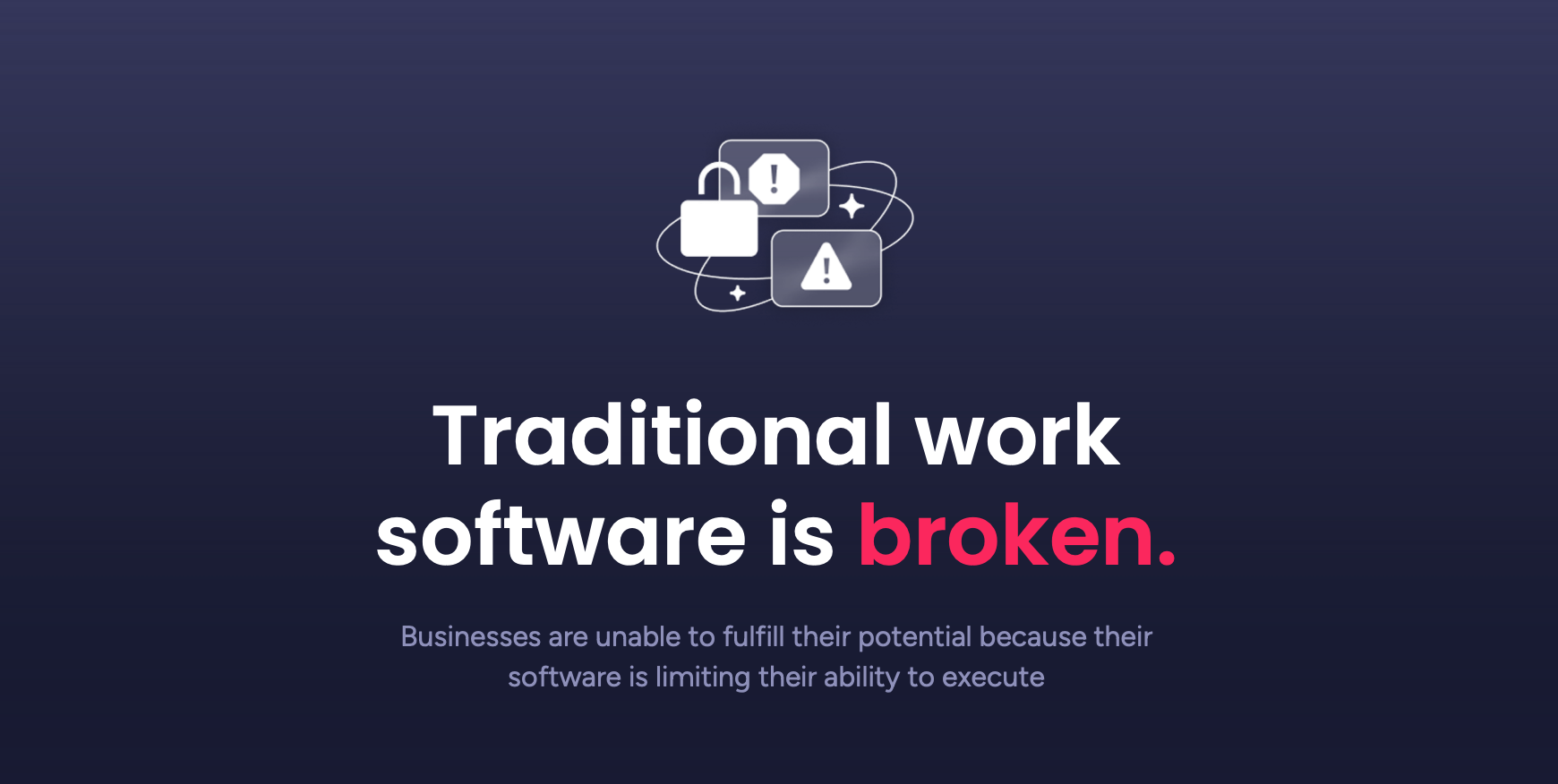
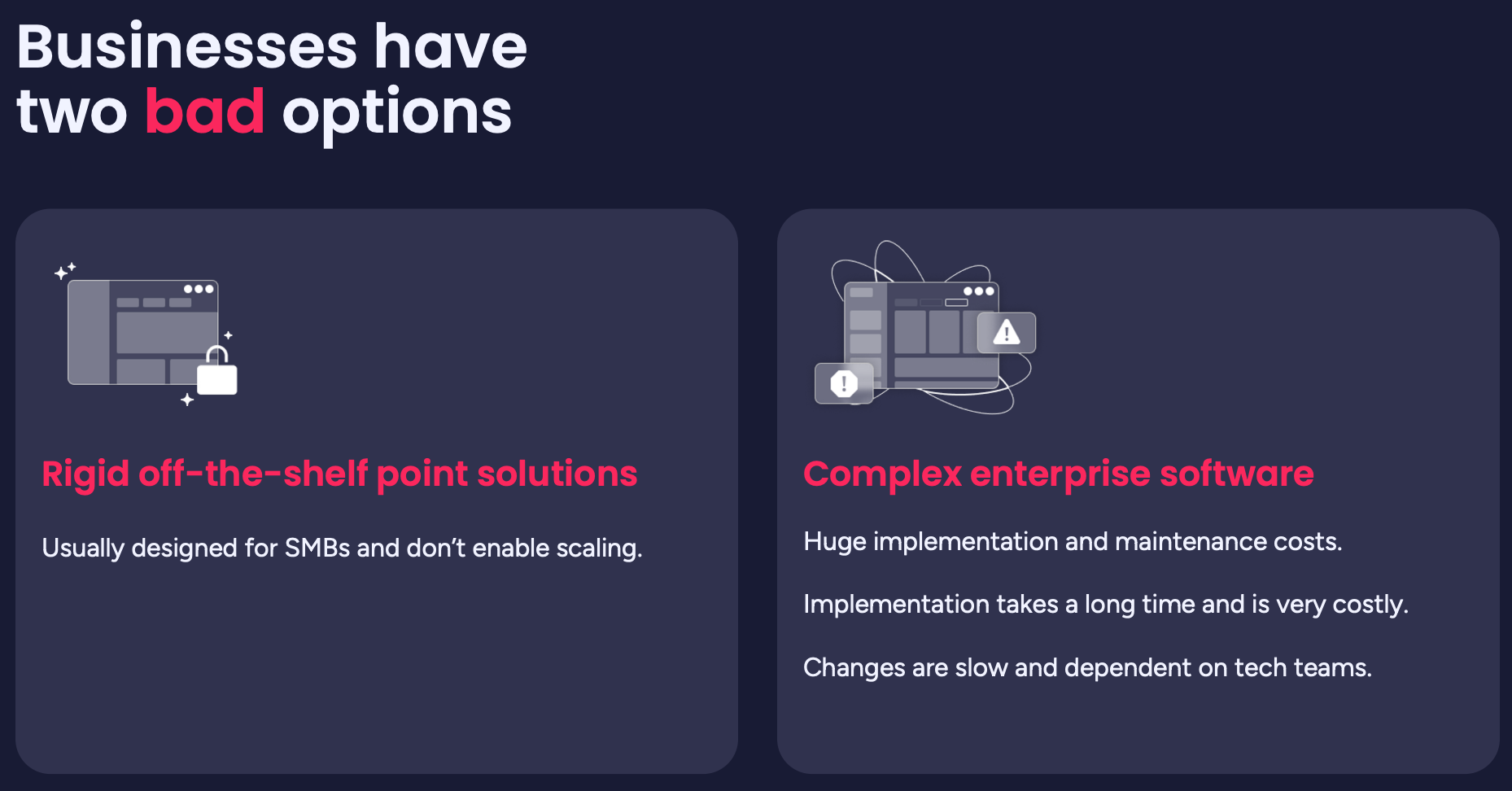
Importantly, Monday does not sell a commodity software solution. Project management and work collaboration may seem crowded markets at first glance, but Monday’s offering is highly differentiated. The company positions itself as an open, customizable Work Operating System (WorkOS), rather than a narrowly defined task management tool.
This distinction matters: instead of forcing customers to conform to rigid workflows, Monday enables organizations to design their own processes using modular "building blocks" – columns, automations, integrations – without requiring technical expertise.
This no-code/low-code flexibility is one of Monday’s core competitive advantages. It allows users to build CRM systems, software development boards, customer support dashboards, and more – all without writing a single line of code.
While traditional competitors like Asana or Smartsheet focus largely on pre-defined templates or narrower use cases, Monday gives users true adaptability across industries and functions.
In that sense, Monday is less of a direct Asana competitor and increasingly a broader platform play, able to serve companies across various industries and edging into markets traditionally dominated by Salesforce and HubSpot.
In terms of product tier, Monday.com would generally be considered a mid- to high-tier SaaS offering. It is priced well above mass-market task managers like Trello, but below the complex, enterprise-heavy CRM solutions offered by Salesforce.
The combination of strong product capabilities with relatively accessible pricing has allowed Monday to serve both SMBs and larger enterprises, a rare balancing act in the SaaS space.
Product innovation has been a clear strategic priority for the company. Since 2022, Monday has significantly expanded its offering beyond its original project management roots. Today, the core WorkOS platform supports several dedicated solutions:
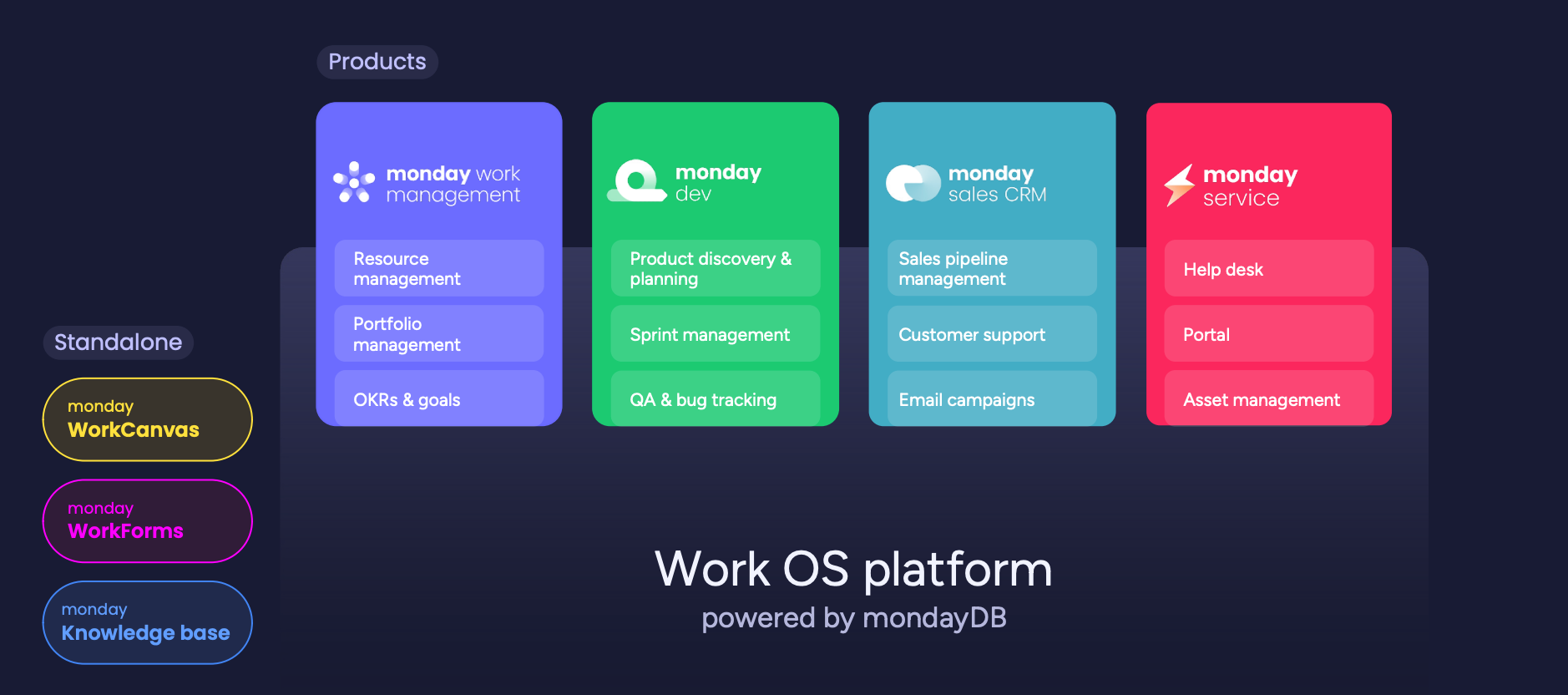
Monday Work Management – At the heart of Monday.com’s product suite lies Monday Work Management, the original and still primary solution that enables teams to plan, track, and execute a wide variety of operational workflows. This offering forms the backbone of the platform and is used across departments for everything from project planning to marketing campaign tracking and HR onboarding. While newer verticals like CRM, Dev, and Service are expanding Monday’s total addressable market, Work Management continues to drive the bulk of adoption and serves as the natural entry point for most customers. Its intuitive interface, flexible automations, and rich integration ecosystem are what first attract users, and what often lay the groundwork for deeper cross-product expansion.
Monday Sales CRM – targeting small to mid-sized sales organizations, positioning itself as a simpler, more flexible alternative to HubSpot.
Monday Dev – aimed at agile software development teams, competing with Atlassian’s Jira.
Monday Service – a newly launched product for service and support teams, entering a market adjacent to ServiceNow and HubSpot Service Hub.
Unfortunately, as of now, monday.com does not publicly disclose the percentage of its revenue attributable to these individual product segments.


The company is also investing heavily in AI-powered workflow capabilities. Modular AI features – such as automatic data extraction, categorization, and predictive risk assessment – are being embedded across Monday’s product suite.
“In 2024, we made significant strides in our AI development unveiling several new capabilities, including AI Blocks. Since AI was integrated into the monday platform, users have performed approximately 10 million AI actions. This ongoing progress highlights our commitment to enhancing the user experience and driving greater efficiency through innovating AI solutions.“ – Roy Mann
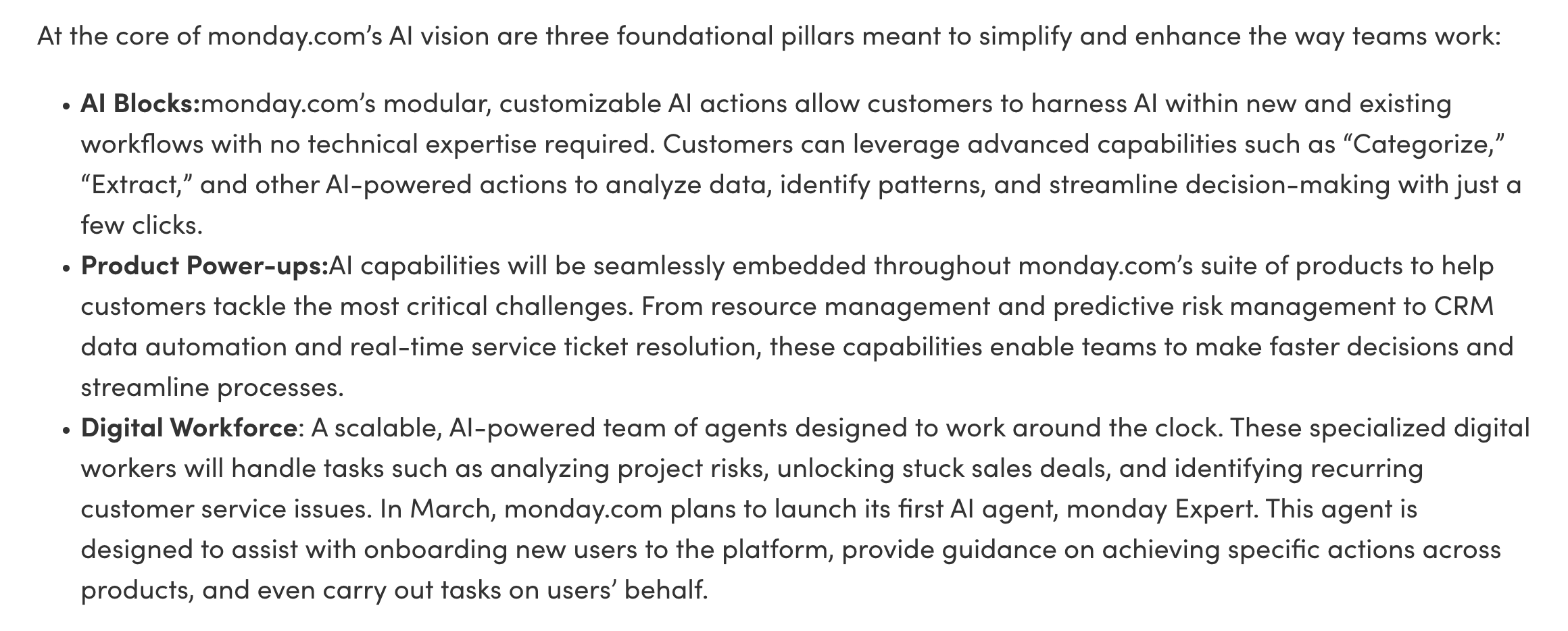
The first dedicated AI agent, Monday Expert, launched in March 2025, promising further productivity gains for users.
This ongoing expansion of the product ecosystem suggests that Monday’s ambitions are far from capped. Rather than being a one-trick project management pony, Monday is methodically positioning itself as a multi-solution WorkOS platform capable of powering virtually every major workflow within a business.
2. Business Operations: How Monday.com Makes Money
The rest of this post is FREE to read. I only ask that you subscribe, which costs nothing and can be undone with a single click whenever you like.
The wall also helps keep my writing from being freely scraped by AI crawlers, so I hope you understand the small extra step.
In return, you get every deep dive, earnings review and process piece I publish, straight to your inbox.