

Find five free “Visual Blueprints” further below.
Great research without distribution is a stranded asset. Over three to four years – if I recall correctly, between 2019 and 2023 –, I dedicated thousands of hours to building a rigorous, three-volume investment framework spanning roughly 2,100 pages.
I built it because I wanted an unshakeable system for evaluating businesses, understanding competitive dynamics, and allocating capital effectively.

Yet, experience teaches a clear lesson about publishing: even institutional-grade analysis, as my deep dives and market commentary, needs a clear distribution mechanism to create actual value for readers.
In $100M Offers, Alex Hormozi made a point that applies just as directly to equity research as it does to traditional businesses. He noted that if you put a hot dog stand in front of a starving crowd at 2 AM, you can sell terrible hot dogs and still make a fortune – because the crowd dictates initial success, not the product alone.
"If you put a hot dog stand in front of a starving crowd at 2 AM, you could sell terrible hot dogs and still make a fortune. It's not about the hot dog; it's about the crowd."
He followed that up in $100M Leads with an equally sharp reality check:
"You can have the best product in the world, but if nobody knows about it, you’ll still go out of business."
I am confident in the quality of my research. Very confident. I know the sheer volume of labor and market experience required to produce high-level fundamental analysis, and I don’t see many others with a similar value proposition out there.
If you don’t want to ever miss a new “Visual Blueprint,” make sure you are subscribed and on the email list!
But product quality only dictates long-term reader retention. It does not solve the initial hurdle of attention.
To bridge that gap and make complex ideas vastly more accessible, I am introducing a new format to the publication: “Blueprints.”
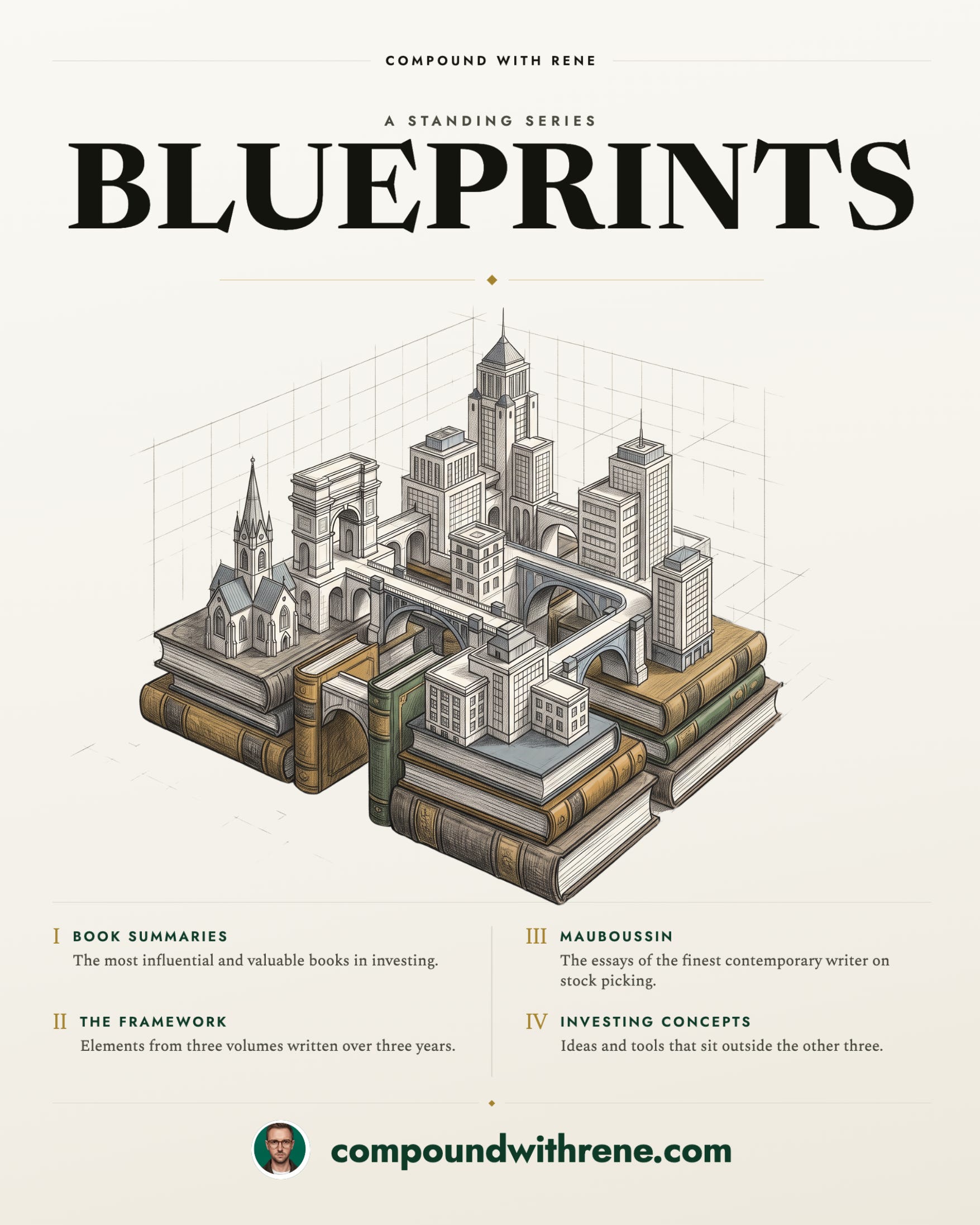
Four Pillars for the Modern Investor
Blueprints are visual slide decks designed to condense heavy corporate finance concepts, valuation mechanics, and strategy frameworks into clean reference sheets.
Rather than replacing my long-form deep dives, they act as concentrated architecture for your investment process.
I am structuring this format around four core pillars:
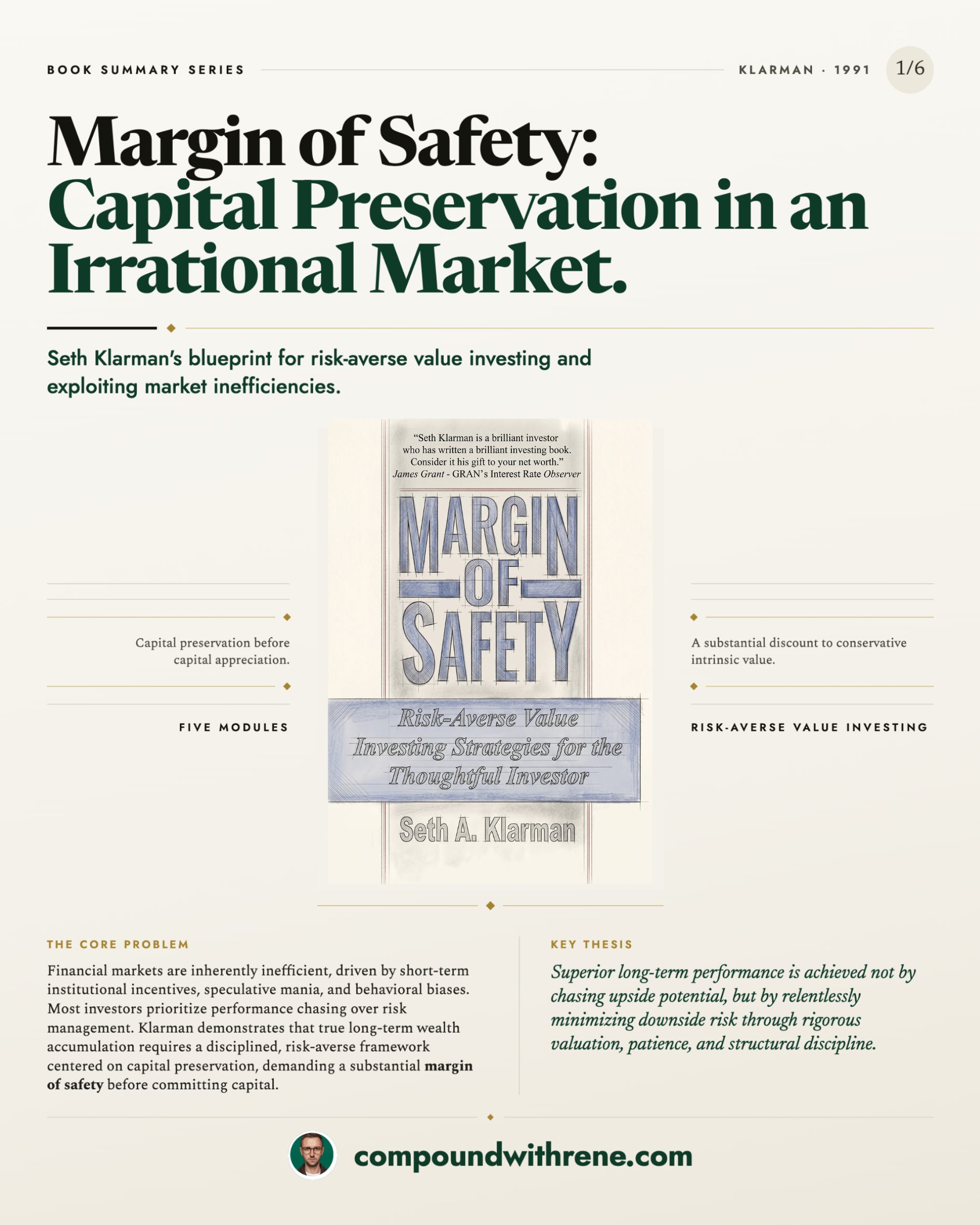
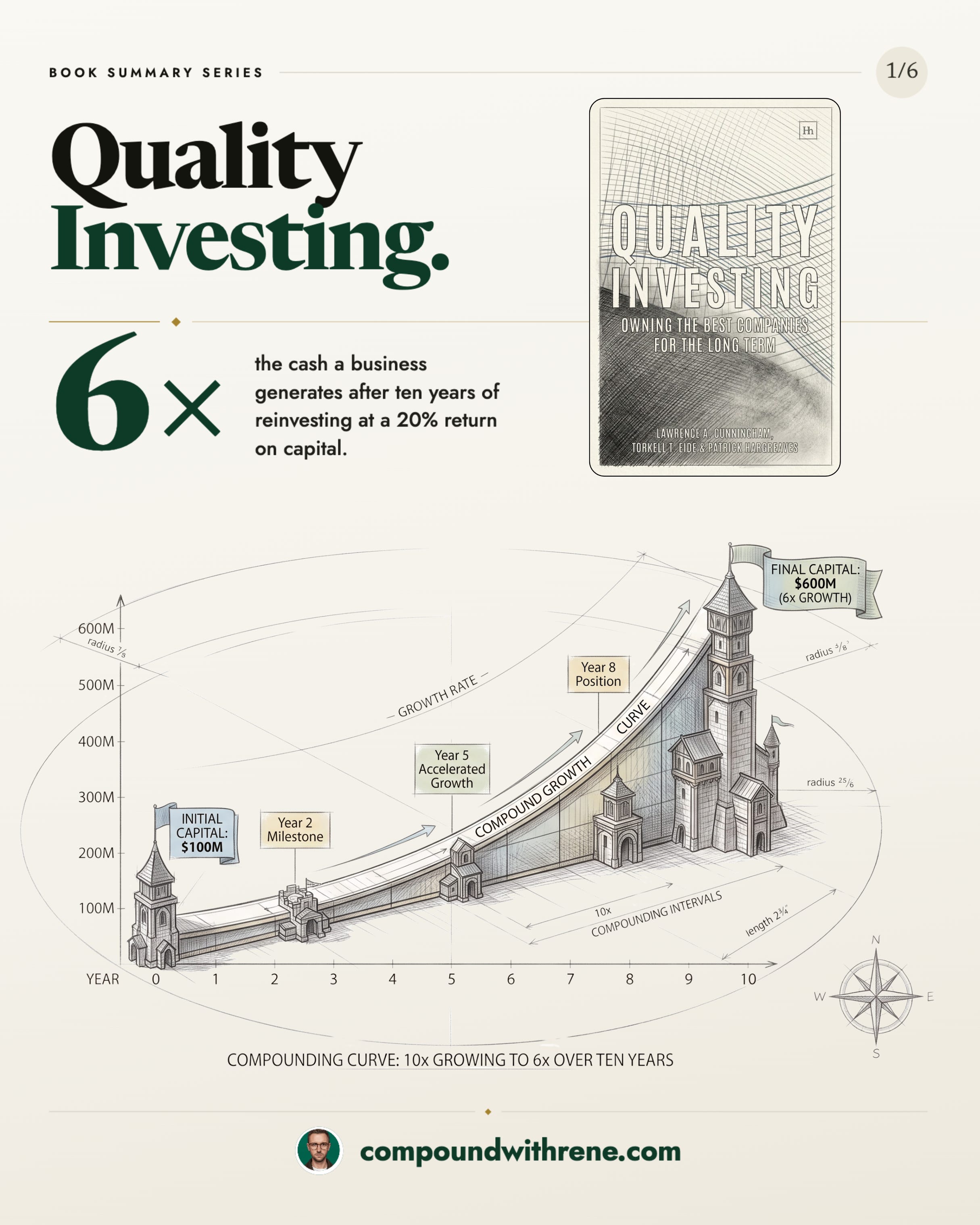
Summaries of essential investing books. The classic texts by figures like Seth Klarman, Warren Buffett, and Philip Fisher contain timeless wisdom, but their core mental models can easily get lost in dense prose. Visual blueprints bring those core frameworks back into sharp focus.
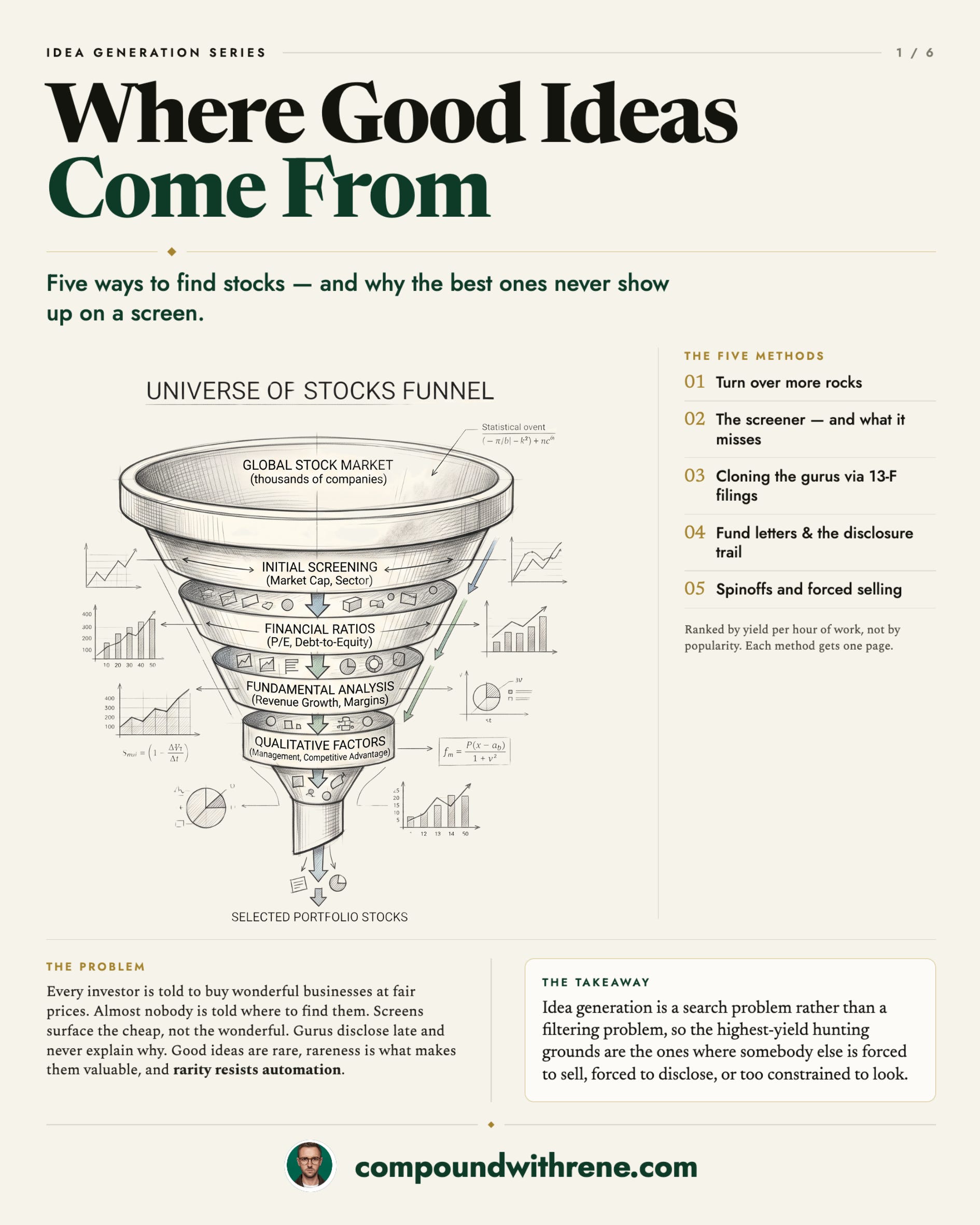
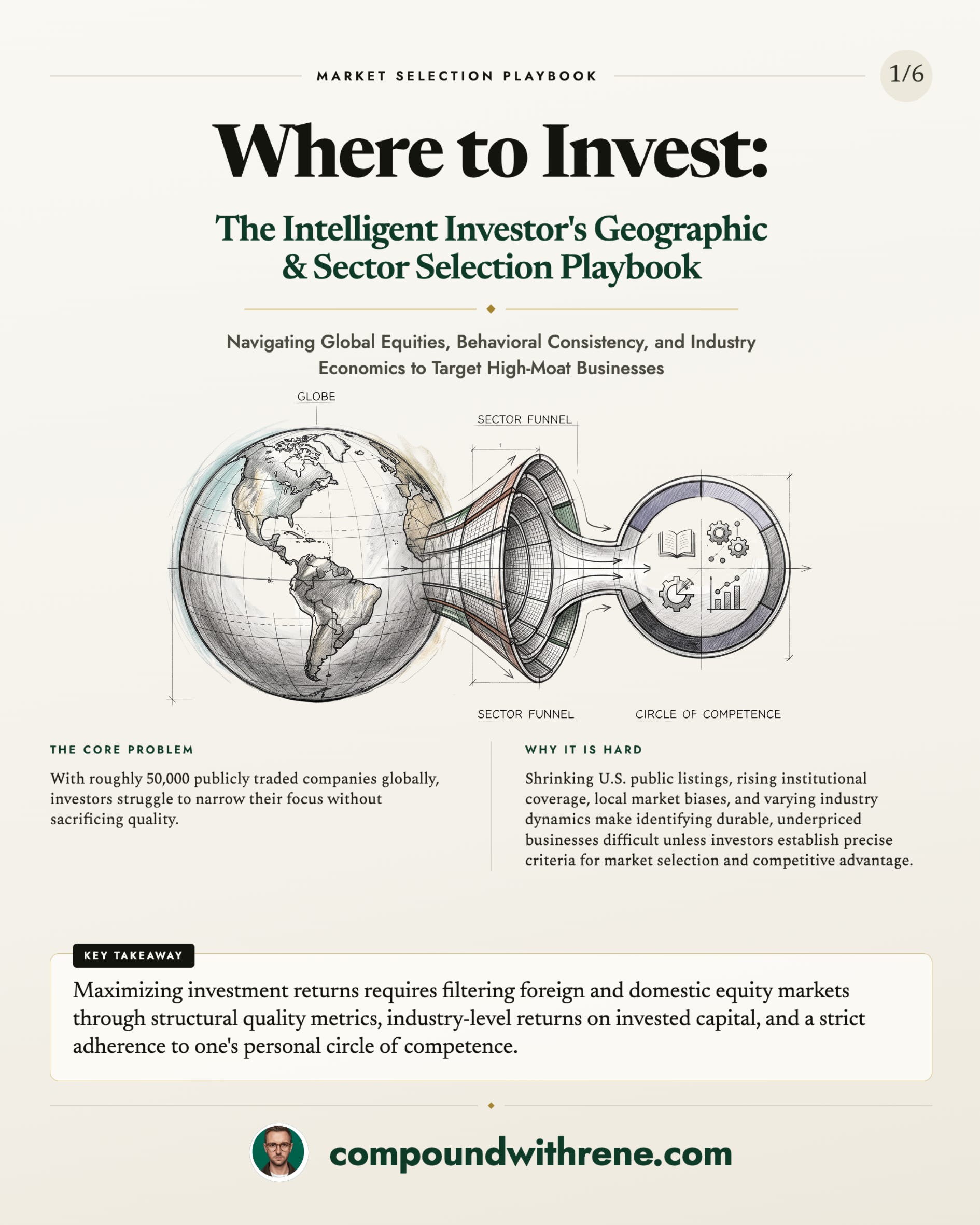
Direct modules pulled from my proprietary investment framework. Distilling these core modules – attached below are two examples I already created (my systematic mental models for where to deploy capital geographically + specific tools from my idea generation toolkit) – allows me to share the most valuable insights from my three-volume set over time. It is a deep reservoir of material that will fuel content for years.
The works of Michael Mauboussin. If I were forced to choose only one contemporary writer on stock picking to read for the rest of my life, it would be Mauboussin without hesitation. Periodically forcing myself to systematically reread and synthesize his essays on return on invested capital, expectations investing, and competitive advantages keeps my own edge sharp.
General investing, market, and corporate finance concepts. This covers everything else.
On Algorithmic Lotteries & The Beauty of a Newsletter
Social media algorithms are notoriously noisy. They constantly push creators toward clickbait, macro-panic, or apocalyptic bear thesis content designed to generate outrage rather than clarity.
I refuse to play that game.
Substack built its own social feed, Notes, to help creators distribute work. Yet, social feeds remain black boxes. Unpredictable.
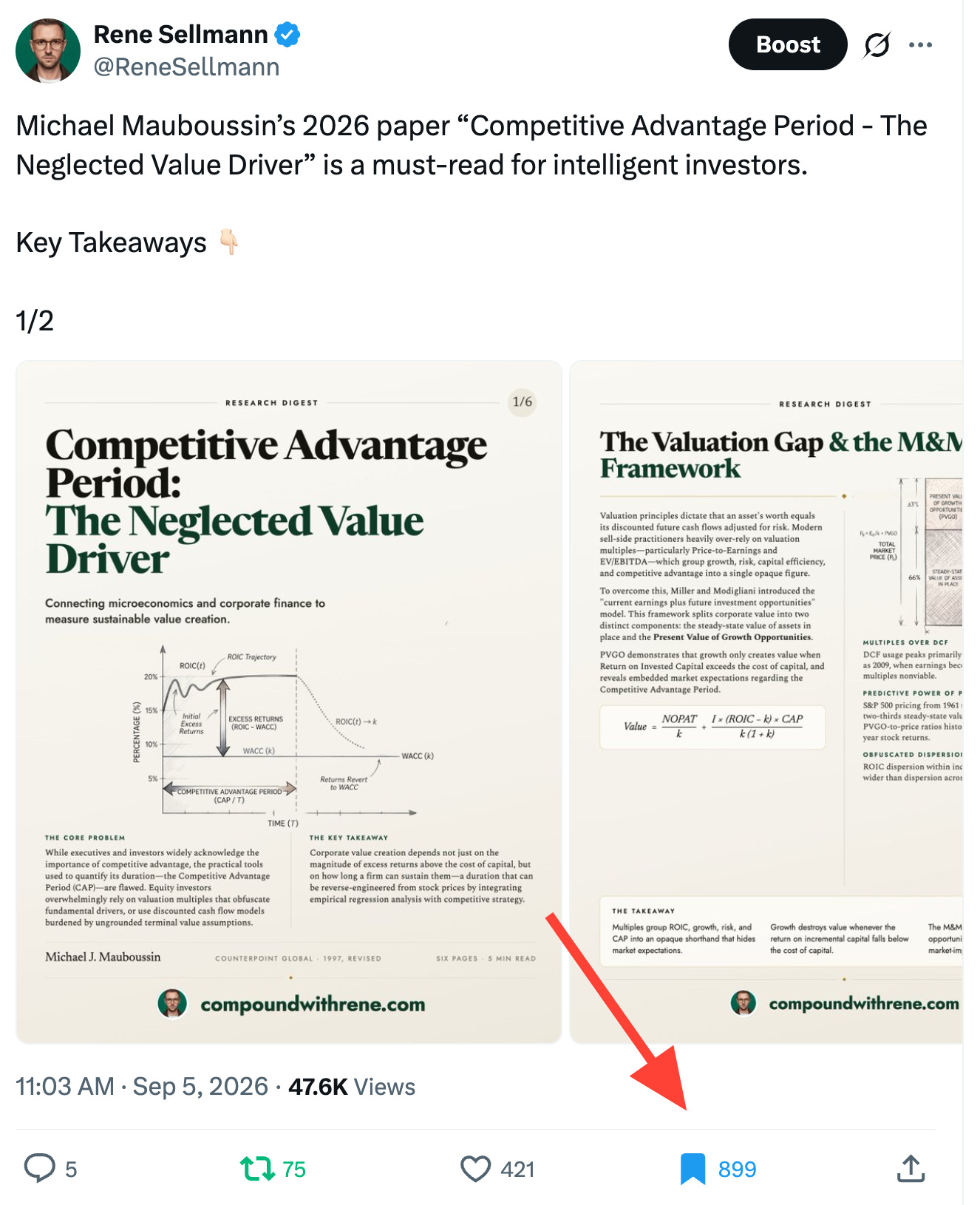
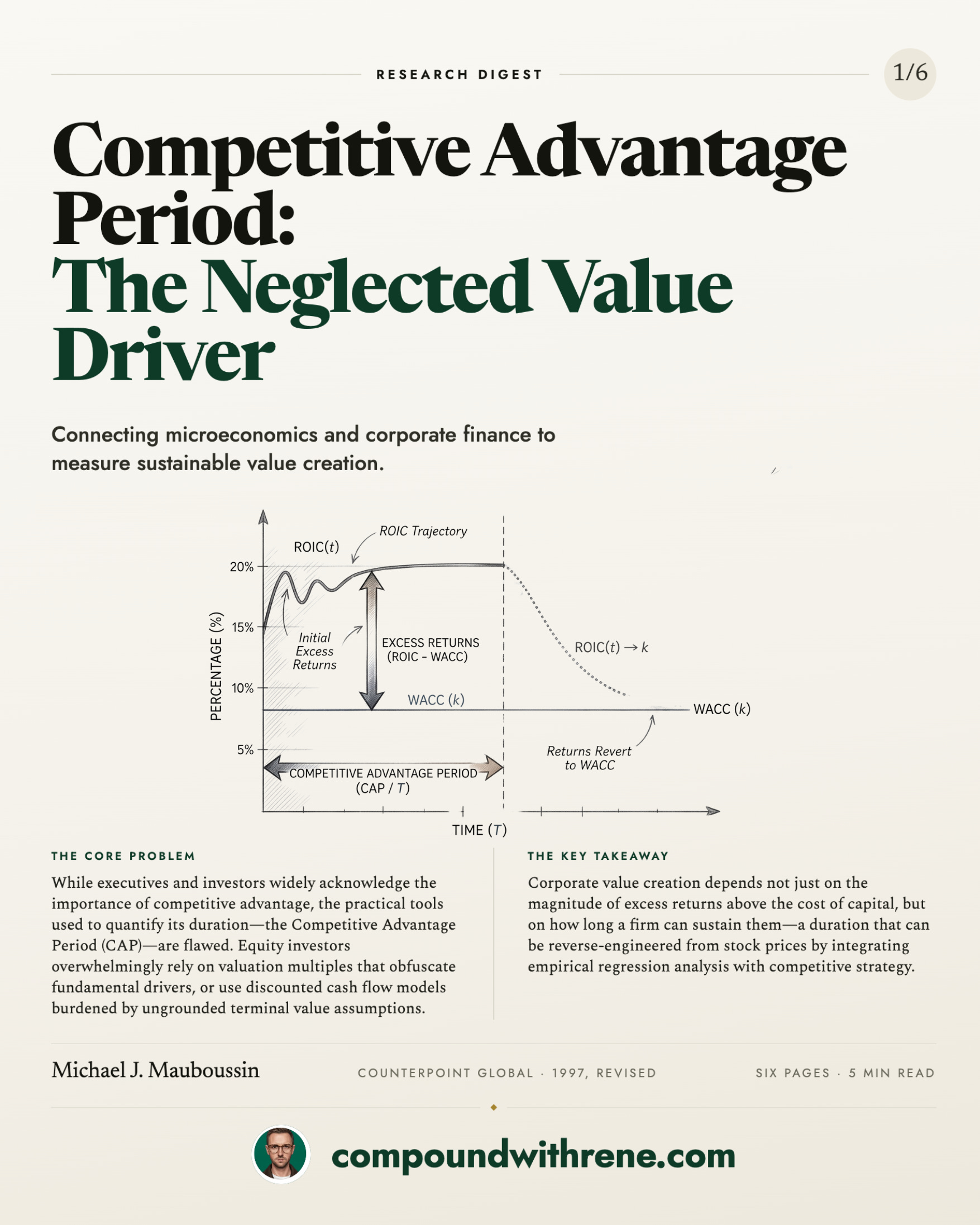
The numbers prove it. When I shared my visual summary of Michael Mauboussin’s paper on Competitive Advantage Periods on X, it became my most bookmarked post to date.
A short while later, my breakdown of Seth Klarman’s Margin of Safety pulled in nearly 300 bookmarks on the platform.
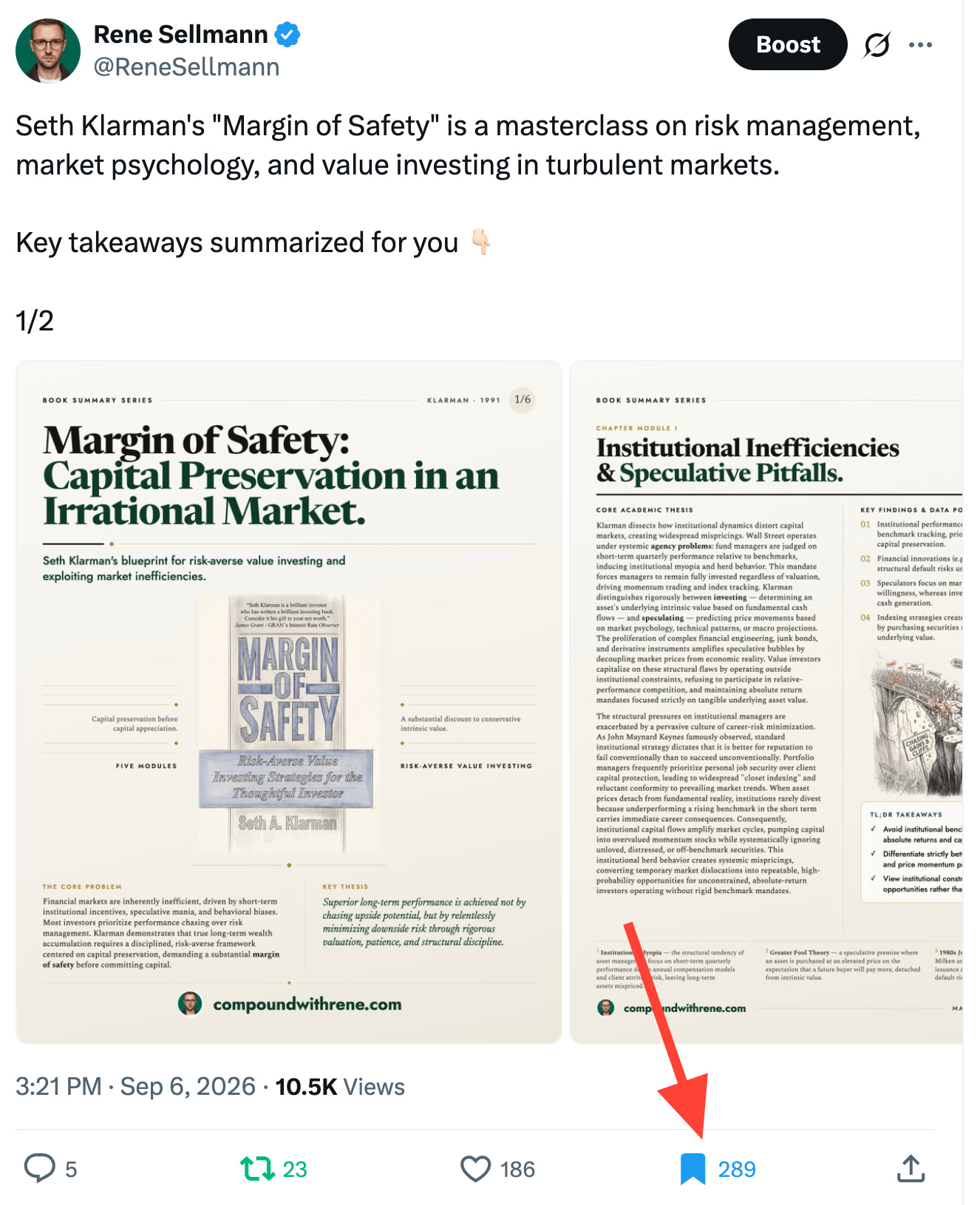
Investors clearly found value in these visual frameworks. But when I posted those identical visual blueprints to Substack Notes, the best-performing piece gathered roughly seven likes.
I just checked … Six.
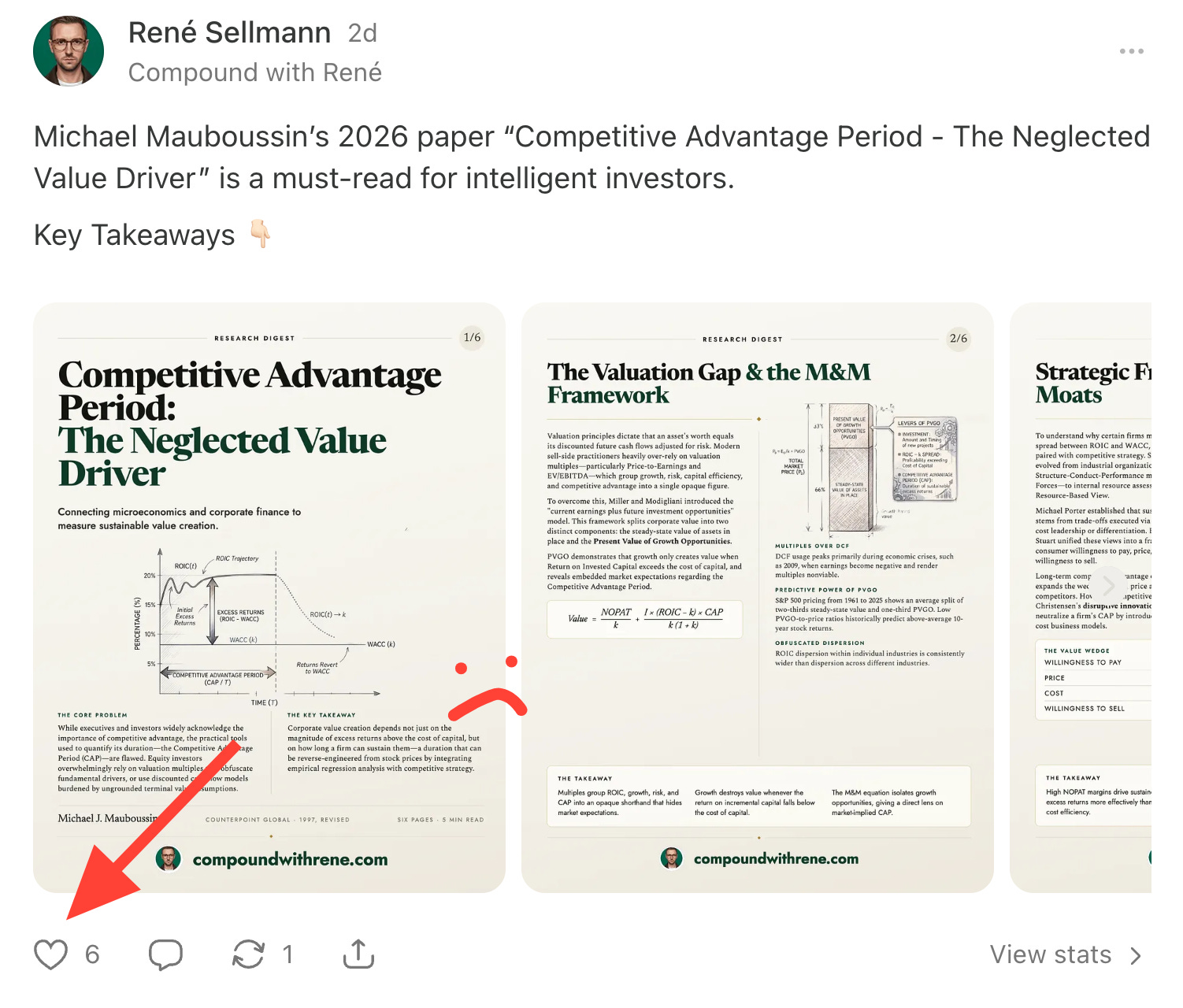
I’m not even sure how many of you actually got to see any one of these slide series decks? It requires you to open the Substack Feed in the first place, which I’m not sure how many readers actually regularly do.
My hunch is very few.
If you do find value in the PDFs below, please let me know via the comments. This keeps me motivated to keep creating these Blueprints.
So that discrepancy exposes a massive flaw in relying on discovery feeds. Algorithms change overnight. It’s a bit of a lottery. Reach disappears without warning. Building a publishing strategy around algorithmic luck makes zero sense when the underlying goal is delivering rigorous, institutional-grade analysis.
I prefer direct distribution.
That’s why I plan to distribute these "Blueprints” as regular posts too. And by publishing these Blueprints as standalone Substack pieces, I intend to route every issue directly to your inbox. You receive the complete essay, a slide deck that is easily digestible in five minutes and hopefully adds some value too, alongside a downloadable PDF version of it.
This format lets you take ownership of the material. You can store the PDFs on your desktop, file them by topic, and build a permanent reference library over time.
I may eventually curate these decks into a single master archive or restrict certain downloadable PDFs to paid subscribers, but my immediate focus is making sure you get direct access to these frameworks, which is why at the bottom of this post, I have attached downloadable PDF files for all the visual Blueprints created so far.
If you find real utility in these decks, share this post with fellow investors or forward it to someone who values high-quality research.
PS: I also added a new tab to the homepage for the new format!
Disclaimer: The analysis presented in this blog may be flawed and/or critical information may have been overlooked. The content provided should be considered an educational resource and should not be construed as individualized investment advice, nor as a recommendation to buy or sell specific securities. I may own some of the securities discussed. The stocks, funds, and assets discussed are examples only and may not be appropriate for your individual circumstances. It is the responsibility of the reader to do their own due diligence before investing in any index fund, ETF, asset, or stock mentioned or before making any sell decisions. Also double-check if the comments made are accurate. You should always consult with a financial advisor before purchasing a specific stock and making decisions regarding your portfolio.
From my Framework
IDEA GENERATION SERIES: Where Good Ideas Come From

MARKET SELECTION PLAYBOOK: Where to Invest – The Intelligent Investor’s Geographic & Sector Selection Playbook
SETH KLARMAN: Margin of Safety – Capital Preservation in an Irrational Market.
LAWRENCE A. CUNNINGHAM, TORKELL T. EIDE & PATRICK HARGREAVES: Quality Investing – Owning the Best Companies for the Long Term
MICHAEL MAUBOUSSIN: Competitive Advantage Period: The Neglected Value Driver
Disclaimer: The analysis presented in this blog may be flawed and/or critical information may have been overlooked. The content provided should be considered an educational resource and should not be construed as individualized investment advice, nor as a recommendation to buy or sell specific securities. I may own some of the securities discussed. The stocks, funds, and assets discussed are examples only and may not be appropriate for your individual circumstances. It is the responsibility of the reader to do their own due diligence before investing in any index fund, ETF, asset, or stock mentioned or before making any sell decisions. Also double-check if the comments made are accurate. You should always consult with a financial advisor before purchasing a specific stock and making decisions regarding your portfolio.
Hi René, the visuals are definitely helpful to keep us focused on the key points. Thank you very much for making them.