When Nicolas – we have two members with that name, so I guess this still keeps it anonymous – from my investing community posted his latest find in our WhatsApp community, I almost scrolled past it.
Luckily, I did not.
Because Rob Vinall had a new position. And I bet almost no one is aware of it. It wasn’t on Dataroma or in his latest 13F, and he hadn’t mentioned it in any of his latest fund letters.
However, it sat among the top 10 holdings in his fund’s factsheet, a document most people never open. You have to log in on the website (with an account of course) to access it. Nicolas went that extra mile.
The company was Atour Lifestyle Holdings, a Chinese hotel chain I had barely heard of. And I am tempted to think most of you haven’t either.
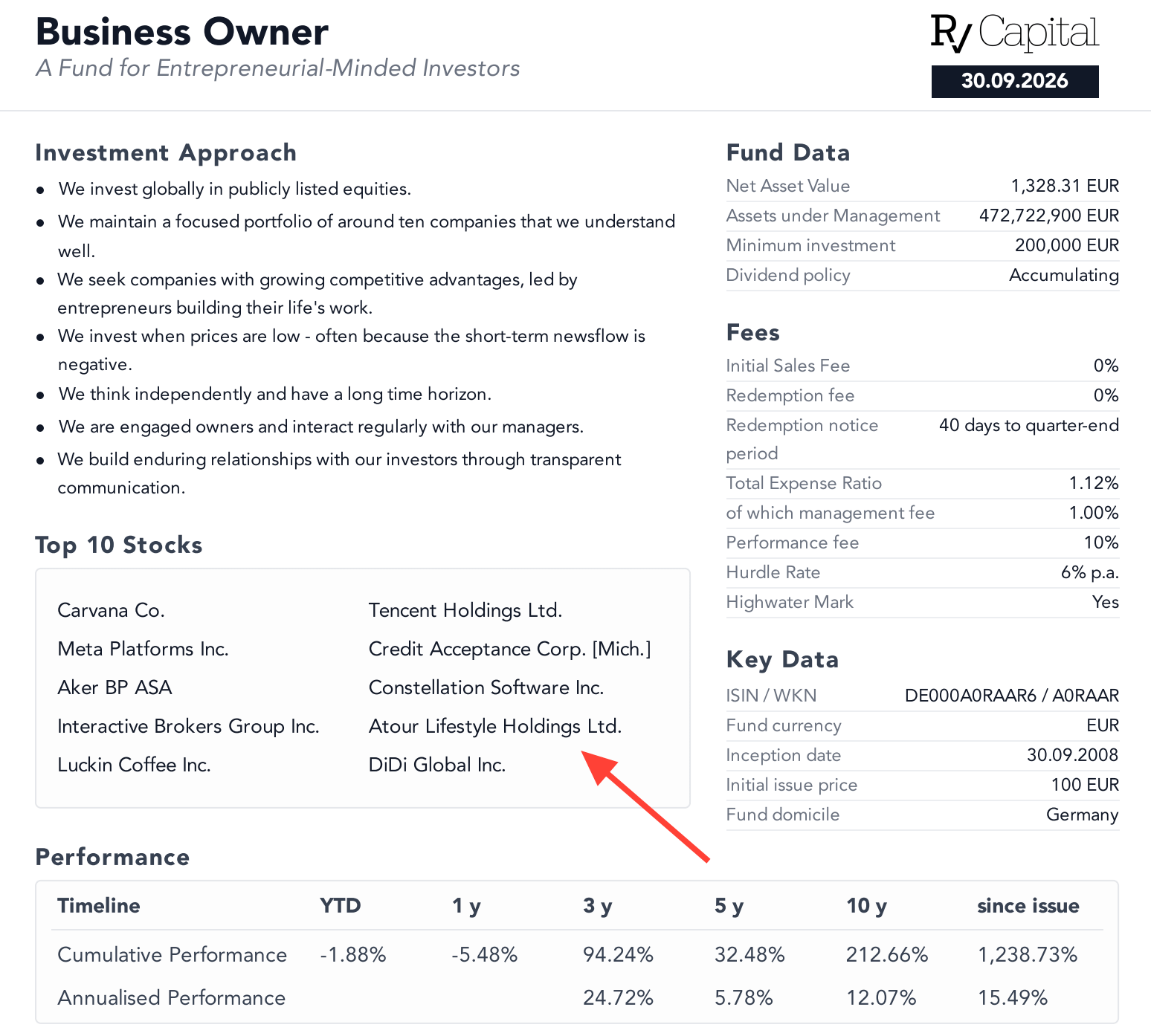
The fact that this is a new position but already sized to be among the top 10 names … that detail stuck with me. Vinall runs a concentrated portfolio and isn’t known for impulse buys. A new name doesn’t land in his top 10 by accident, so he must have sized it with conviction at cost.
He also knows China far better than most Western investors. He visits the country at least once a year, and his “Postcards from China” posts on his blog are well worth your time if you haven’t read them.
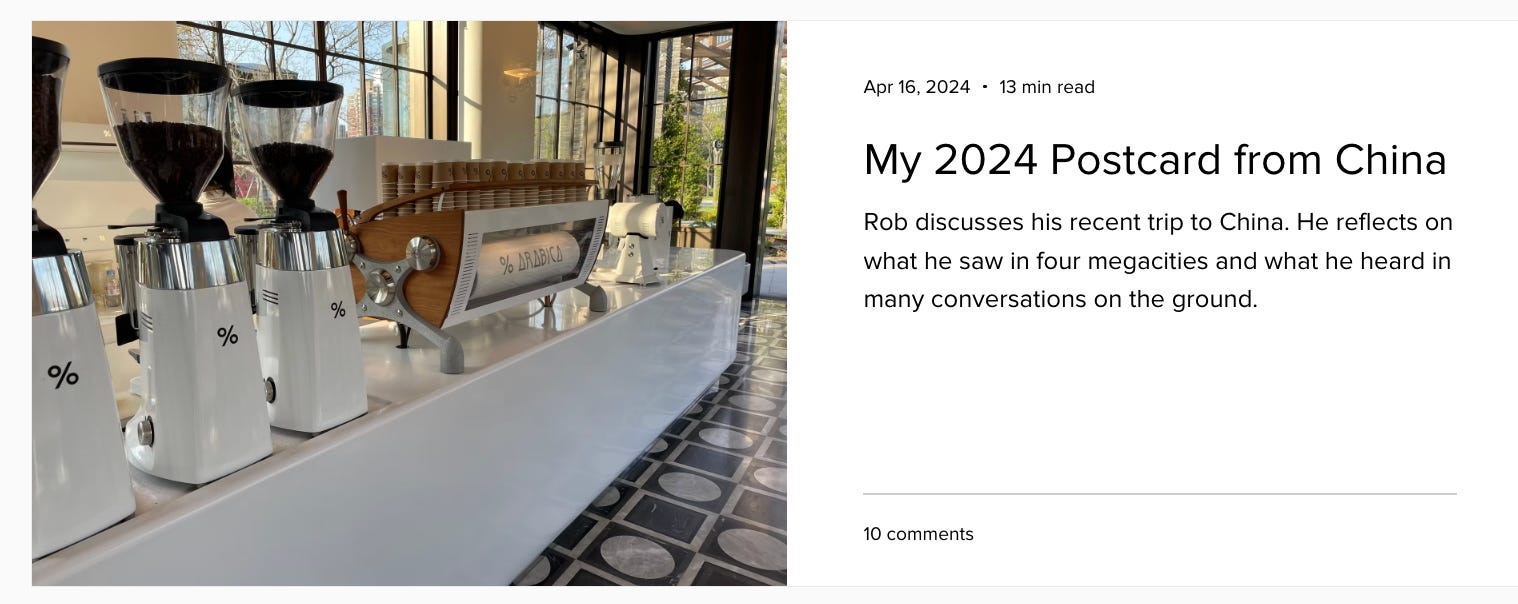
When someone with that kind of on-the-ground experience, someone whose investment philosophy I strongly resonate with – very high quality focus, growth oriented, and unlike many of his “quality peers”, Rob is fairly valuation disciplined – makes a sizable bet on a Chinese consumer business, I pay attention.
As I said, his last 13F, as of June 30, doesn’t show Atour, which suggests he bought in the last few months.
What it does show is H World Group, the Chinese hotel giant and Atour’s largest competitor in its segment. My guess is that Vinall found Atour while studying H World. The more he looked, the more he liked the smaller, faster-growing rival. I can’t prove that, but my hunch is that he’s onto something here (throughout this write-up we will also come back to his H World thesis which he covered in one of his letters).
When Nicolas briefly mentioned the idea, I only heard three words:
hotels,
franchise,
cheap.
That combination was enough to get me intrigued.
Over the years, I’ve studied the big US hotel franchisors like Hilton, which Bill Ackman owned for years, and Marriott. They are some of the best business models in public markets in my view (for reasons to be discussed throughout this write-up). Property owners pay to build the hotels, and the brand collects a fee on every night sold. They need almost no capital to grow, and given that we are in 2026, we might mention that they are about as AI-proof as a business gets (reducing the embedded tail risk), because you can’t download a night’s sleep.
So when someone pointed me to an asset-light hotel franchisor growing revenue at 30–40% at a mid-teens earnings multiple, of course, I had to dig in.
What I found was stranger (yes, strange) and more interesting than a Chinese Hilton. Atour does run more than 2,100 hotels, almost all of them funded by franchisees. Yet, Atour also sells pillows. Lots of them. More than 12 million units of a single memory foam pillow, sold mostly online to guests who slept on it in an Atour room the night before. That retail business has gone from roughly 4% of revenue in 2019 to about 45% in Q2 2026. By one rough calculation, it now earns more gross profit than the hotels. Atour has turned into a hotel chain where the rooms double as showrooms for a sleep brand, and as far as I know, no hotel company in the world has done that at this scale.
The stock shows how unsure the market is about what to make of it. At around $31-32 per ADS (as I write this), Atour is up about 146% since its listing in late 2022 and has compounded at roughly 19% a year over the past three years.
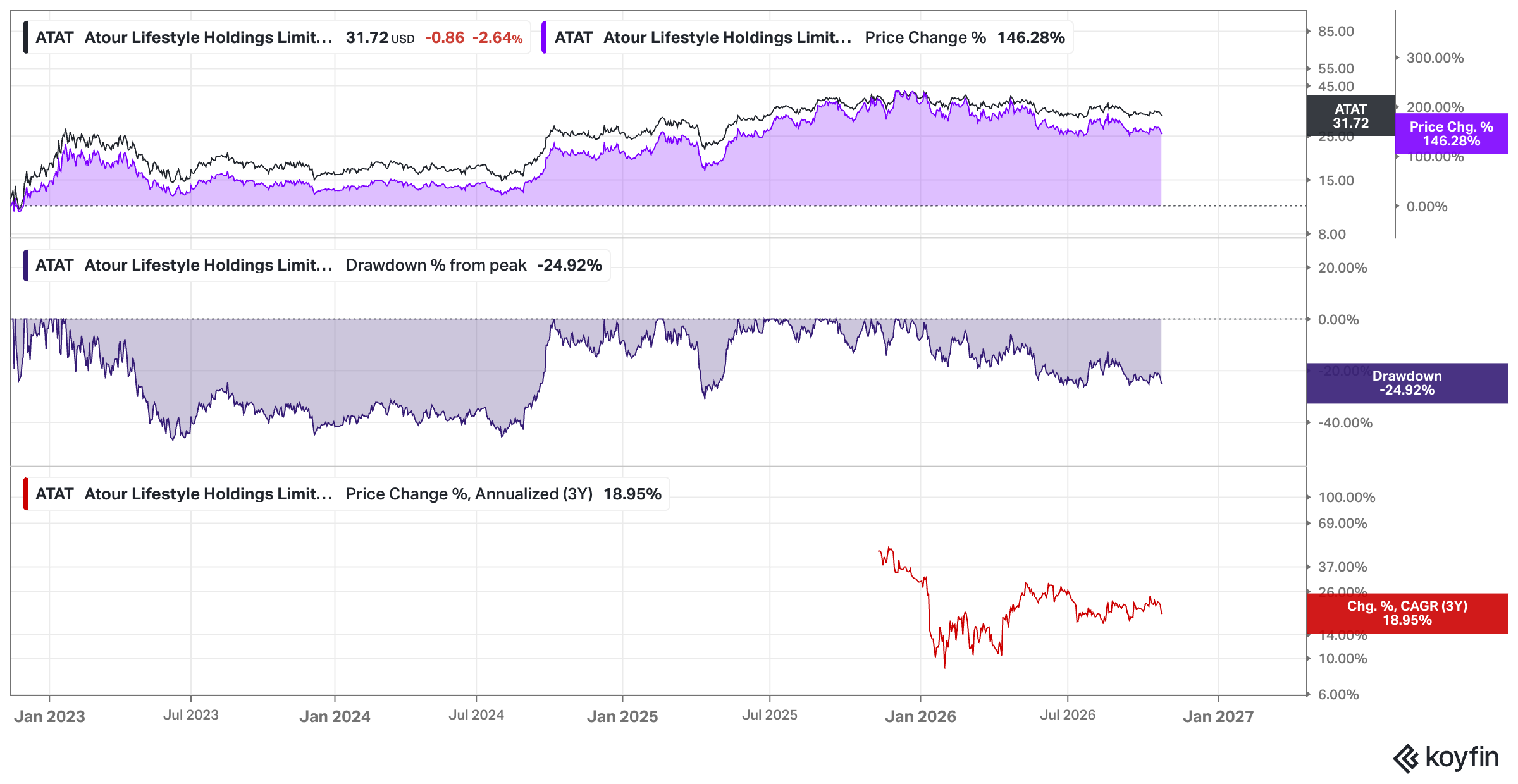
That’s a decent run by any standard. It’s also down about 25% from its peak, even though Q2 2026 revenue grew 41% and net income 29%.
Something isn’t adding up, and those are the situations I like to study.
The fundamentals have outrun the share price by a wide margin. Over the past three years, revenue has compounded at about 55% a year, EBIT at about 87%, and net income and EPS at roughly 90%.
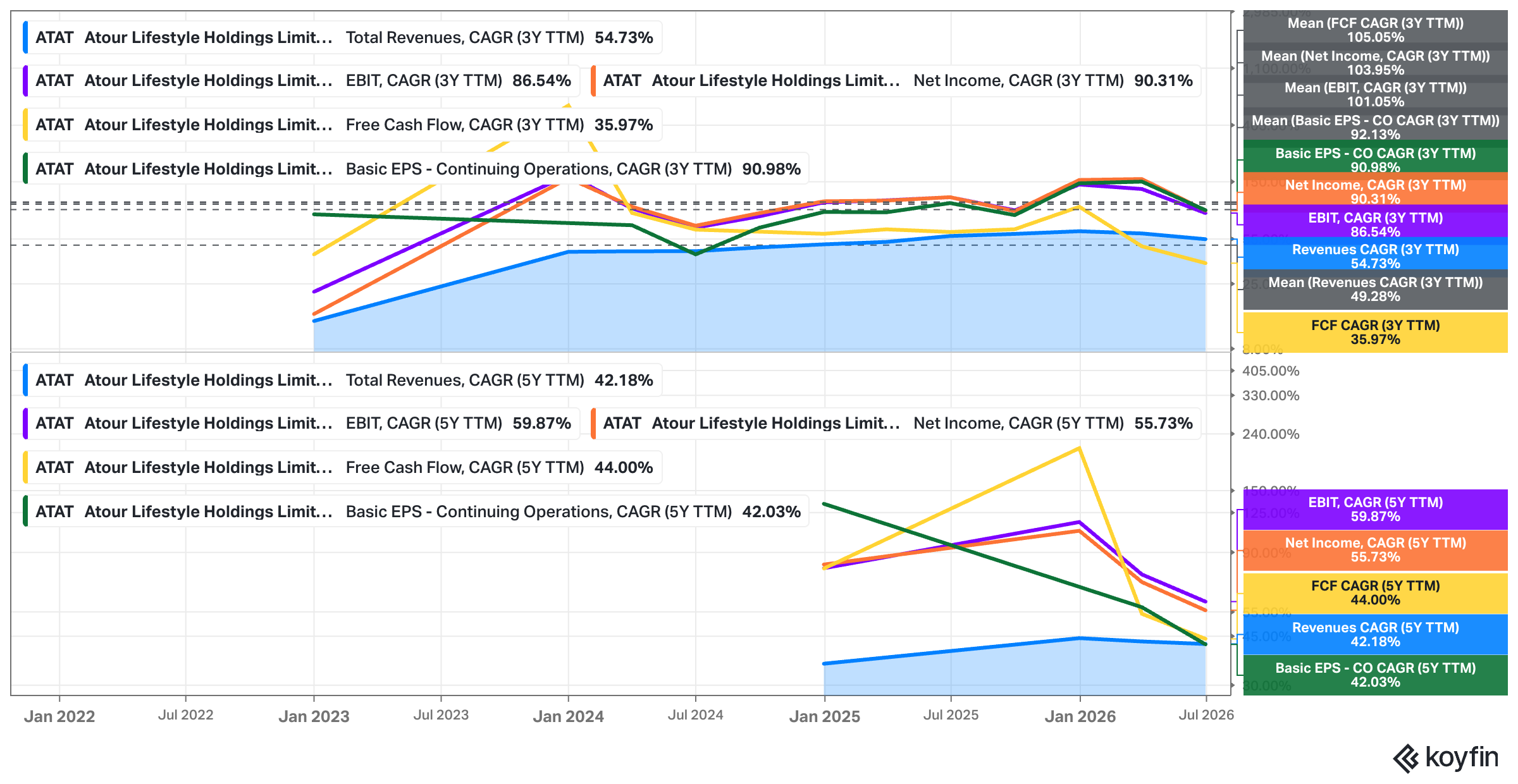
I’d take those figures with a grain of salt, since they start from a pandemic-depressed base in 2022.
The five-year figures are still impressive though, at about 42% for revenue, 60% for EBIT and 44% for free cash flow.
Meanwhile, the multiples have collapsed. Atour trades at about 15x trailing earnings and 12x forward earnings. Its EV to EBIT is around 8–9x, and price to free cash flow about 13x.
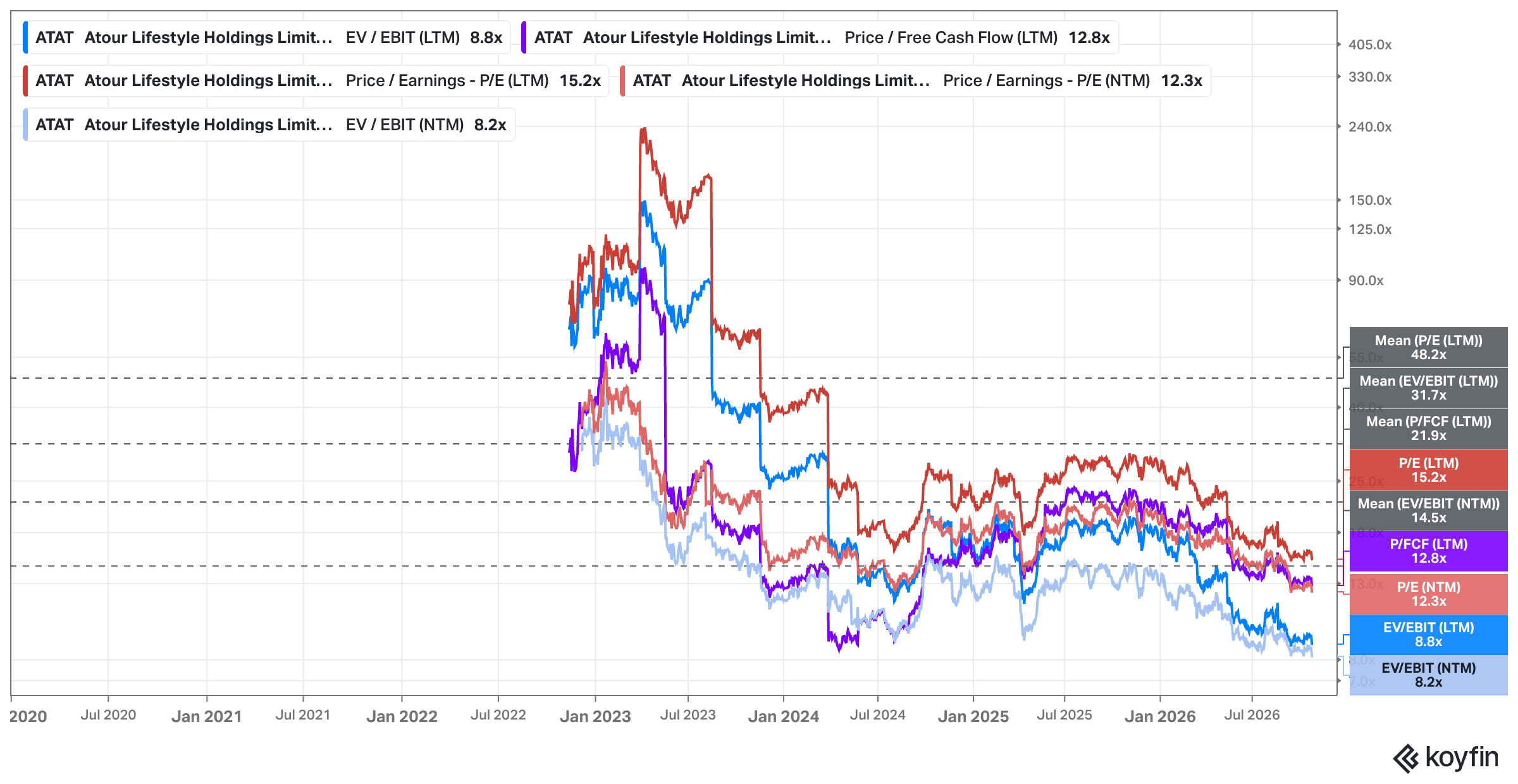
Its own historical averages are 48x earnings and about 32x EV/EBIT. Those averages are inflated by the IPO period, when earnings were still depressed, so I wouldn’t anchor on them.
But even with that caveat, this is the cheapest the stock has been relative to its earnings since it went public. And ATAT has never been cheaper on a sales basis too.
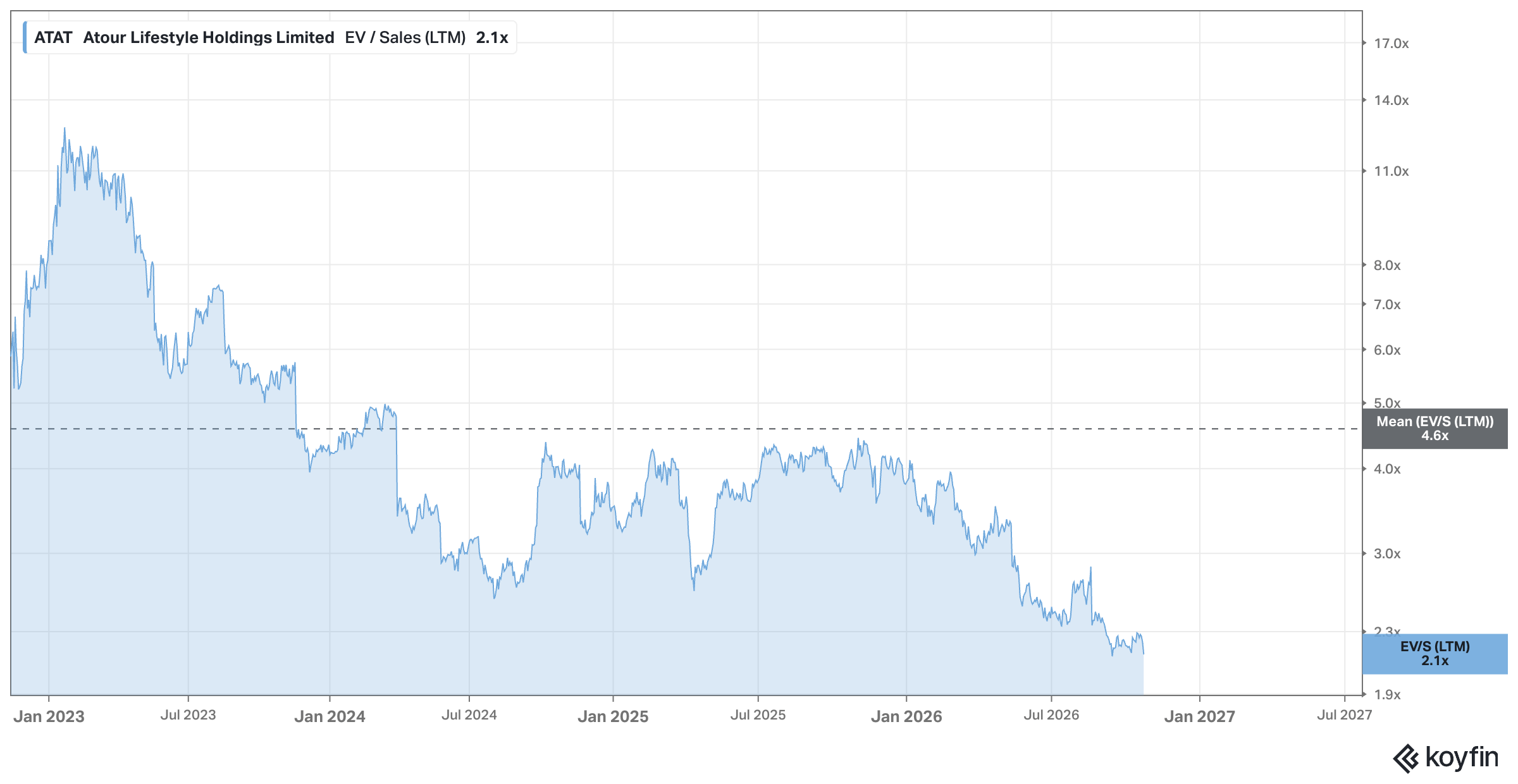
So is the market missing something, or is it seeing something I’m not?
There are reasons for skepticism. RevPAR at mature hotels is falling. Marketing spend is rising faster than revenue. Hotel peers have launched their own copycat pillows. Management’s own guidance implies a sharp slowdown in retail in the second half of the year. The hotel chain at the center of all this sits in a country many global funds simply won’t touch. Q3 results are due on November 24.
As you can tell, there is a lot to unpack! And I hope you are as much looking forward to it as I am.
What this deep dive series covers:
The 90-second pitch: eight reasons to own Atour
What went wrong, and why a company growing 40% sits 25% below its high
The origin story: a budget-hotel veteran, a remote village in Yunnan, a near-bankruptcy at 30 hotels and two aborted IPOs
How a pillow rewired the business, and the quarter retail gross profit overtook the hotels
The “zero-CAC” claim under the microscope, and what the margin math says about it
Unit economics side by side: Atour vs. Ji Hotel vs. Vienna, plus a stress test of what a 10% RevPAR drop does to franchisee payback
Updating a 2024 valuation framework I came across: why the hotels alone no longer pay for the stock
120 million loyalty members vs. roughly 65 million room nights a year
The customer: an illustrative lifetime value calculation, and why a frequent guest is worth roughly ten times a pillow buyer
The uncomfortable parts: hygiene complaints, pressure on staff to sell pillows, and a moat critics call “a piece of sponge”
Ownership stakes
Industry analysis
ROIIC calculation
Growth drivers and forecasting
Margins outlook
Valuation, and what I think Atour is worth
The full analysis runs long, as most of my deep dives, and most of it sits behind the paywall. If you’re a free subscriber and the list above makes you curious, this is a good time to upgrade to paid. You get this report in full, along with every other deep dive I publish, access to our community, the digital meetups, my AI tools, etc. etc.
So again, if you’re not part of my investing community yet, consider joining. Atour is only one of many ideas members like Nicolas bring up there, far more than I could ever cover on the blog.