

Dear Compounders,
In the current market environment of 2026, classic value investing – call it Buffett 1.0 investing – seems completely out of fashion.
Institutional investors spend billions chasing macroeconomic narratives, momentum trends, and high-flying technology multiples. Trump even began offering high-speed access to his market-moving announcements for $100,000 a month in August.
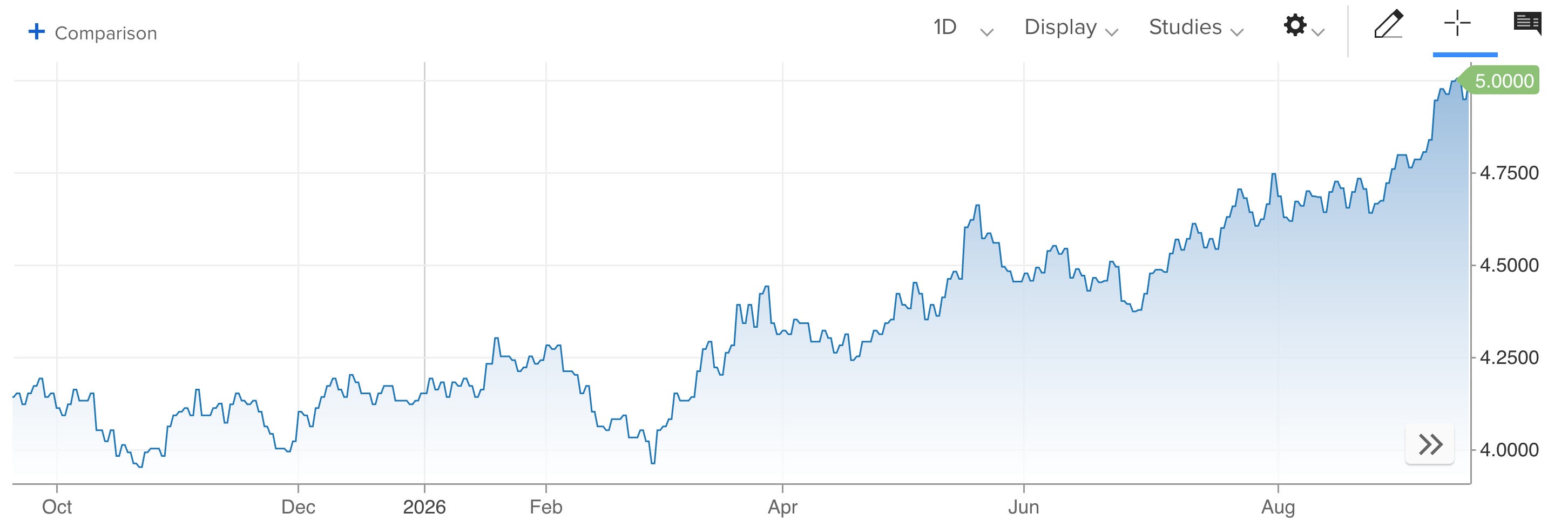
Institutional investors spend billions chasing macroeconomic narratives, momentum trends, and high-flying “AI-multiples.” Trump even began offering high-speed access to his market-moving announcements for $100,000 a month in August, and more than ten firms signed up, mostly high-frequency shops. Speed on a headline is what they are buying. The backdrop rewards it. Warsh's Fed raised rates on September 16, the ten-year yields around 5%, the top ten companies make up close to 40% of the S&P 500 against a 27% peak in 1999, and the five largest cloud providers have committed something like $700 billion of capex this year, increasingly on borrowed money.
And if market participants ever discuss Warren Buffett today, they almost exclusively study what I call Buffett 2.0. They analyze the legendary, late-stage strategist shaped by Charlie Munger – the investor who preferred deploying tens of billions into durable capital-light franchises with durable competitive moats, sometimes holding them for decades.
That mental model makes sense when managing a massive conglomerate like Berkshire Hathaway post-2000 (arguably way sooner already).
Scale forces giant capital bases into narrow corners.
Yet most investors overlook the fact that Warren Buffett’s legendary early performance was built on an entirely different foundation. Between 1957 and 1963, operating with under $10 million in partnership capital, he faced zero size penalties.
This was Buffett 1.0. He was an aggressive arbitrageur, a “balance sheet activist,” and a relentless and incredibly talented special situation investor.
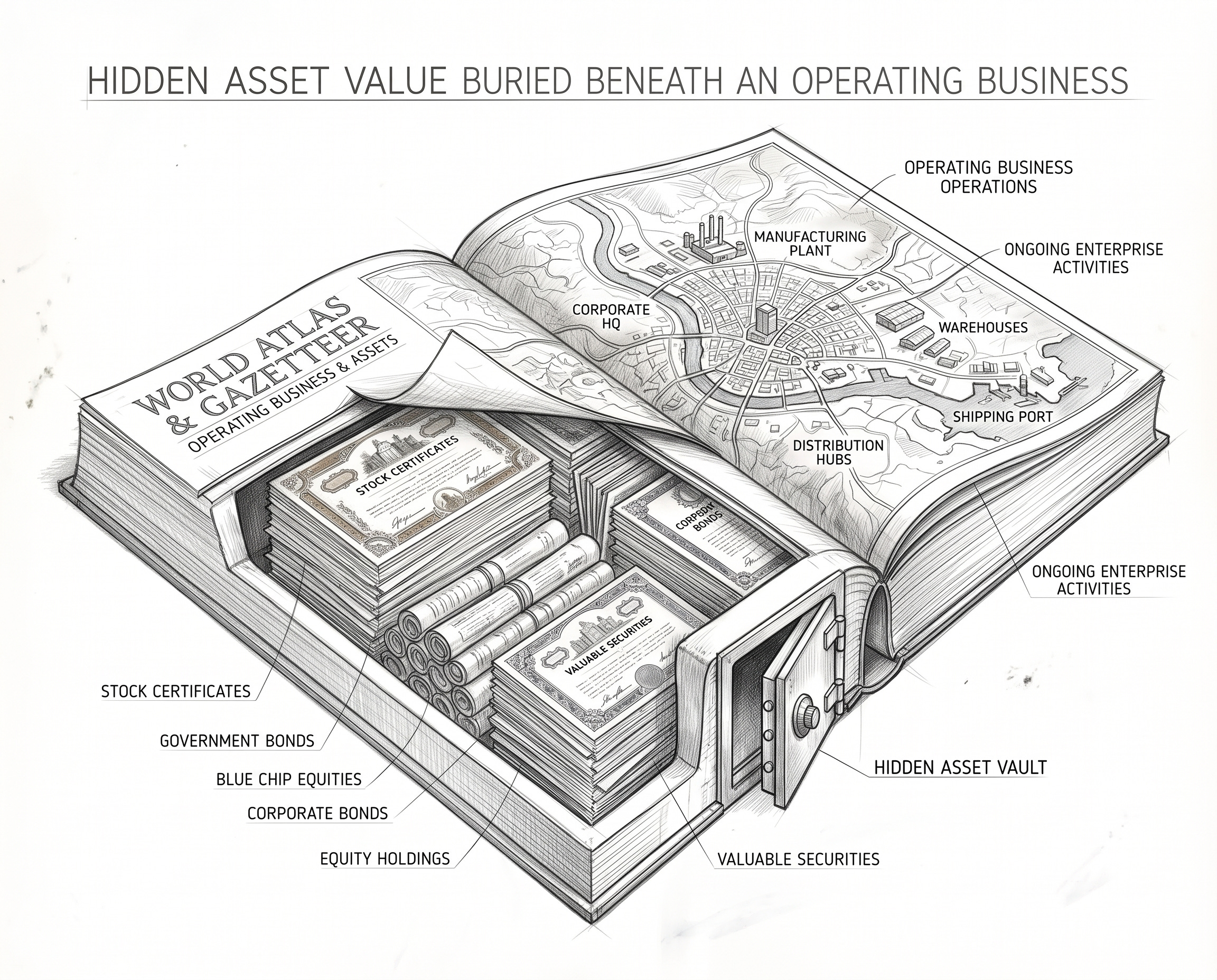
While the finance world fixates on meme stocks, high-frequency trading algorithms, passive investing, or quality compounding, the playbook of early Buffett remains one of the most effective, under-studied avenues for generating asymmetric alpha.
Asset-based activism, corporate workouts, and severe balance sheet mispricings still deliver extraordinary results in today’s markets.
I recommend listening to my conversation with Jamie Halse and his activist approach in Japan.
Unlocking Japan: Deep Value, Activism, and the $300M Opportunity w/ Jamie Halse

In this episode, we sit down with Jamie Halse, Founder and Portfolio Manager at Senjin Capital, to dissect one of the most compelling and misunderstood corners of global equities: Japanese small-caps.
To capture those returns, you must study the original partnership letters when his capital was nimble and his investment taxonomy was sharp.
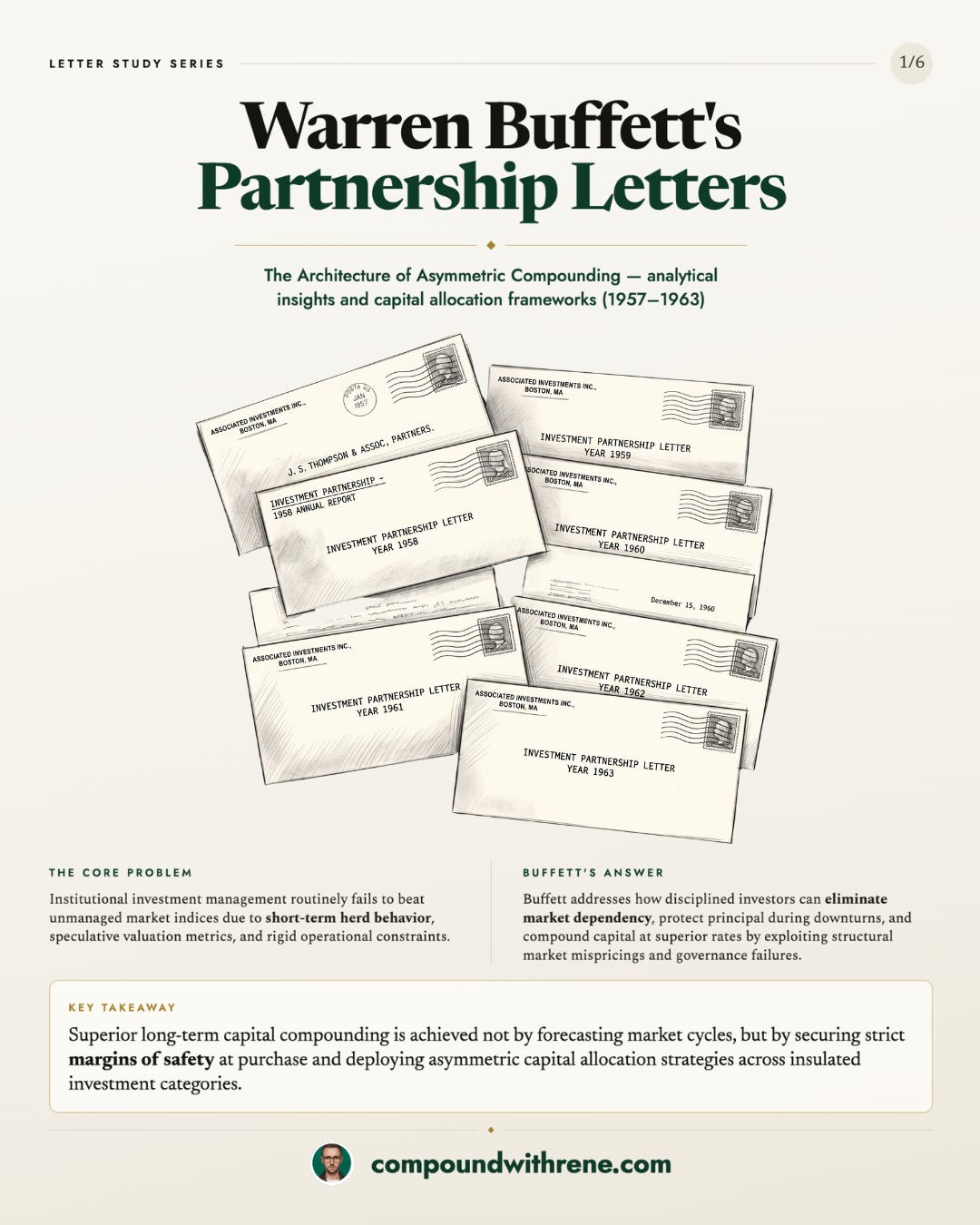
Why did early capital allocation rely on three distinct engines?
To eliminate dependence on stock market advances, Buffett constructed a portfolio divided into three operational categories:
Generals,
Work-Outs, and
Controls.
This tripartite architecture allowed him to generate superior returns while maintaining strict down-market capital preservation.

Generals represented classic undervalued securities where the partnership exercised no corporate control and had no fixed timeline for price realization. These positions carried massive individual margins of safety and generated substantial upside during rising markets. However, their market prices remained correlated with general market moves.
Work-Outs provided the defensive counterweight. These were corporate arbitrage commitments tied directly to specific corporate actions such as liquidations, mergers, spin-offs, and tender offers. The returns on Work-Outs depended on corporate schedules rather than market sentiment. To optimize capital efficiency, Buffett routinely used short sales to strip out broader equity market risk and deployed conservative bank leverage – capped strictly at 25% of net worth – solely to finance these predictable transactions.
“You will note on our yearend balance sheet (part of the audit you will receive) securities sold short totaling some $340,000. Most of this occurred in conjunction with a work-out entered into late in the year. In this case, we had very little competition for a period of time and were able to create a 10% or better profit (gross, not annualized) for a few months tie-up of money. The short sales eliminated the general market risk.“ – 1962 Letter
Controls formed the third pillar. When market prices remained depressed for extended periods, Buffett systematically accumulated dominant equity positions to force corporate change. Prolonged stock stagnation was welcomed because it lowered acquisition costs. Once control was secured, performance became completely insulated from Wall Street sentiment.
Decoupling portfolio performance from general market indexes required this structural variety. In static or declining markets, Work-Outs and Controls drove performance, allowing the overall partnership to compound capital while broad indexes faltered.
In case you missed it, I recently wrapped up my 126-idea series, in which I sorted the ideas found in the fund letters I track by:
Worst Performers: Quarter-to-Date (QTD)
Worst Performers: 3-Month Window
Worst Performers: 6-Month Window
Revisiting the 126 Idea-List: Which Ones Are Cheaper Now?

In my recent three-part series on new stock ideas from young and talented money managers, I combed through the latest investor letters from under-the-radar fund managers – those running smaller pools of capital who beat the market without showing up on Dataroma.
How do you extract cash from non-performing assets?
The true genius of Buffett 1.0 lay in his appraisal discipline and aggressive balance sheet restructurings, best demonstrated by his investments in Sanborn Map Co. and Dempster Mill Manufacturing.
In 1958, Sanborn Map presented a glaring market inefficiency. The company’s stock traded at $45 per share, yet its underlying investment portfolio alone was worth $65 per share. Investors were pricing the core mapping business at a negative $20 valuation despite its historical stability. Board inertia caused this severe mispricing; nine directors owned just 46 shares combined and continuously slashed dividends while maintaining executive fees.
Buffett accumulated a 44% controlling stake alongside allied partners and engineered a tax-efficient corporate separation. Instead of liquidating the stock portfolio and incurring a massive corporate capital gains tax, he structured an SEC-approved exchange. Shareholders wishing to exit swapped 72% of Sanborn’s outstanding stock directly for underlying portfolio securities at fair value. The transaction eliminated over $1 million in prospective tax liabilities, unlocked immediate intrinsic value for exiting partners, and left the remaining business debt-free.
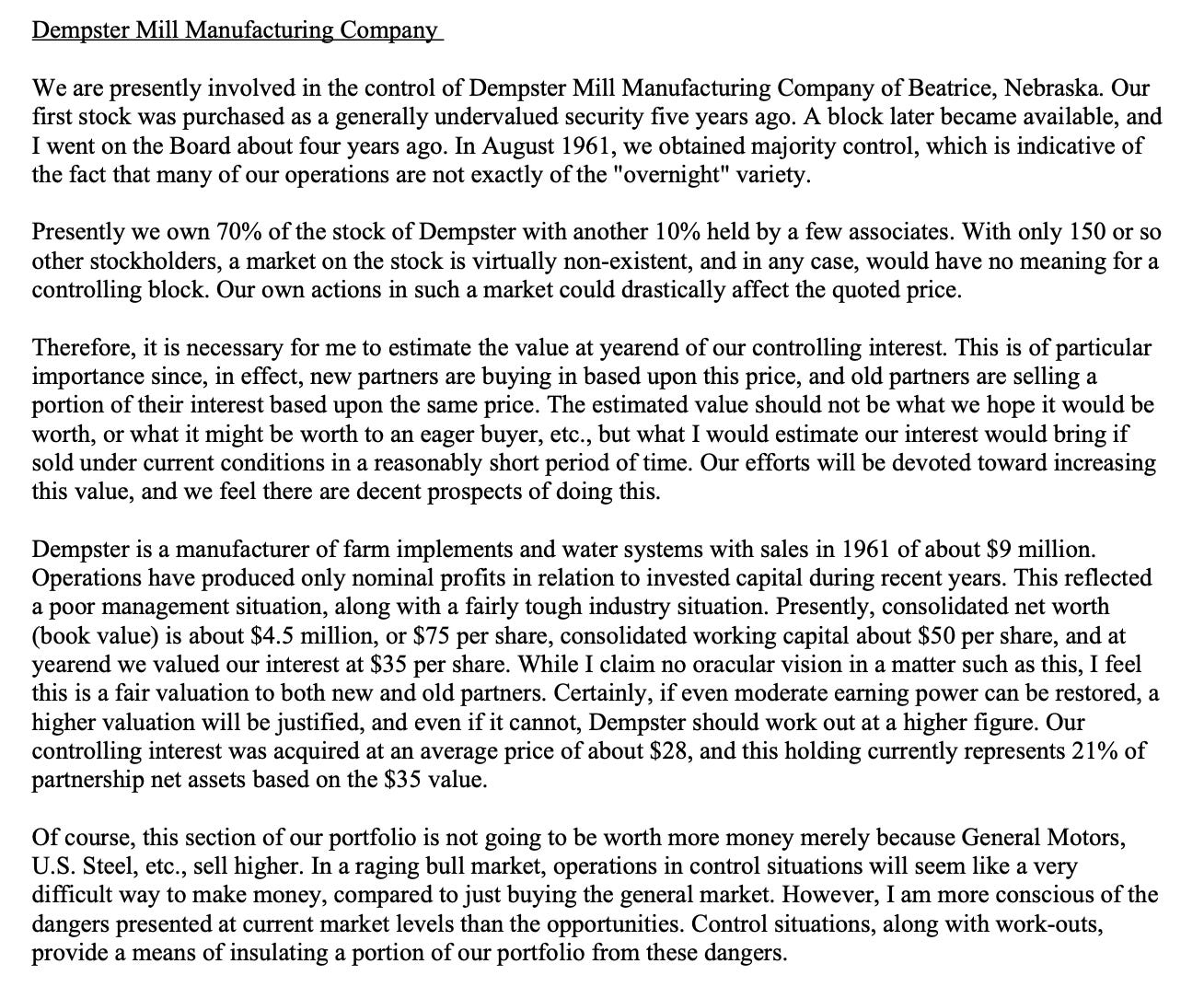
At Dempster Mill Manufacturing, Buffett demonstrated his quick-liquidation valuation framework. Ignoring optimistic book values, he applied severe haircuts to the balance sheet: 40% off inventory, 15% off receivables, and basic scrap values for physical equipment.
“We intend to use the same method or valuing our controlling interest in Dempster Mill Manufacturing at this yearend that we did at the end of last year. This involved applying various discounts to the balance sheet items to reflect my opinion as to what could be realized on a very prompt sale. Last year this involved a 40% discount on inventories, a 15% discount on receivables, estimated auction value of fixed assets, etc., which led to an approximate value or $35.00 per share”
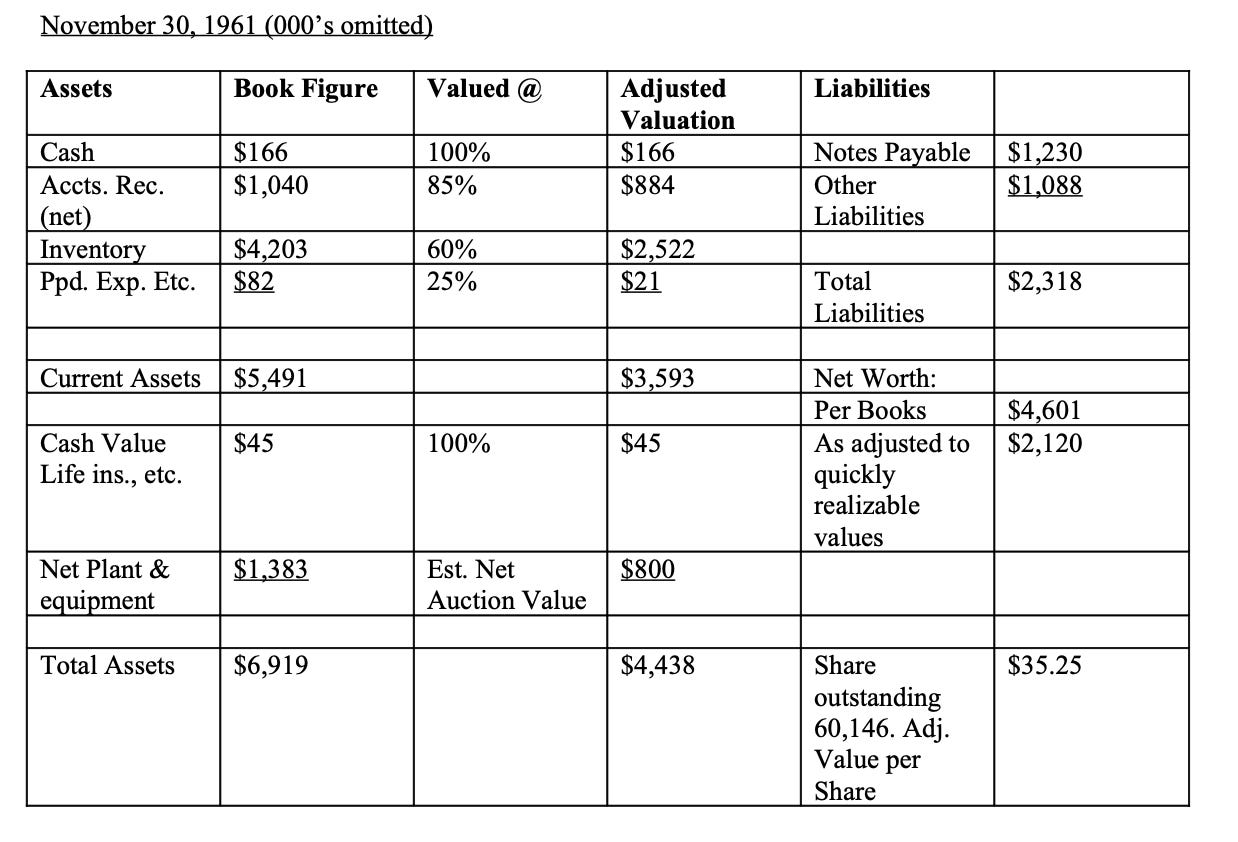
He acquired majority control at an average price of $28 against a book value of $75 per share.
When original management failed to reduce operational drag, Buffett installed turnaround specialist Harry Bottle. Bottle slashed operating breakeven points in half and reduced excess inventory from $4.2 million down to under $1.0 million.
The extracted capital was funneled directly into a high-yielding securities portfolio managed by the partnership. By 1963, Dempster held $35 per share in liquid securities held inside a bank vault alongside $16 per share in productive manufacturing assets. The liquid assets alone exceeded the total acquisition cost of the entire company.
Blueprint of Buffett’s Early Partnership Days
To help sophisticated investors visualize these dense corporate finance mechanics, I distilled the core architectural frameworks from Warren Buffett’s 1957–1963 letters into a visual deck.
It breaks down the portfolio allocation models, governance turnarounds, and valuation frameworks into a clean structural format.
You can access the Blueprint via the note I shared with the slide deck as image files a couple of days ago (free to access for everyone):
Disclaimer: The analysis presented in this blog may be flawed and/or critical information may have been overlooked. The content provided should be considered an educational resource and should not be construed as individualized investment advice, nor as a recommendation to buy or sell specific securities. I may own some of the securities discussed. The stocks, funds, and assets discussed are examples only and may not be appropriate for your individual circumstances. It is the responsibility of the reader to do their own due diligence before investing in any index fund, ETF, asset, or stock mentioned or before making any sell decisions. Also double-check if the comments made are accurate. You should always consult with a financial advisor before purchasing a specific stock and making decisions regarding your portfolio.
Downloadable Blueprint PDF
The complete image series above is free for everyone to review. Paying subscribers can access and download the Blueprint as a PDF so you can store it – and all old and future Blueprints – nicely on your computer.
Until next time, keep compounding!
(PDF download link below)