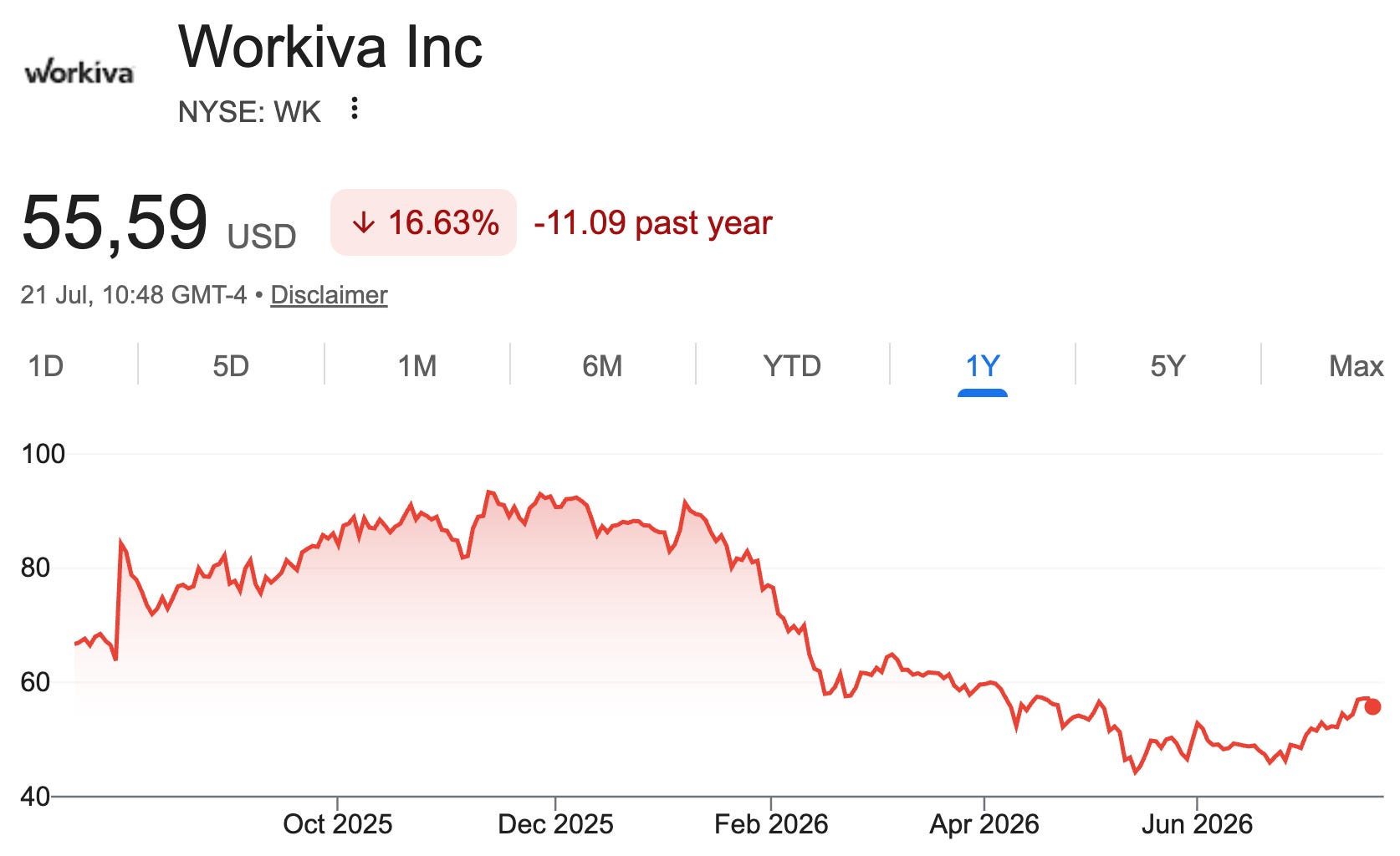
Here’s a puzzle to start today’s analysis with:
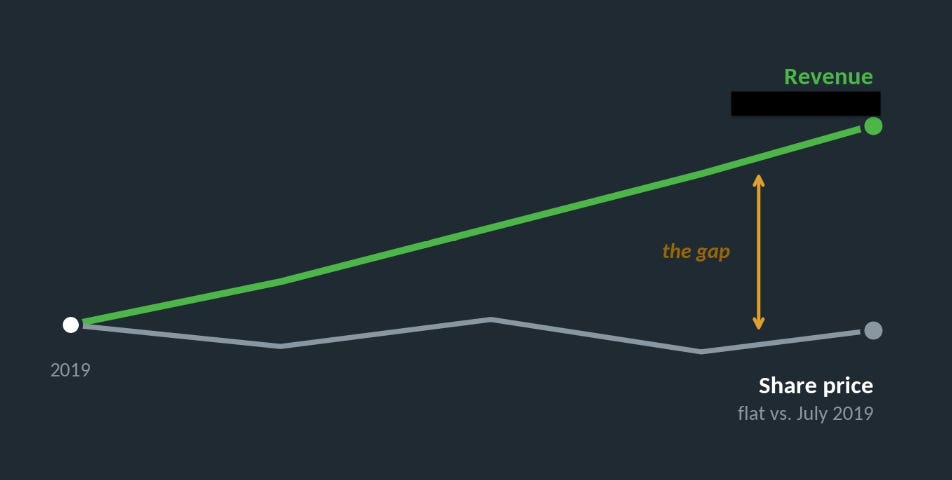
Imagine a software monopoly company that nearly quadrupled its revenue, from around $250 million to almost a billion dollars over the last nine years.
Yet, the stock itself rewarded its shareholders with precisely nothing. The stock is flat versus where it traded in July 2019. Seven years of really strong compounding growth, seven years of dead money.
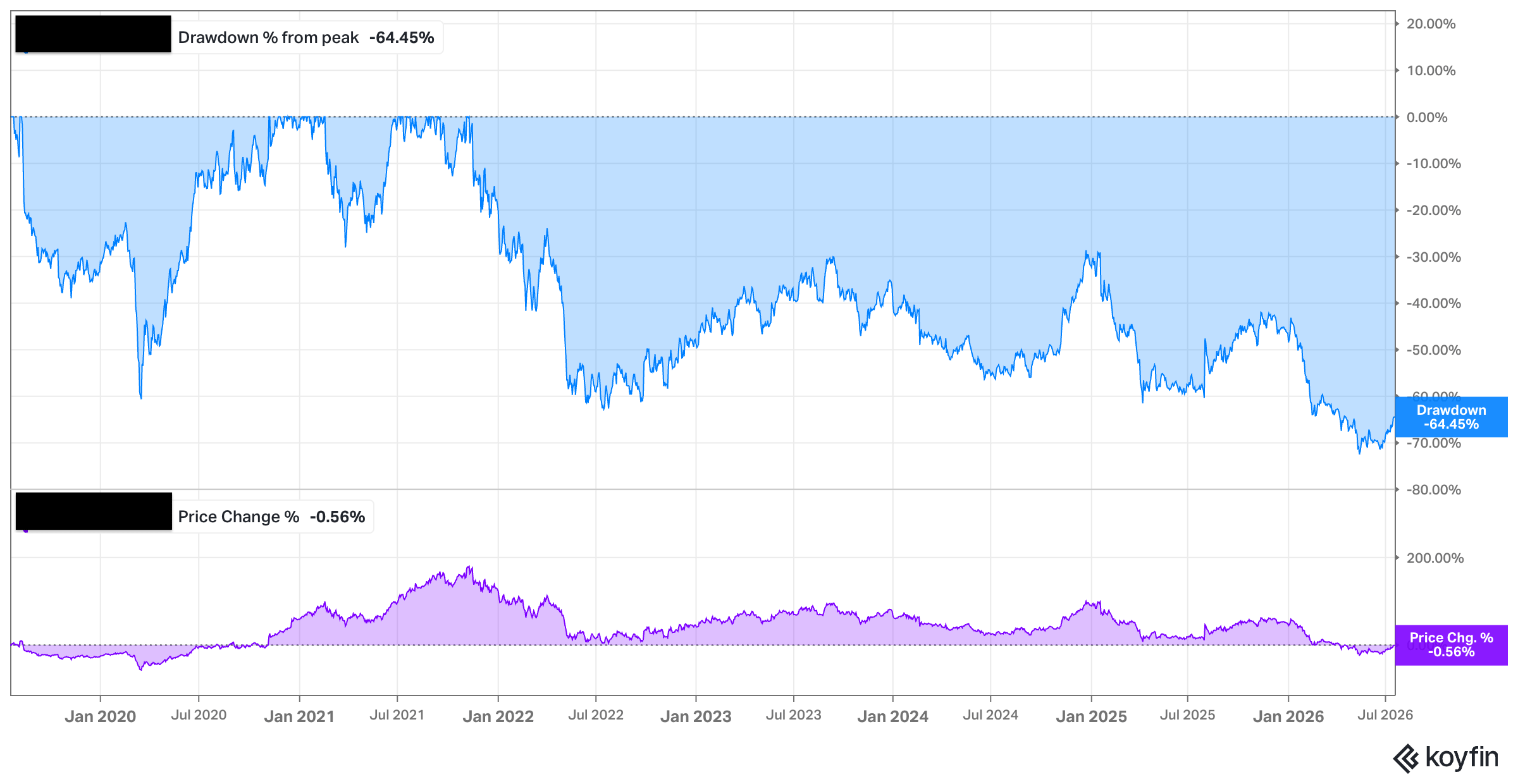
In fact, more recently, it’s down 64% from its high as I write this (update: in fact, the stock ended yesterday’s trading session down 5%, bringing the total drawdown closer to 70% as of July 23, 2026).
Interesting setup!
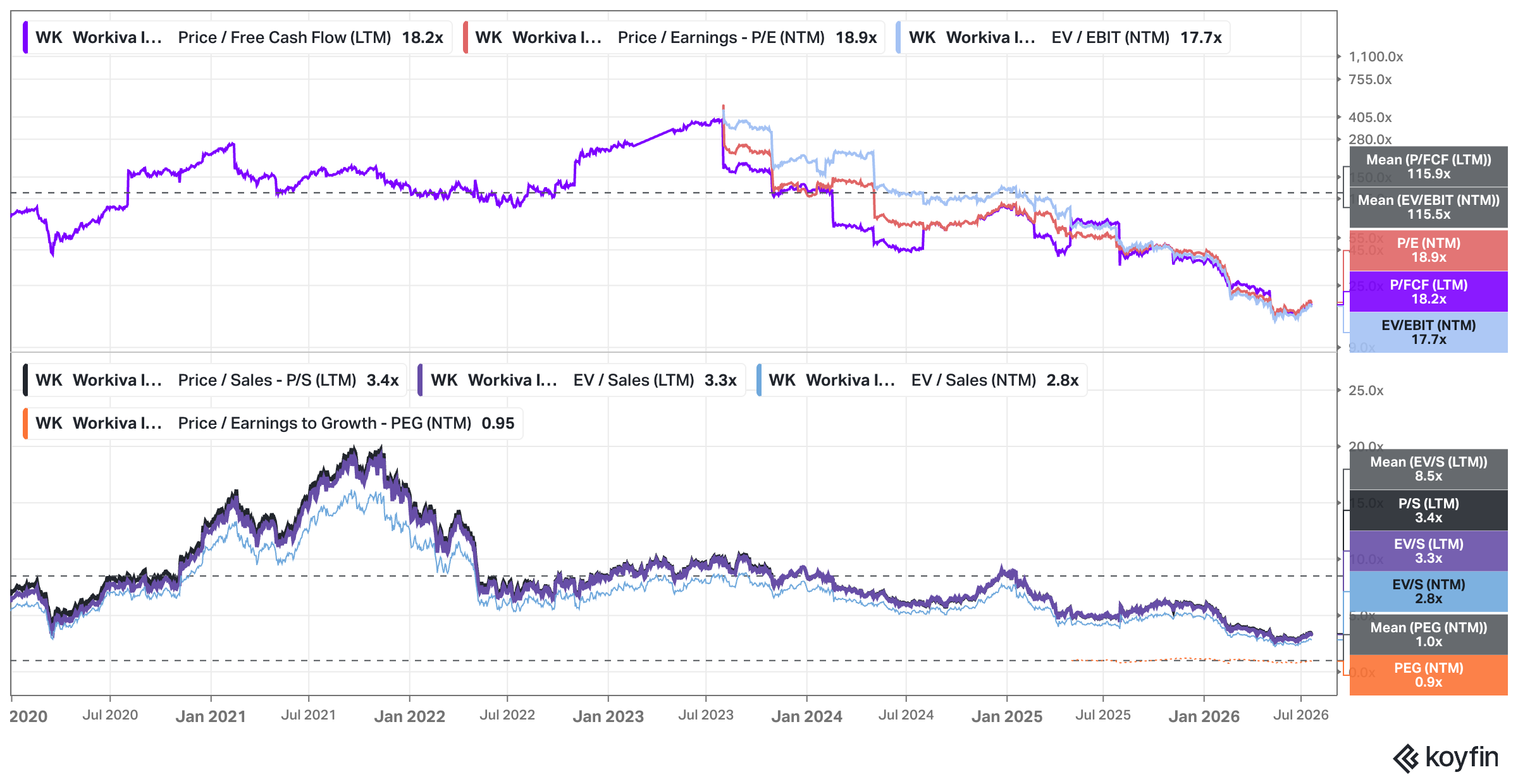
On paper, that pairing shouldn’t be possible (or at the least not rational), and when a market hands you a monopoly business growing that fast – revenue compounded at nearly 20% over the last ten years and the PEG ratio sits below 1x – at a price that’s gone nowhere, the interesting question is whether the market knows something you don’t, or whether it is making a mistake and mispricing this equity.
I think it might be the second one, and this post is my attempt to prove myself wrong before I let myself believe it.
What this deep dive covers:
We cover the key thesis in about 8,000 words:
The five-part bull case (”Bam Bam Bam Bam Bam”)
What went wrong
The one event that I watch for that could create a generational buying opportunity
Investment Slide Deck – the deep dive in a highly compressed + visualized form
Every deep dive now comes with a companion slide deck. It’s the whole argument in compressed form – the hypothesis, the business, the competitive position, the valuation, and the case against – for the days when you don’t have an hour to spare but still want the shape of the thing. Paid subscribers get both, the long piece and the deck, on every deep dive from here on.
If you then want to dig deeper, we cover the business, the management team, detailed valuation work, etc. in the subsequent sections (another 10,000 words).
The origin story
The business itself
Unit economics analysis
The customer
Legal structure, cyclicality, and operating leverage
The moat
Is it a good business in a good industry
Management and governance
Growth drivers and forecasting
Margins outlook
Valuation (including two downloadable models)
Other interesting findings
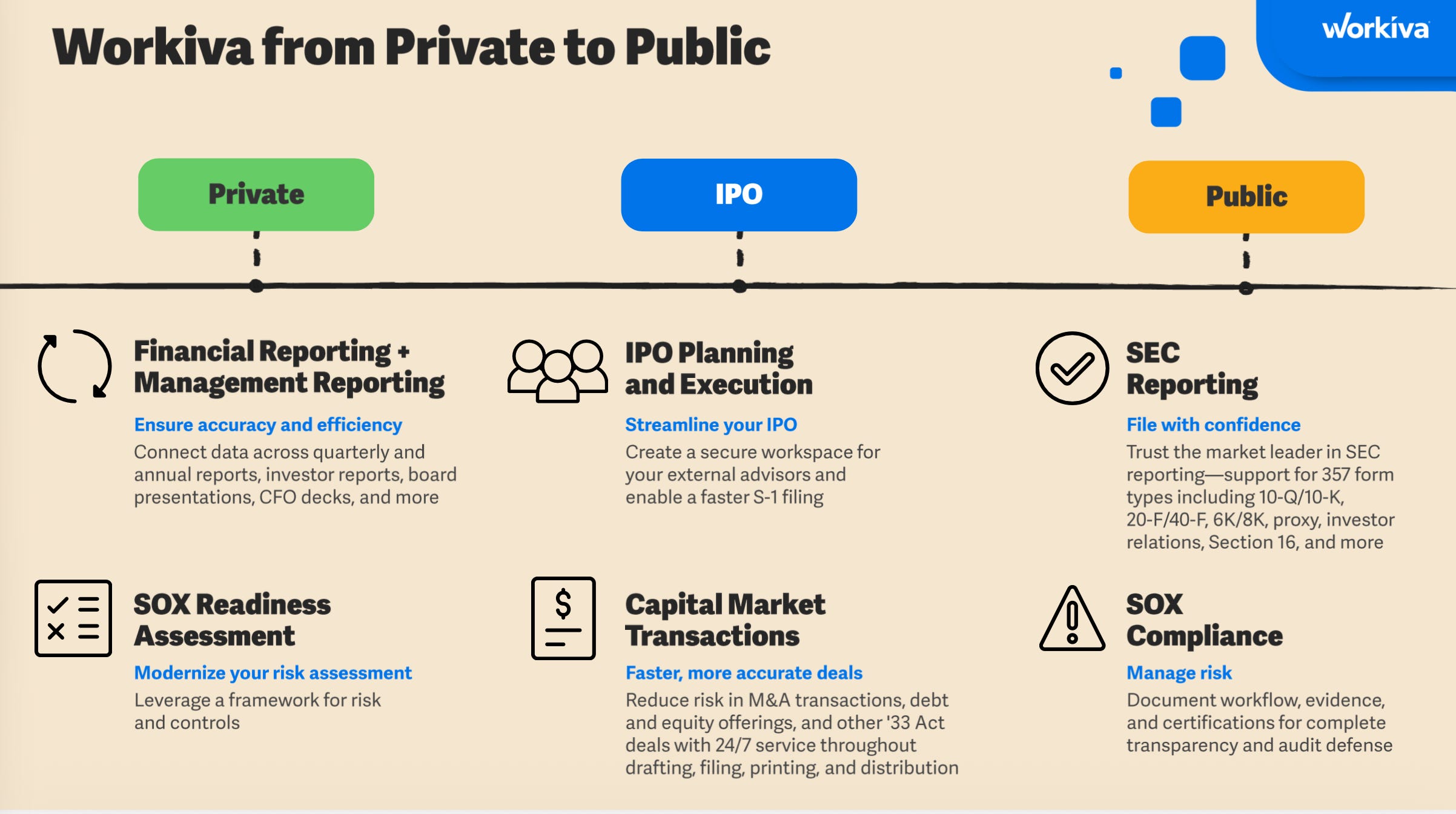
Let me set the scene with the problem this company solves. Not long ago, the largest corporations on earth assembled their most sensitive regulatory filings through a process best described as organized panic.
Fragmented Word documents labeled “Q3_10Q_Draft_v8_auditor_comments_FINAL.docx.” Spreadsheets (“Tax_Provision_2025_vFINAL_adj_check_tab.xlsx”) that didn’t reconcile. Someone checking printer proofs line by line last-minute, praying a wrong number hadn’t slipped through before the midnight deadline.
This company, Workiva, turned that chaos into something closer to a self-driving workflow, where changing a single figure at its source updates thousands of linked instances across every document in seconds.
Dull-sounding work. Mission-critical work.
And it now runs the plumbing for a shocking share of corporate America.
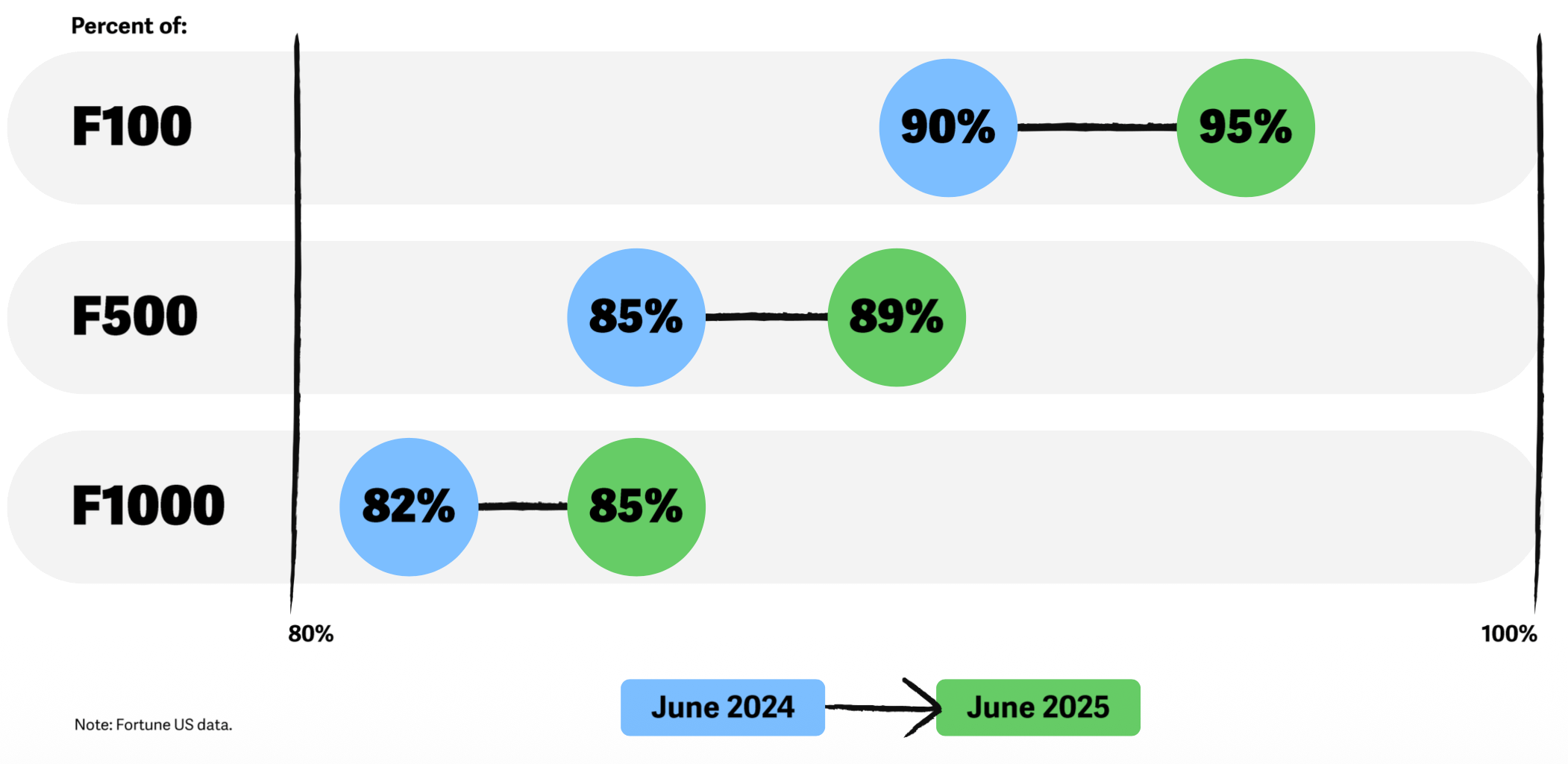
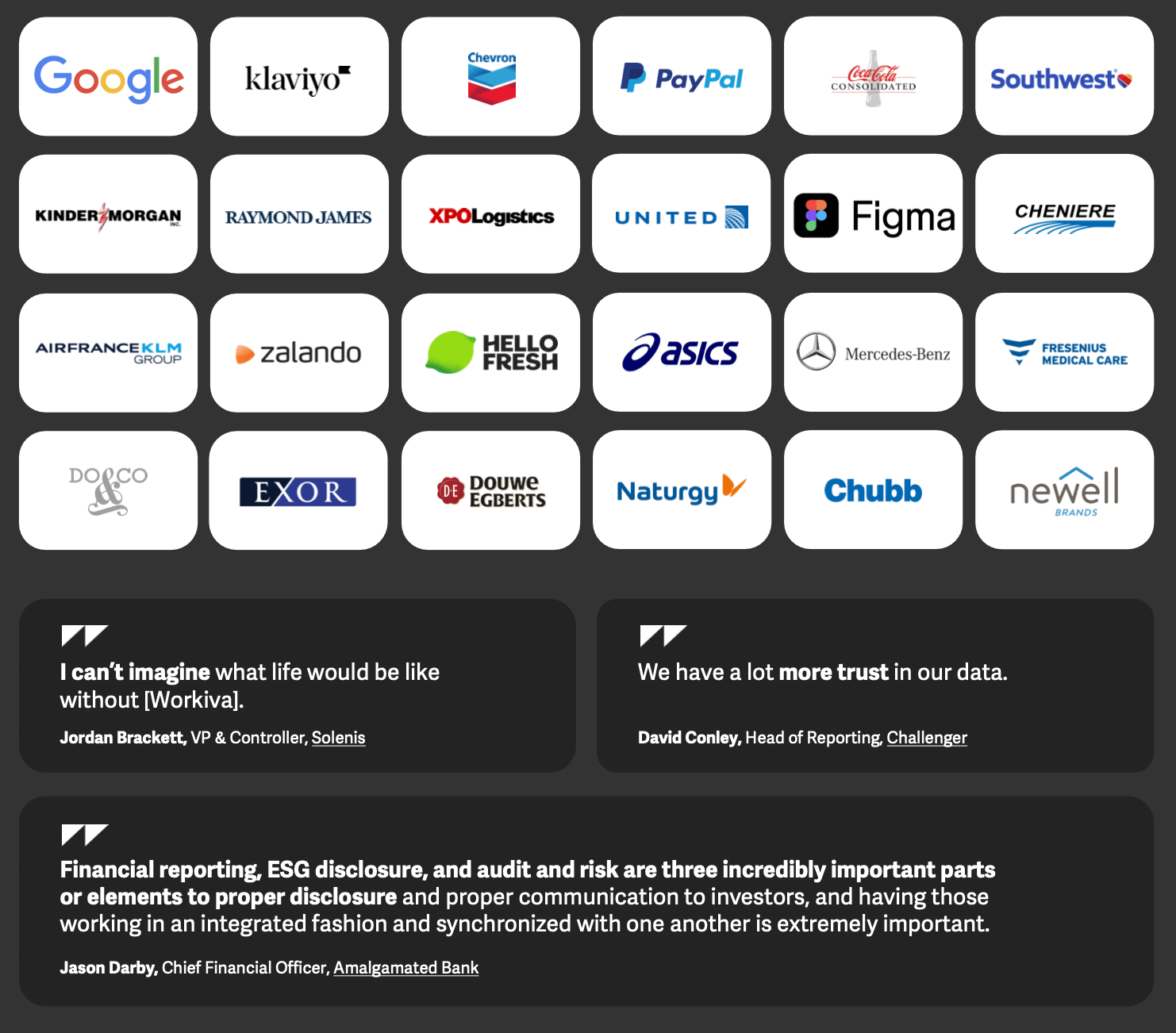
How shocking? The platform serves 95% of the Fortune 100, 89% of the S&P 500, and more than 85% of the Fortune 500.
It handles roughly half of all US filers, yet those filers represent something like 85% of total US market capitalization, which tells you the biggest and most complex companies are the ones that can’t live without it.
For instance, it just won SpaceX ahead of its IPO.

The AI standard-bearer, Anthropic (prediction markets point to a late 2026 IPO), is a multi-solution customer.
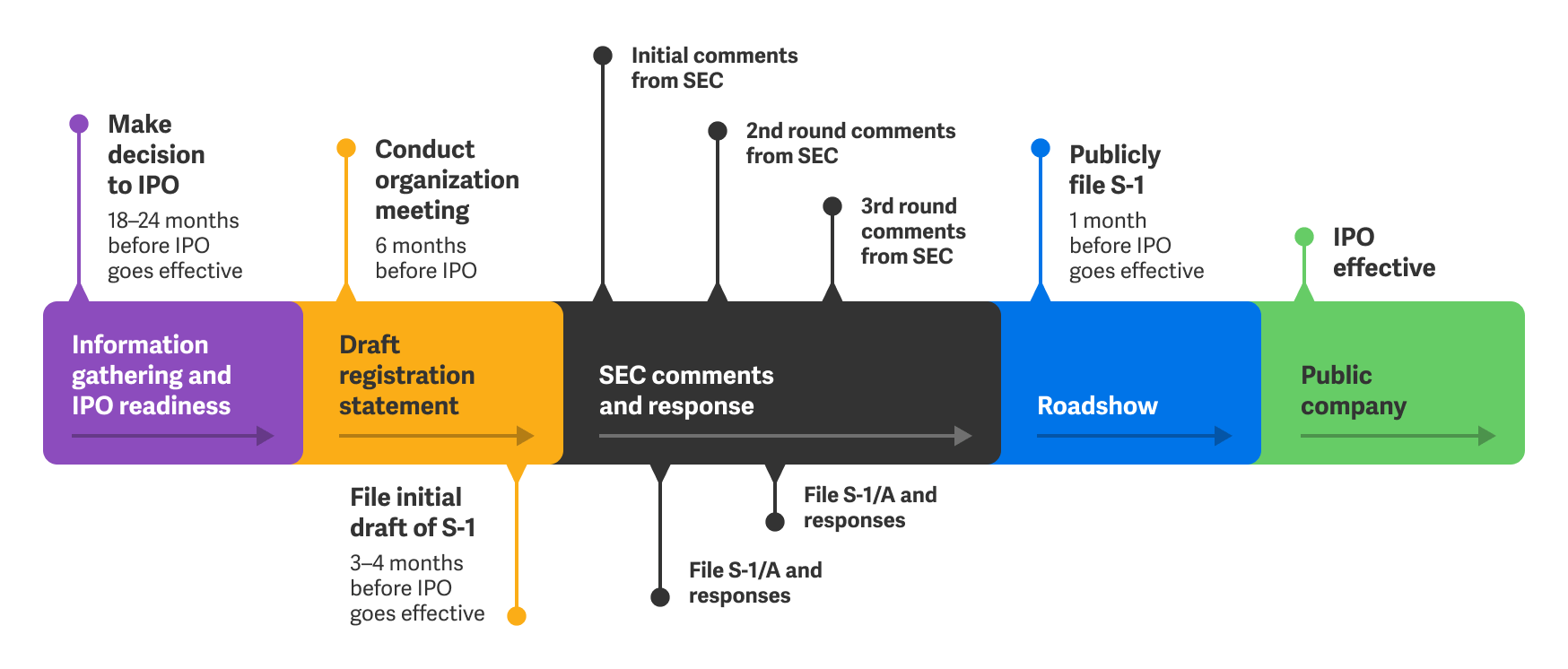
This is a hidden giant sitting underneath the disclosures of the global economy, and almost nobody outside its industry can name it.
So why is it potentially in the bargain bin? One word, and you already know it:
AI.
The dominant fear across software is that generative models and autonomous agents will make platforms like this one obsolete, and the multiple has compressed sharply, even as profitability hit an all-time high.
My hypothesis runs directly against that fear. In a zero-tolerance regulatory environment, an AI that hallucinates a number is a liability (!) rather than an assistant, and this company has spent fifteen years building the one thing those agents need to be trusted at all: structured, validated, auditable data with traceable lineage.
The technology the market thinks will kill it may be the technology that makes it even more indispensable.
That’s the case I’ll build and then attack across the rest of this piece – the near-monopoly, the moat, the management pivot, the balance sheet, the risks, and finally what I think the whole thing is worth (or what kind of returns the stock may generate from the current starting level).
If the hypothesis survives the beating, the disconnect between this company’s growing business and its stagnant stock starts to look like one of the more interesting setups in software right now.
High-Level Thesis: “Bam Bam Bam Bam Bam”-90 Second-Hypothesis
I always start with Bill Miller – and I won’t get tired of it – who once made an observation that every analyst should tattoo on the inside of their eyelids: portfolio managers have ultra-short attention spans, and almost none of them wants to sit through a pitch longer than 90 seconds. He liked to tell the story of Peter Lynch, who kept an egg timer on his desk. An analyst would walk in to pitch a stock, Lynch would flip the timer, and the poor soul had 90 seconds to make the case and get out. No preamble. No throat-clearing. Just the goods.
Miller’s own template was equally blunt. You name the company, you give the price and the 52-week range, and then you fire off the reasons in rapid succession.
Bam. Bam. Bam. Bam. Bam. Five bullets, a rough sense of what the thing is worth, and the risks. That’s the whole pitch. So before I spend the next several thousands of words dissecting Workiva (ticker: WK) from every conceivable angle, I owe you my concise version (even though I’ve deviated from the 90-second version, but I have five BAMs for you!).
Why this stock, and why now?
Workiva looks potentially mispriced to me, and the reason is a misunderstanding I think the market has talked itself into. The story doing the rounds is that AI is about to make document-generation software obsolete, and Workiva has been lumped into that bucket. The multiple has contracted by roughly 50% to a historically depressed 2.8x NTM revenue (as I write this).
Meanwhile, the underlying business has hit an inflection that doesn’t square with the “melting ice cube” narrative at all: a 1,600 basis-point improvement in non-GAAP operating margin in Q1 2026, achieved while subscription revenue kept compounding at a durable 20%.
“We also continued to deliver on profitable growth, with Q1 2026 non-GAAP operating margin greater than 18%. This was a 240 basis point beat on the high end of our guide and it was a 1,600 basis point improvement compared to Q1 of last year.“ - Q1 Call
Over the last few quarters, Workiva has become the auditable data architecture that enterprise AI actually depends on to produce reliable output inside a regulated environment. The market has it filed under “replaceable document generator.” I think that framing may be wrong
As always, I’m calling this an investment hypothesis, not a thesis. A thesis is a statement of belief, and the trouble with belief is that it quietly recruits you into looking for evidence that confirms it. A hypothesis carries the opposite instinct. It’s a proposition you’re actively trying to break. So across this piece I’ll be stress-testing my own initial assumptions about Workiva’s AI resistance and its margin trajectory rather than cherry-picking the data that flatters them.
If the hypothesis survives the beating, that tells you something. If it doesn’t, better to find out here than in the portfolio.
With that, the timer’s flipped. Here’s the first bam.
Disclaimer:
As of the date of publication the author owns no shares in the company; but that may change. The analysis presented in this blog may be flawed and/or critical information may have been overlooked. The content provided should be considered an educational resource and should not be construed as individualized investment advice, nor as a recommendation to buy or sell specific securities. I may own some of the securities discussed. The stocks, funds, and assets discussed are examples only and may not be appropriate for your individual circumstances. It is the responsibility of the reader to do their own due diligence before investing in any index fund, ETF, asset, or stock mentioned or before making any sell decisions. Also double-check if the comments made are accurate. You should always consult with a financial advisor before purchasing a specific stock and making decisions regarding your portfolio.
Bam #1: A Monopoly Inside the World’s Most Boring Workflow
Workiva serves 95% of the Fortune 100, more than 85% of the Fortune 500, and 89% of the S&P 500. That’s all you need to know about Workiva’s position in its industry. It’s a quasi-monopoly.
It works with roughly half of all US filers, yet those filers represent something like 85% of total US market capitalization. Serving 50% of filers but 85% of market cap tells you the customer base skews hard toward the large and the complicated and the most valuable ones.
The bigger and messier a company’s reporting obligations get, the more likely it is to end up on Workiva.
As of early 2026 the platform counts over 6,600 organizations and more than 340,000 users spread across 180-plus countries. Over the last five years, the total number of customers compounded at an 11% CAGR.
To understand why that footprint is so hard to dislodge, you have to understand what Workiva actually owns, which is the “last mile” of reporting.
The last mile is the stretch between the moment data leaves a system of record – an ERP, say – and the moment it gets published to regulators, shareholders, or the board.
It’s the highest-risk leg of the whole journey, because it’s where a clean number from the general ledger can get mangled by human hands before it reaches the SEC.
Before Workiva, this stretch was chaos. Picture a folder full of files named things like “10K_2025_v12_FINAL_counsel_v3_DO_NOT_USE_YET.docx,” a swarm of spreadsheets that don’t reconcile, and a chain of frantic emails in the middle of the night the day before a filing deadline.
Workiva collapsed all of that into one cloud environment where the document, the data, and the sign-offs are stored and working together. The connective tissue is what makes it stick. Workiva plugs into hundreds of different …
ERP (Enterprise Resource Planning),
HCM (Human Capital Management),
CRM (Customer Relationship Management), and
GRC (Governance, Risk, and Compliance) systems
… and behaves like a universal translator between them.
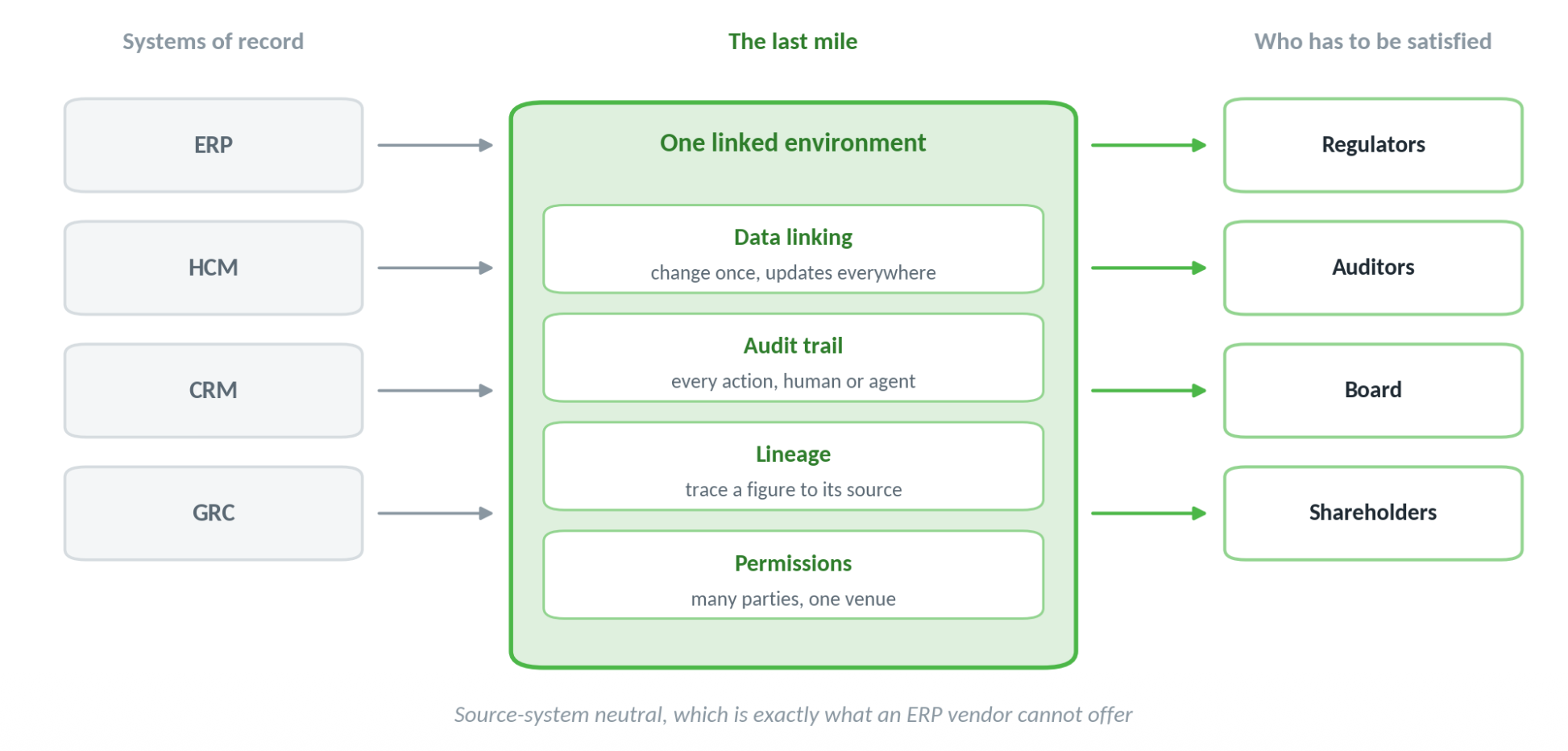
This “source-system neutrality” is a bigger deal than it sounds. Because Workiva doesn’t care whose ERP you run, adopting it doesn’t lock you deeper into any one vendor’s ecosystem. A company running SAP for finance and Workday for HR and something else entirely for compliance can pull it all into a single reporting layer without picking a side. That neutrality is precisely what the ERP vendors can’t replicate, and I’ll come back to why in a moment.
Then there’s the part that turns a useful tool into an operating system: the workflow itself is inherently multi-departmental. A single 10-K isn’t a finance deliverable. It requires input and sign-off from accounting, finance, legal, investor relations, the board, the external auditor, and outside legal counsel. Workiva houses all of those parties in one place, with granular permissions and task management wrapping the whole thing. Once that’s the venue where the year’s most sensitive disclosures get assembled, ripping it out means re-coordinating seven constituencies who have finally agreed on how they work together. Good luck.
And adoption rarely stops at SEC filings. Companies that come in for the 10-K tend to expand into SOX compliance, internal audit, and ESG reporting, and each new use case sinks the roots a little deeper. Multi-solution adoption is a key KPI investors should track.
If I had to name the single feature that “builds the moat,” it’s data linking. Any given number – Q3 revenue, say – might appear in a 10-Q, an earnings deck, a supporting spreadsheet, and an ESG report all at once.
In the old world, changing that figure meant hunting down every instance by hand and praying you didn’t miss one. Workiva’s deep linking means you change it once at the source and every downstream instance updates simultaneously, across every document, automatically. That eliminates the nightmare scenario every CFO has lived through, where two official reports quote two different numbers for the same line item. Legacy tools can’t do this. Manual processes definitely can’t. It’s the kind of feature that sounds mundane in a demo and becomes irreplaceable the first time it saves you from a restatement.
So why hasn’t anyone bulldozed this position? Because the obvious challengers keep failing for structural reasons. The ERP giants have been the most persistent. SAP and Workday have spent well over 15 years trying to build their own last-mile reporting tools, and the traction has been minimal. They stumble on the same two things every time:
they can’t offer source-system neutrality when the whole point of their business is to be your source system, and
they’ve never nailed the collaborative, Office-like feel that reporting teams actually want to work in.
The point-solution vendors have the opposite problem. Firms like AuditBoard or Diligent build genuinely strong GRC or audit products, yet they can’t handle complex financial reporting or SEC filings.
And the old-guard financial printers like DFIN keep bleeding share because they only show up for the final filing and never became the year-round workspace where the work actually happens.
Thus, Workiva remains the only platform that brings financial reporting, ESG, and GRC into one audit-ready environment.
The proof that all of this embedding is more than a story shows up in retention. Gross retention sits consistently at 97% or higher, which is elite for enterprise software and tells you customers essentially never leave. The rate has remained exceptionally stable, consistently exceeding management's internal target of 96%.
“Our gross retention has not fallen below 97% for the past 15 quarters, exceeding our 96% internal target. Net retention has also shown a positive trend, increasing from 109% last year to 114% in the most recent quarter.“ - Analyst Day
Net revenue retention runs between 110% and 114%, which means the average customer spends more each year as they layer on solutions and departments.
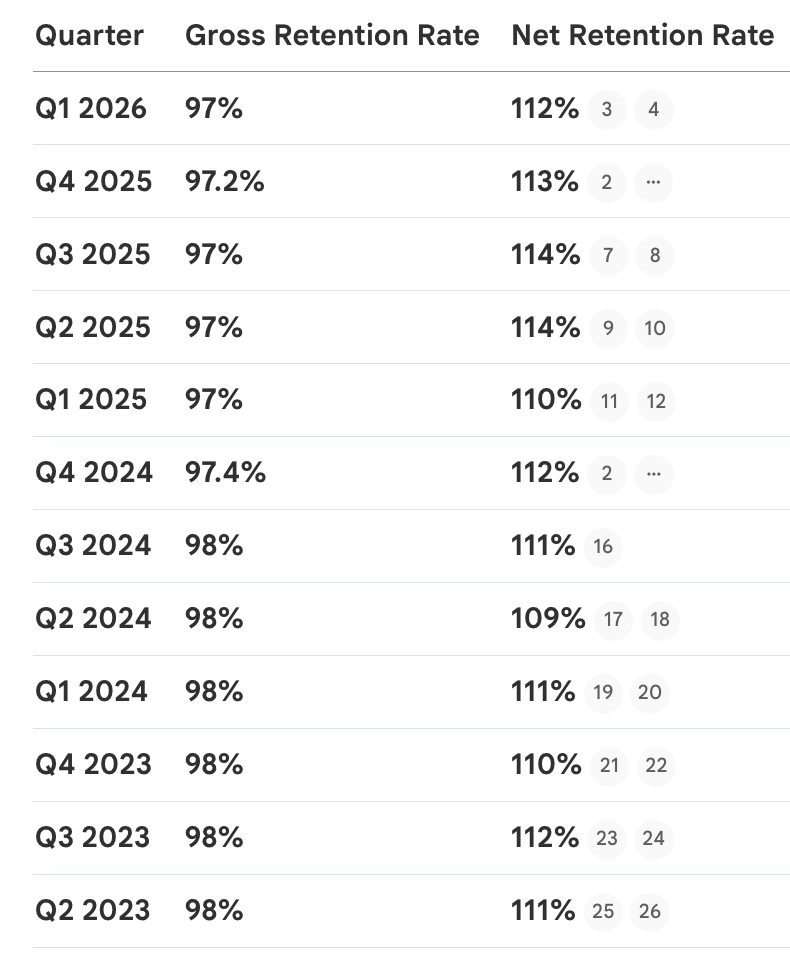
Management believes this high rate of retention is a direct result of their robust technology platform and strong customer service, creating high switching costs for customers managing mission-critical regulatory data
Here’s where I’ll put a small thumb on the scale, though, in the spirit of trying to break my own case. That NRR is solid, very solid. Yet, best-in-class SaaS names have historically posted net retention well north of 120%, and Workiva’s low-teens figure signals steady expansion rather than the land-and-explode dynamics investors sometimes pay premiums for. The moat here is overwhelmingly about keeping customers, not about squeezing dramatically more out of them each year. That’s a durable model. It’s also a reason to be honest that the growth engine leans more on winning new logos and pushing modest expansion than on any single customer ballooning over time.
This is where it gets interesting!
Become a paying subscriber to read the rest of this post and get access to all of my other research, including valuation spreadsheets, deep dives (e.g. well-known mid- and large caps such as LVMH, Duolingo, Meta, Edenred as well as more hidden gems such as Tiger Brokers, Digital Ocean, Ashtead Technologies, InPost, Timee, and MANY more), and powerful investing frameworks.
As a member, you get:
Complete Access: Every deep dive in our library (65+ and counting).
More Content: Company updates; powerful valuation spreadsheets, frameworks, and processes; regular portfolio updates (insights into my investing decisions); market commentary; etc.
The WhatsApp Community: Real-time discussion and networking with like-minded investors.
Digital Investing Conferences: About three times a year, we also hold digital conferences where members present and share stock ideas, and discuss broader themes, and we’d love for you to join in!
Incredible Value: Full access to all of this for less than $1/day.
If you want to see the level of research we provide before committing, the following deep dives are, for instance, free to read (access them via The Library):
InPost ($INPST) - generated an IRR of >400% as an acquisition offer emerged 2-3 months post write-up
DigitalOcean ($DOCN) - up 5x in less than a year post write-up release
I will also attach one testimonial that meant the world to me when I first saw it because Jake Barfield is a professional fund manager whose philosophy is very much aligned with my own, and the analyses he shares are always of the highest quality!